Writing multiplication expressions using exponents
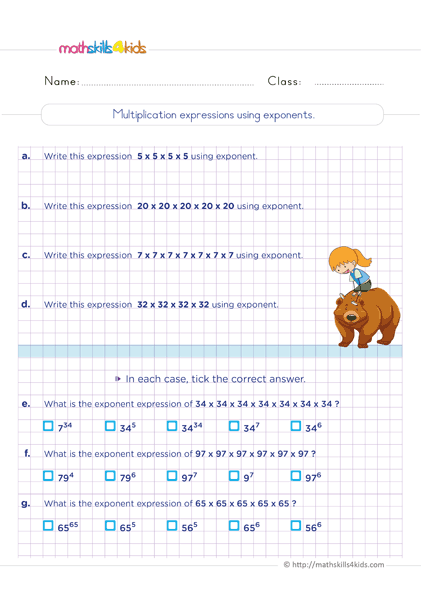
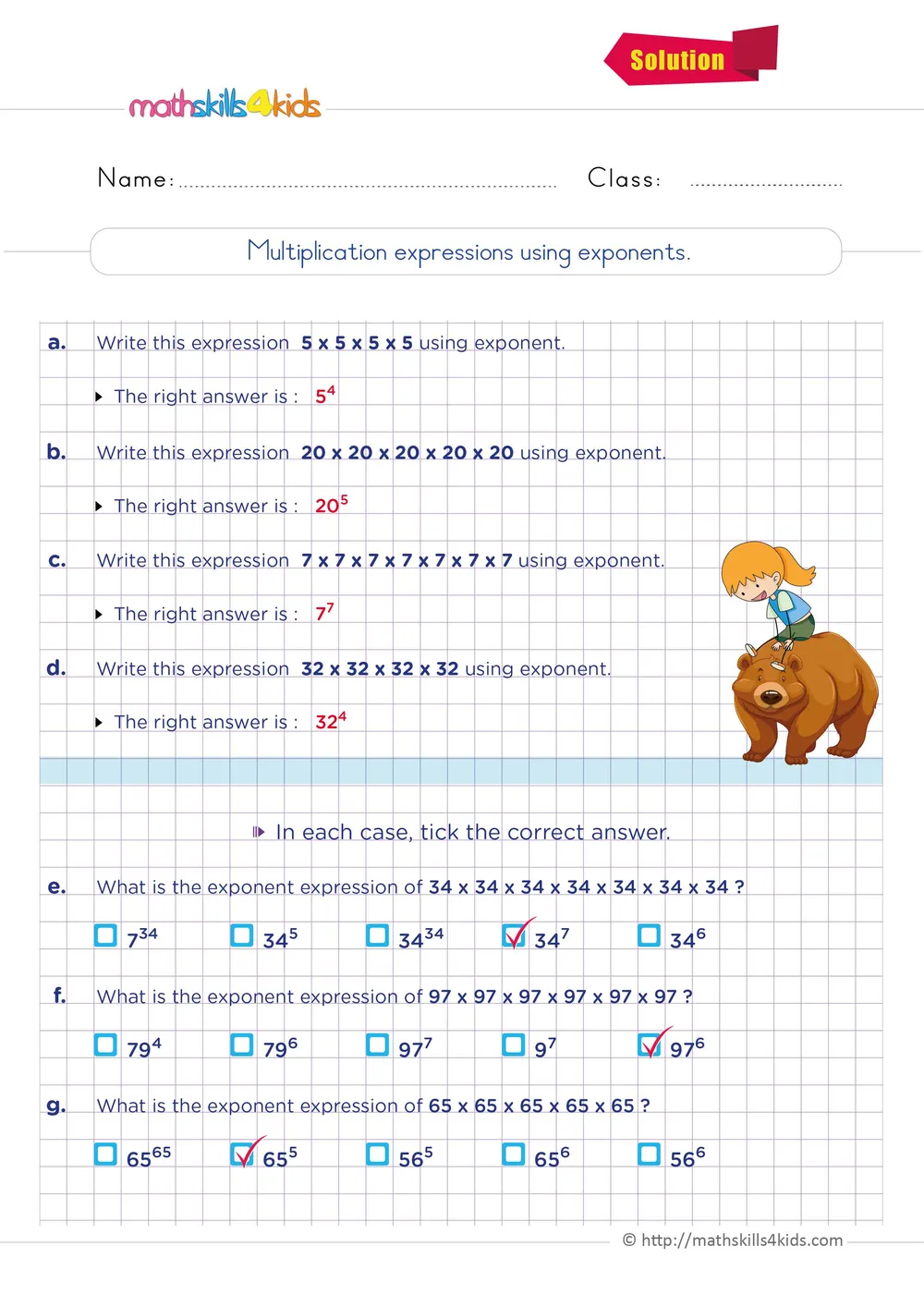
How many 5s hide in 5 x 5 x 5 x 5? Many kids answer three, because they count the x signs. This page turns that slip into a habit of counting factors: your child practices writing repeated multiplication with exponents on four products, then chooses the right power for three longer ones, where 79⁶ sits right next to 97⁶. The second page holds every answer, from 5⁴ to 65⁵.
Is it 5³ or 5⁴? The count decides
An exponent is a counting job before it is a multiplication job. The base tells you which number repeats; the exponent tells you how many times it appears as a factor. That is all.
The sheet tests exactly that. Items a to d give your child the product and ask for the power, so the work is pure counting. Items e to g flip it: five ready-made powers, and only one with the right base and the right count. The wrong ones are not random. They swap base and exponent (7³⁴ for 34⁷) or reverse the digits (79⁶ for 97⁶), the two slips sixth graders really make.
This is the first expressions standard of Grade 6, 6.EE.A.1: write and evaluate numerical expressions with whole-number exponents.
Three x signs, four 5s
Start with item a and stay quiet for a moment. If your child writes 5³, hold back the correction. Ask, "How many 5s can you touch?" Then let them tap each one with a pencil. The count lands on four, and the mistake explains itself: three x signs sit between four factors.
Item c is the long one, with seven 7s, so suggest a tally mark under each factor. For e to g, try a different question: "Which choices have the wrong base?" Crossing those out first leaves two or three powers to compare, and the exponent decides.
When they reach 97⁶, slow down. Read the base aloud together, digit by digit.
A grain of rice that outgrows the kitchen
Exponents show up wherever something repeats. At dinner, ask, "If we double this recipe three times, how many batches?" That is 2 x 2 x 2, or 2³, so eight. A square kitchen tile that measures 4 inches on each side covers 4 x 4, or 4², square inches.
For a story, read One Grain of Rice by Demi together. A girl asks a raja for one grain of rice, doubled every day for 30 days, and the pile grows past a billion grains. Your child can write each day's amount as a power of 2.
Close by naming the work, not the score: "You counted every factor before you wrote a power." Next in this series, the missing exponent or base sheet asks the same question in reverse.
About this 6th Grade exponents and square roots worksheet
Download the worksheet: Writing multiplication expressions using exponents
Download the PDF (opens in a new tab)Free · 2 pages · 831 KB · answer key included
🍪 Free worksheets are paid for by ads
To download for free, please accept cookies, or go Premium for an ad-free experience.
A few related activities
Find the missing exponent or base practice
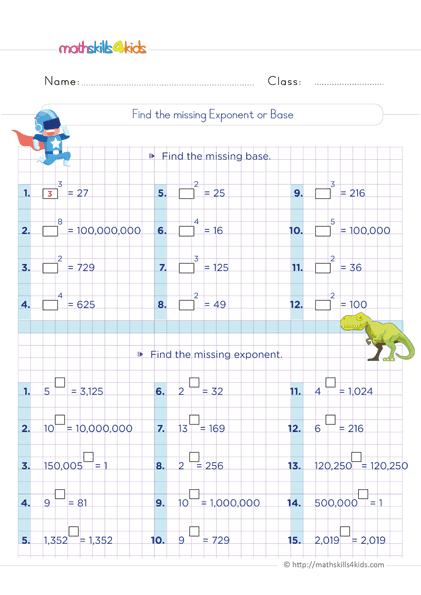
Printable PDF: 6th Grade exponents and square roots practice, 2 pages, answer key included.
See the activity: Find the missing exponent or base practiceExponents with decimal bases
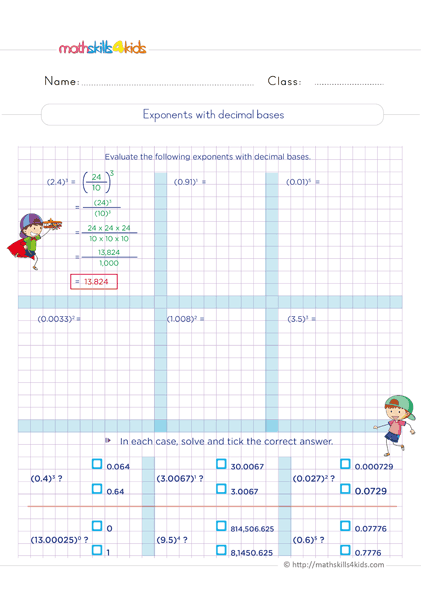
Printable PDF: 6th Grade exponents and square roots practice, 2 pages, answer key included.
See the activity: Exponents with decimal basesExponents with fractional bases
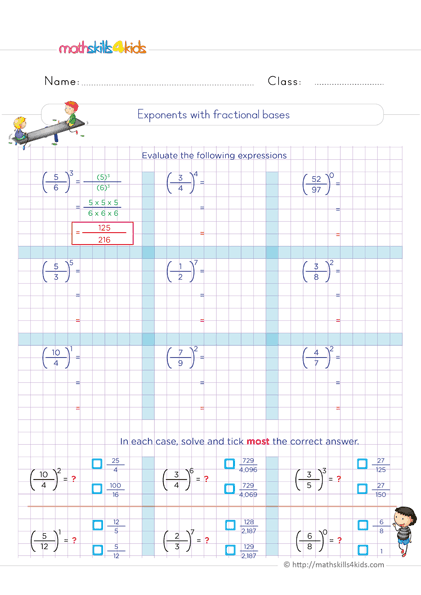
Printable PDF: 6th Grade exponents and square roots practice, 2 pages, answer key included.
See the activity: Exponents with fractional basesUnderstanding negative exponents activity with answers
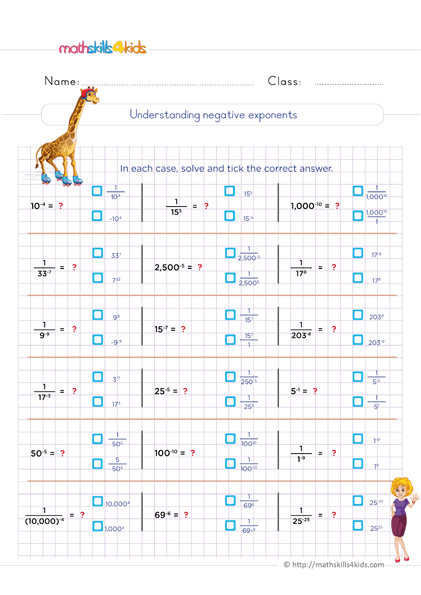
Printable PDF: 6th Grade exponents and square roots practice, 2 pages, answer key included.
See the activity: Understanding negative exponents activity with answersEstimating square roots activity with answers
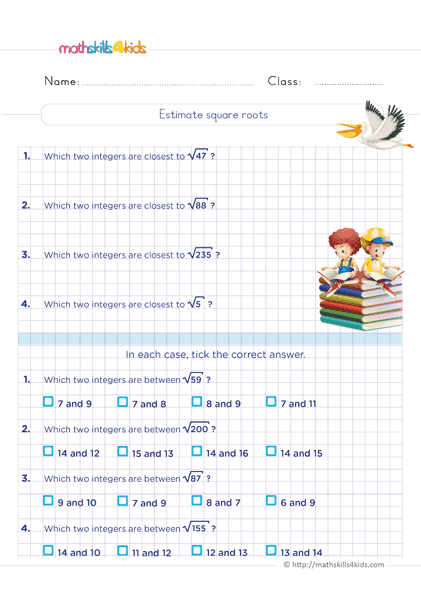
Printable PDF: 6th Grade exponents and square roots practice, 2 pages, answer key included.
See the activity: Estimating square roots activity with answersThe place value of digits in whole numbers
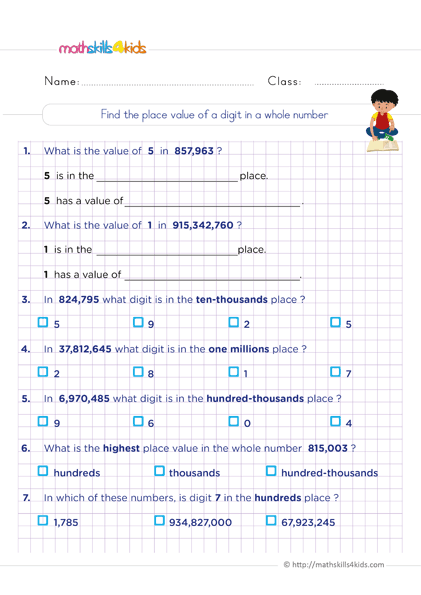
Printable PDF: 6th Grade whole numbers practice, 2 pages, answer key included.
See the activity: The place value of digits in whole numbers