Estimating length customary units practice
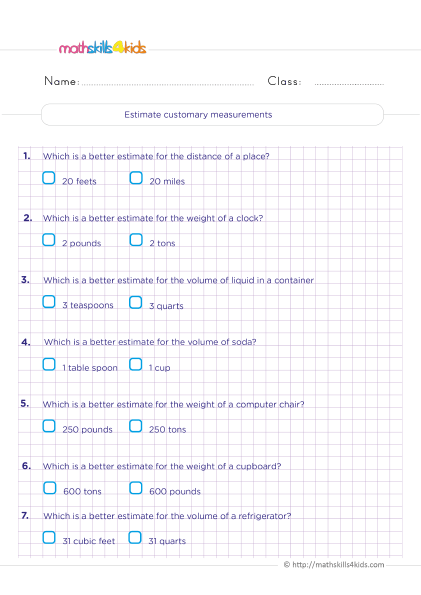
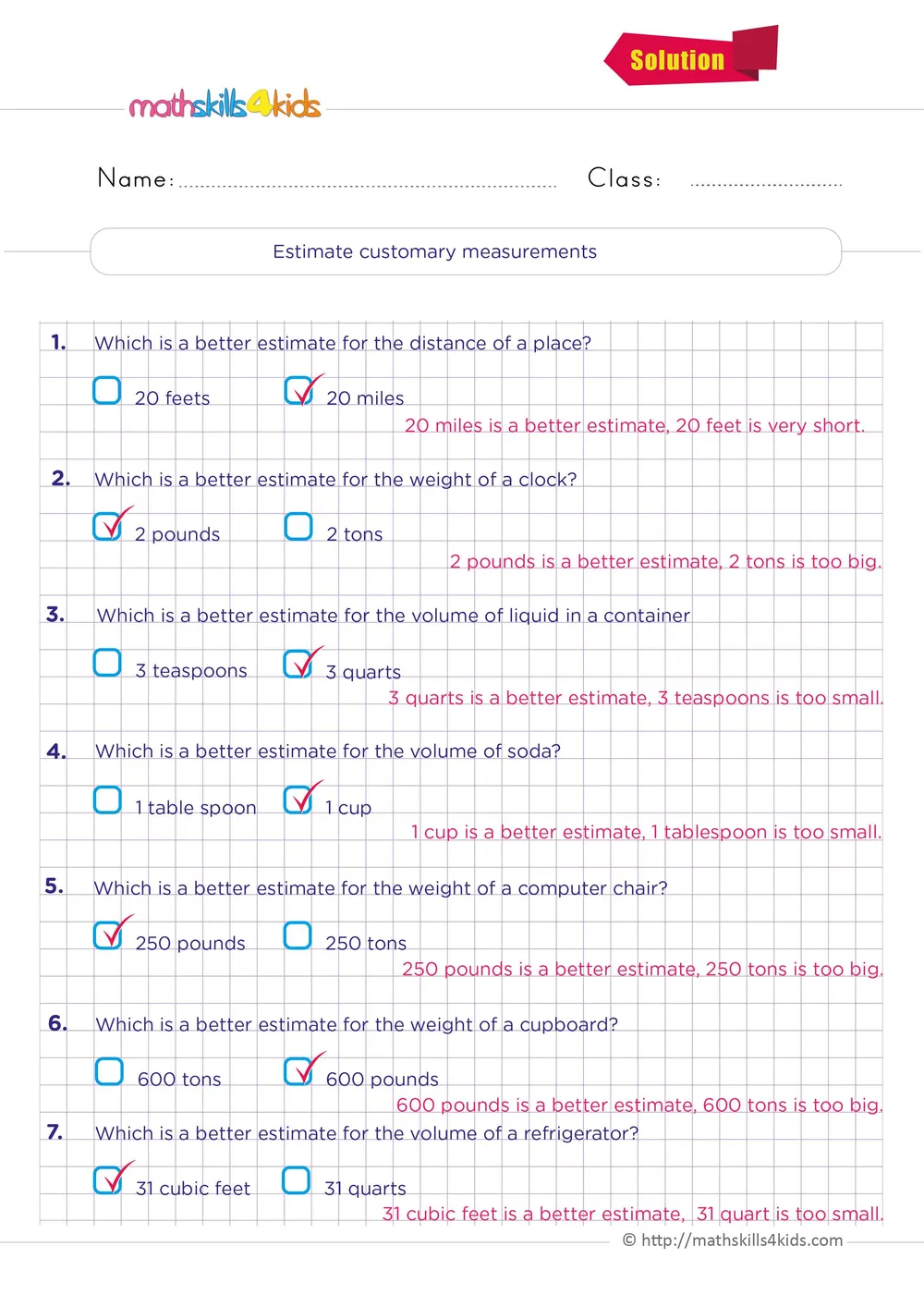
Hold a can of soda and you already know it weighs far less than a ton. That everyday instinct is what this page trains. Your child pictures a clock, a cupboard, a refrigerator, and practices estimating customary measurements in 6th grade by choosing the more sensible of two measures for each object: feet or miles, pounds or tons, teaspoons, cups, quarts or cubic feet. The second page explains every answer in one line.
Why a clock can't weigh 2 tons
Estimating is measuring with your mind. Before a child can convert 2 tons to pounds, they need a felt sense of how big each unit is: a pound is about a loaf of bread, a ton is close to the weight of a small car.
Each item here pairs one sensible measure with one absurd one, using the same number. The number never helps. Both 2 pounds and 2 tons say 2, so the unit carries the whole decision.
This is the relative-size work of 4.MD.A.1, revisited in sixth grade, since conversions with ratio reasoning in 6.RP.A.3.d fall apart when a child cannot tell whether an answer is reasonable.
Which would you pour: a tablespoon or a cup?
Keep real objects close. A measuring cup and a teaspoon from the drawer settle most arguments in seconds.
Item 3 is the one to watch. It asks about liquid in a container without saying which container, so your child may freeze. Ask, "What container are you picturing?" A water jug makes 3 quarts sensible; 3 teaspoons would barely wet the bottom.
Item 5 can puzzle a careful reader too: 250 pounds is far heavier than a real computer chair. Say, "Neither is perfect. Which one is closer?" Estimating means choosing the better of two, and the key on page two agrees.
Then let them hold the cup and check item 4 for real.
Take the units shopping
The grocery store is a measurement museum. Milk comes in quarts and gallons, flour in pounds, spices in ounces. Hand your child a carton and ask, "Is this closer to a cup or a quart?" before anyone reads the label.
In the car, play a quick round: name a place, and your child says feet or miles. The kitchen door? Feet. Grandma's house? Miles.
For a longer read, Millions to Measure by David M. Schwartz tells how people agreed on units in the first place.
Praise the reasoning you heard: "You pictured the fridge before you chose." The metric estimating sheet in this series is the natural next page.
About this 6th Grade measuring units worksheet
Download the worksheet: Estimating length customary units practice
Download the PDF (opens in a new tab)Free · 2 pages · 837 KB · answer key included
🍪 Free worksheets are paid for by ads
To download for free, please accept cookies, or go Premium for an ad-free experience.
A few related activities
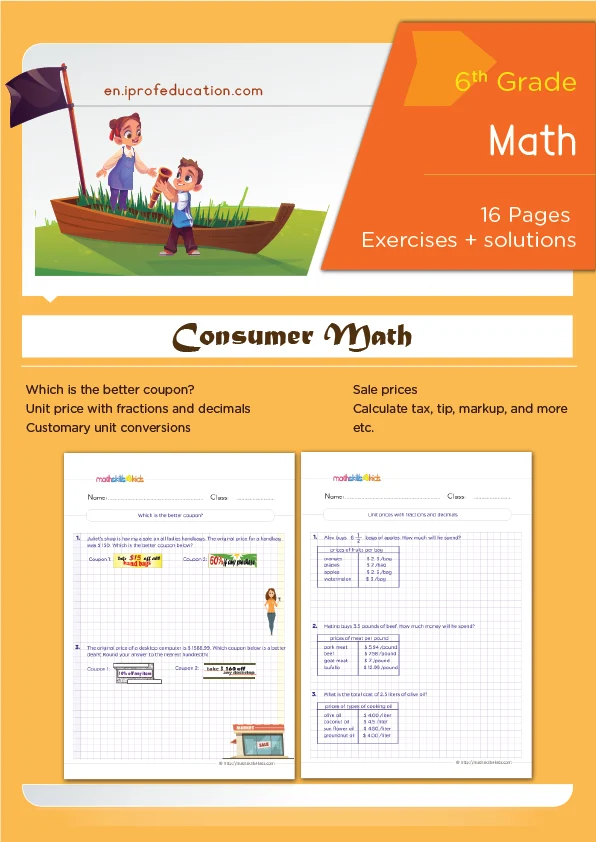
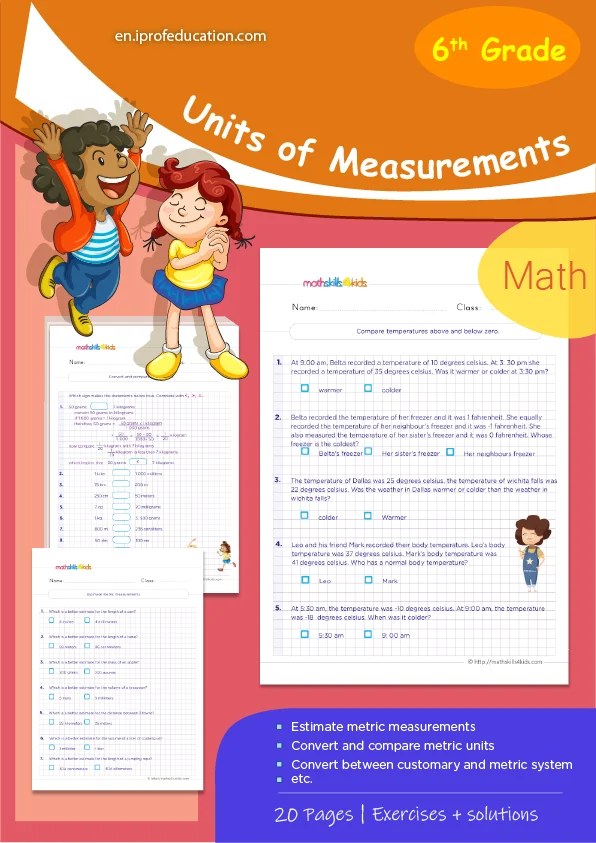
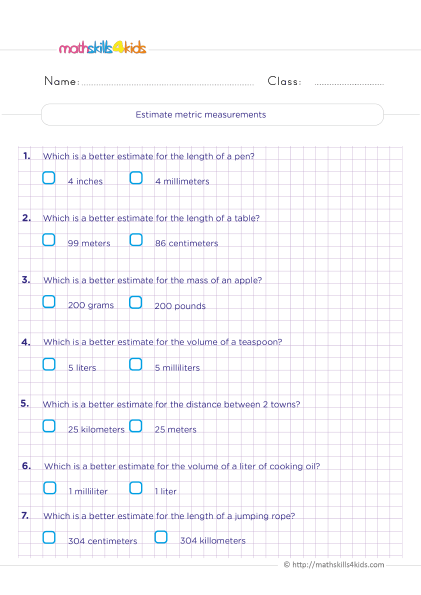
Estimating metric measurements exercises with answers
Printable PDF: 6th Grade measuring units practice, 2 pages, answer key included.
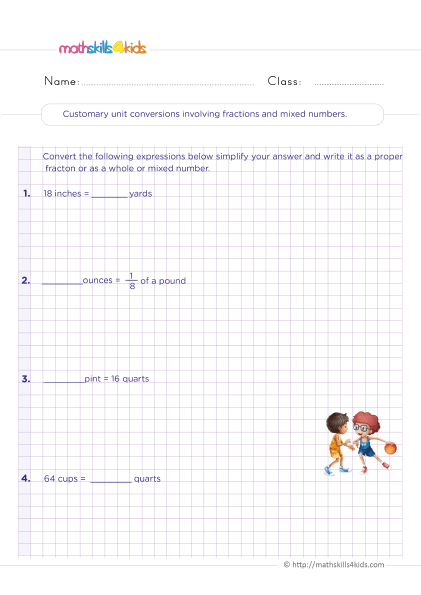
See the activity: Estimating metric measurements exercises with answersCustomary unit conversions involving fractions and mixed numbers
Printable PDF: 6th Grade measuring units practice, 2 pages, answer key included.
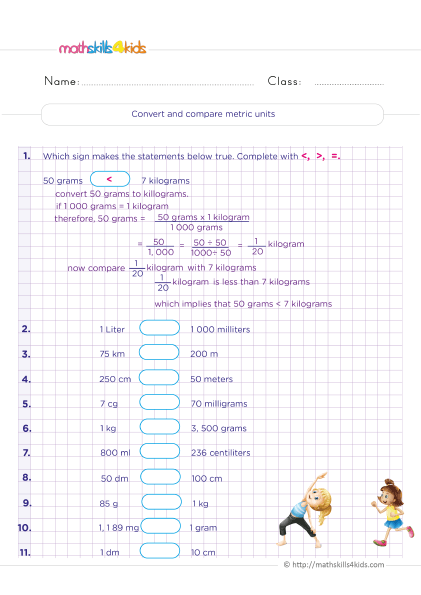
See the activity: Customary unit conversions involving fractions and mixed numbersComparing and converting metric units practice
Printable PDF: 6th Grade measuring units practice, 2 pages, answer key included.
See the activity: Comparing and converting metric units practiceCompare temperature: negative and positive number comparison
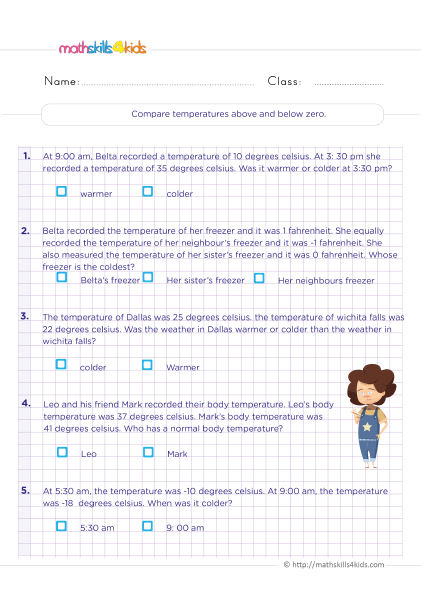
Printable PDF: 6th Grade measuring units practice, 2 pages, answer key included.
See the activity: Compare temperature: negative and positive number comparisonConverting between Celsius and Fahrenheit
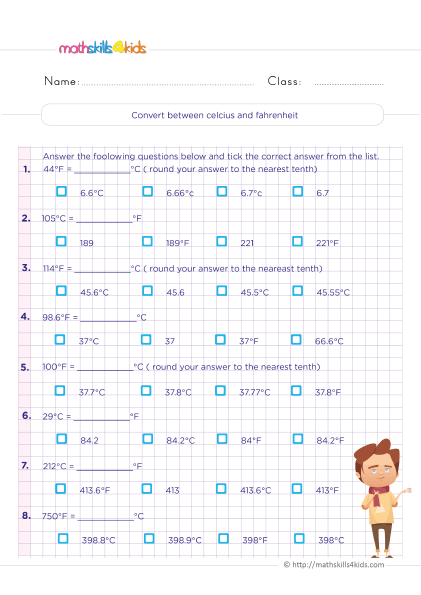
Printable PDF: 6th Grade measuring units practice, 2 pages, answer key included.
See the activity: Converting between Celsius and FahrenheitThe place value of digits in whole numbers
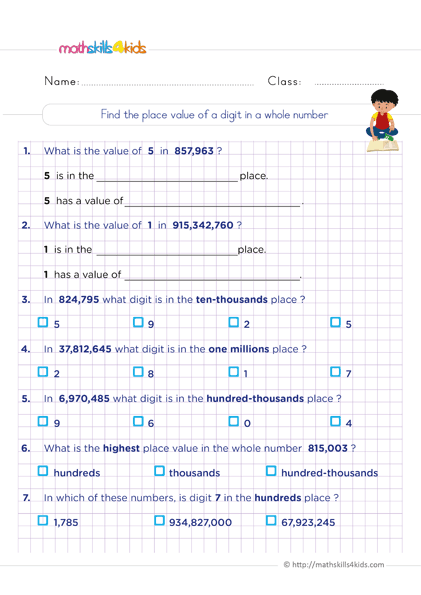
Printable PDF: 6th Grade whole numbers practice, 2 pages, answer key included.
See the activity: The place value of digits in whole numbers