Divide whole numbers by unit fractions using models
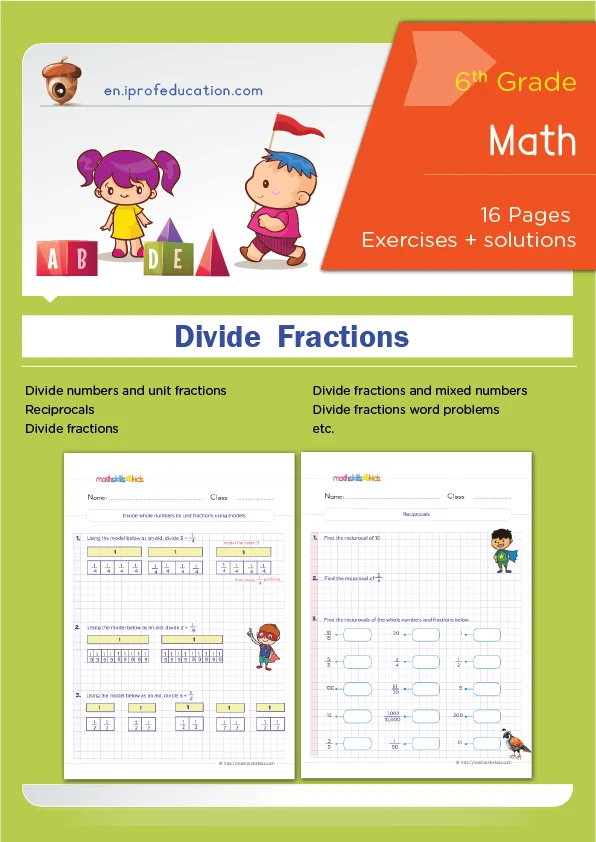
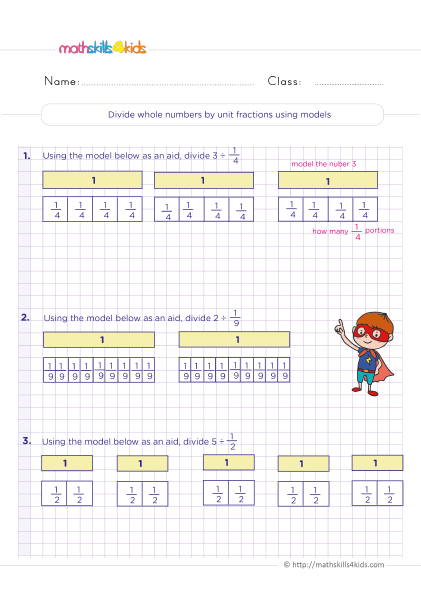
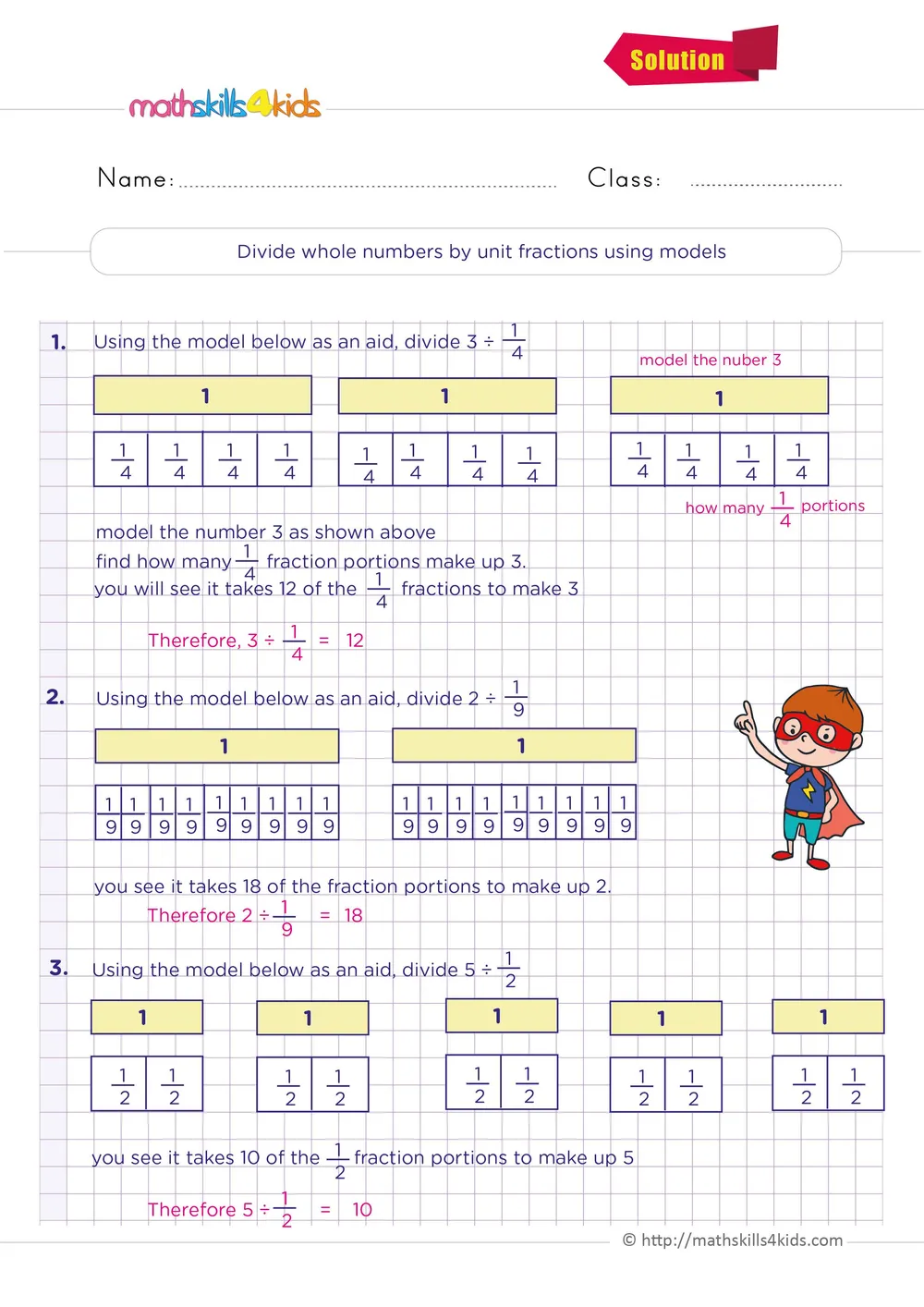
How many quarter-cups of rice fit into a 3-cup jar? Most children guess something small, since dividing usually shrinks things. The bars here settle it: your child practices dividing whole numbers by unit fractions with models by counting the fourths inside three whole bars and landing on 12. Then come 2 ÷ 1/9, cut into ninths, and 5 ÷ 1/2, cut into halves. Page 2 walks through each count and gives the answers 12, 18 and 10.
Why does dividing by 1/4 give more?
Dividing by a unit fraction asks one question: how many of these small pieces fit inside the whole amount? Each whole holds 4 fourths, so 3 wholes hold 12 of them. Counting comes first. The bars make that visible before any rule shows up, and a child who has counted the fourths will later trust the shortcut of multiplying by 4.
Problem 2 is the stretch, with eighteen narrow ninths spread across two bars. That is unit fraction division with models at its most patient.
The standard is 5.NF.B.7.b, dividing a whole number by a unit fraction with a visual model, and all three problems stay inside it.
Eighteen what, exactly?
Hand your child a pencil and say, "Tap every ninth as you count." Tapping keeps the count honest on 2 ÷ 1/9, where the strips are thin and easy to skip.
The likely slip is answering 2/9 or 1/18, because the numbers look like they should shrink. If that happens, point to one bar and ask, "How many ninths make this one whole?" Nine. Then the second bar. Most children say 18 before you finish the sentence.
On the last problem, a quick check works well: "Do ten halves rebuild five bars?" Let your child pair the halves up and see.
Half a sandwich for every guest
In Full House: An Invitation to Fractions by Dayle Ann Dodds, a cake at a busy inn gets shared slice by slice among the guests. Read it, then turn the idea around: if every guest gets half a sandwich, how many guests do 4 sandwiches feed? Your child can draw four rectangles and cut each in half.
The same question waits in the kitchen. Filling a 2-cup measuring cup with a 1/4-cup scoop takes 8 scoops; let your child count them out loud.
Say what you watched: "You counted pieces instead of guessing." Reciprocals come next in the series.
About this 6th Grade divide fractions worksheet
Download the worksheet: Divide whole numbers by unit fractions using models
Download the PDF (opens in a new tab)Free · 2 pages · 783 KB · answer key included
🍪 Free worksheets are paid for by ads
To download for free, please accept cookies, or go Premium for an ad-free experience.
A few related activities
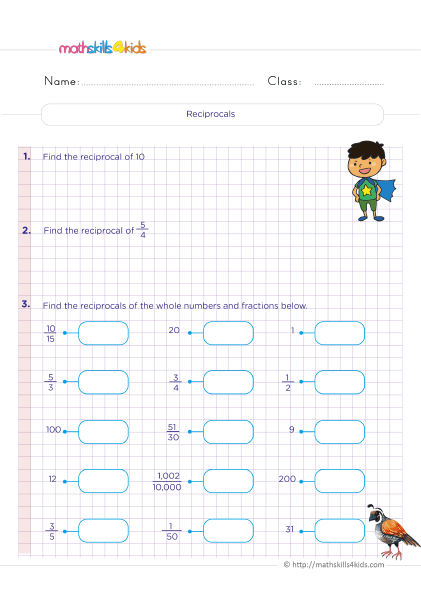
Reciprocals
Printable PDF: 6th Grade divide fractions practice, 2 pages, answer key included.
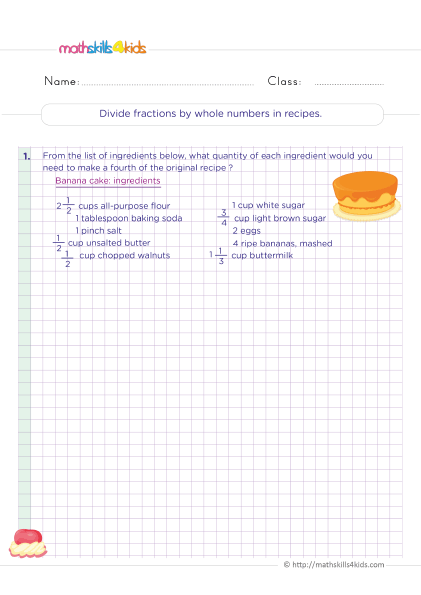
See the activity: ReciprocalsDividing fractions by whole numbers in recipes
Printable PDF: 6th Grade divide fractions practice, 2 pages, answer key included.
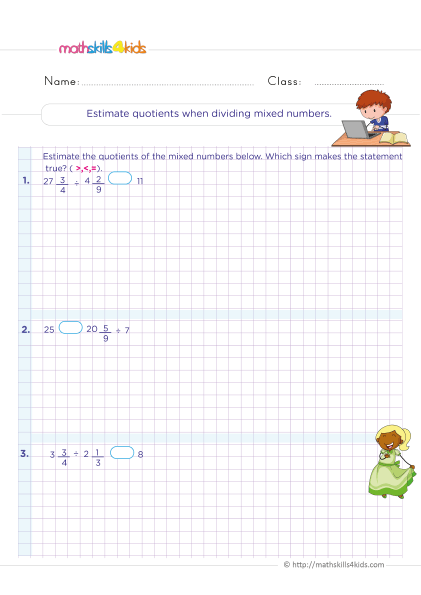
See the activity: Dividing fractions by whole numbers in recipesEstimate quotients when dividing mixed numbers
Printable PDF: 6th Grade divide fractions practice, 2 pages, answer key included.
See the activity: Estimate quotients when dividing mixed numbersDividing fractions
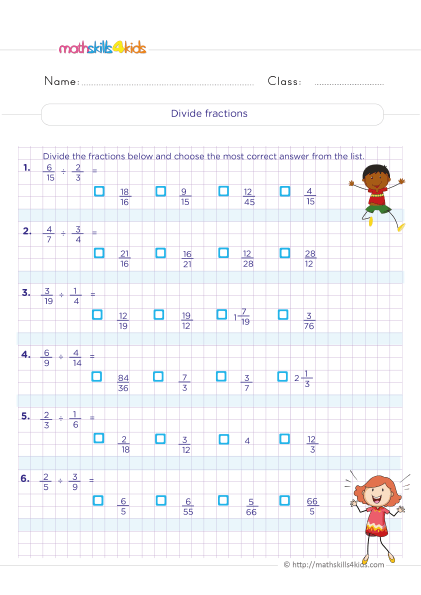
Printable PDF: 6th Grade divide fractions practice, 2 pages, answer key included.
See the activity: Dividing fractionsDividing fractions and mixed numbers word problems
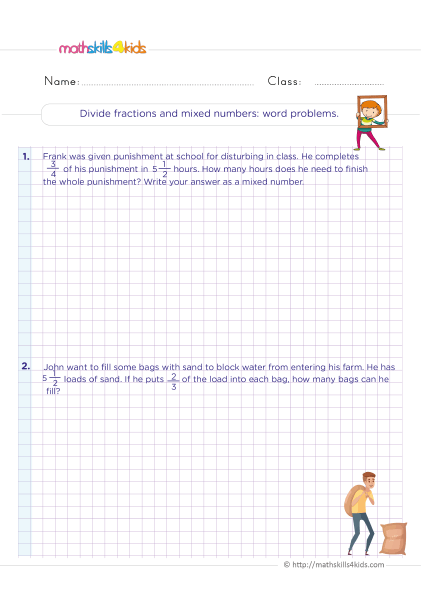
Printable PDF: 6th Grade divide fractions practice, 2 pages, answer key included.
See the activity: Dividing fractions and mixed numbers word problemsThe place value of digits in whole numbers
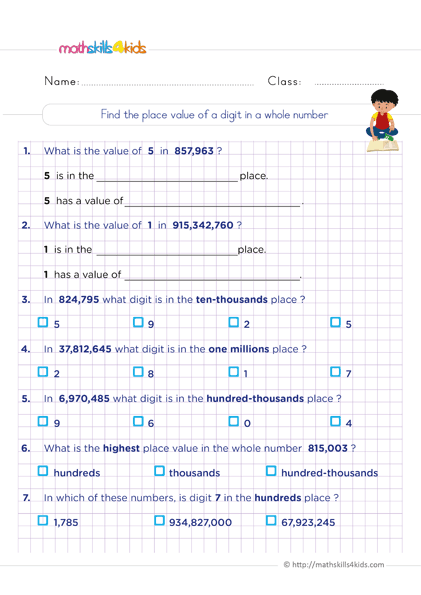
Printable PDF: 6th Grade whole numbers practice, 2 pages, answer key included.
See the activity: The place value of digits in whole numbers