Reciprocals
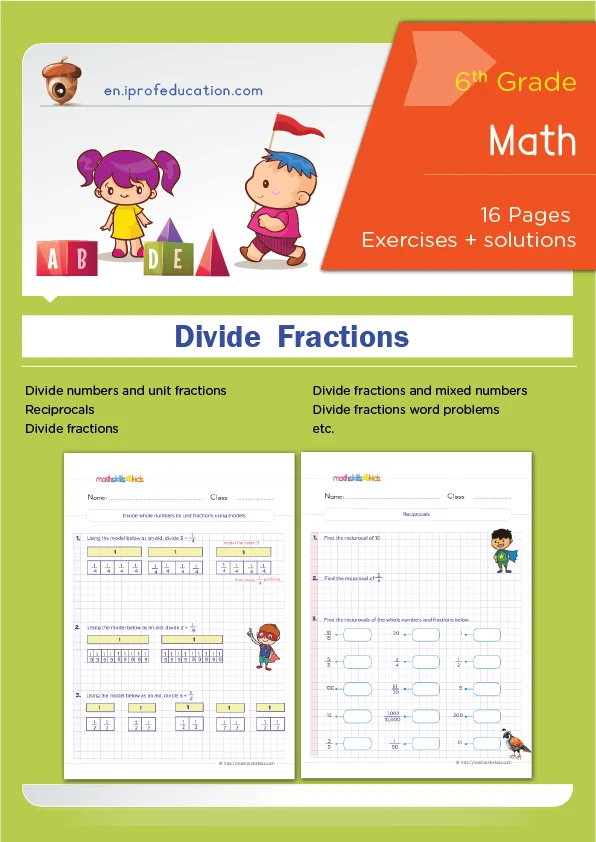
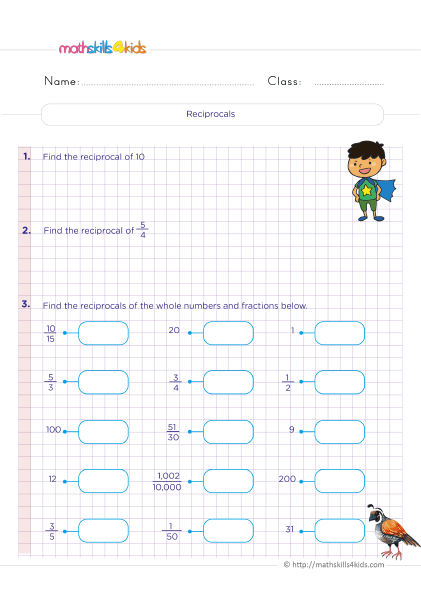
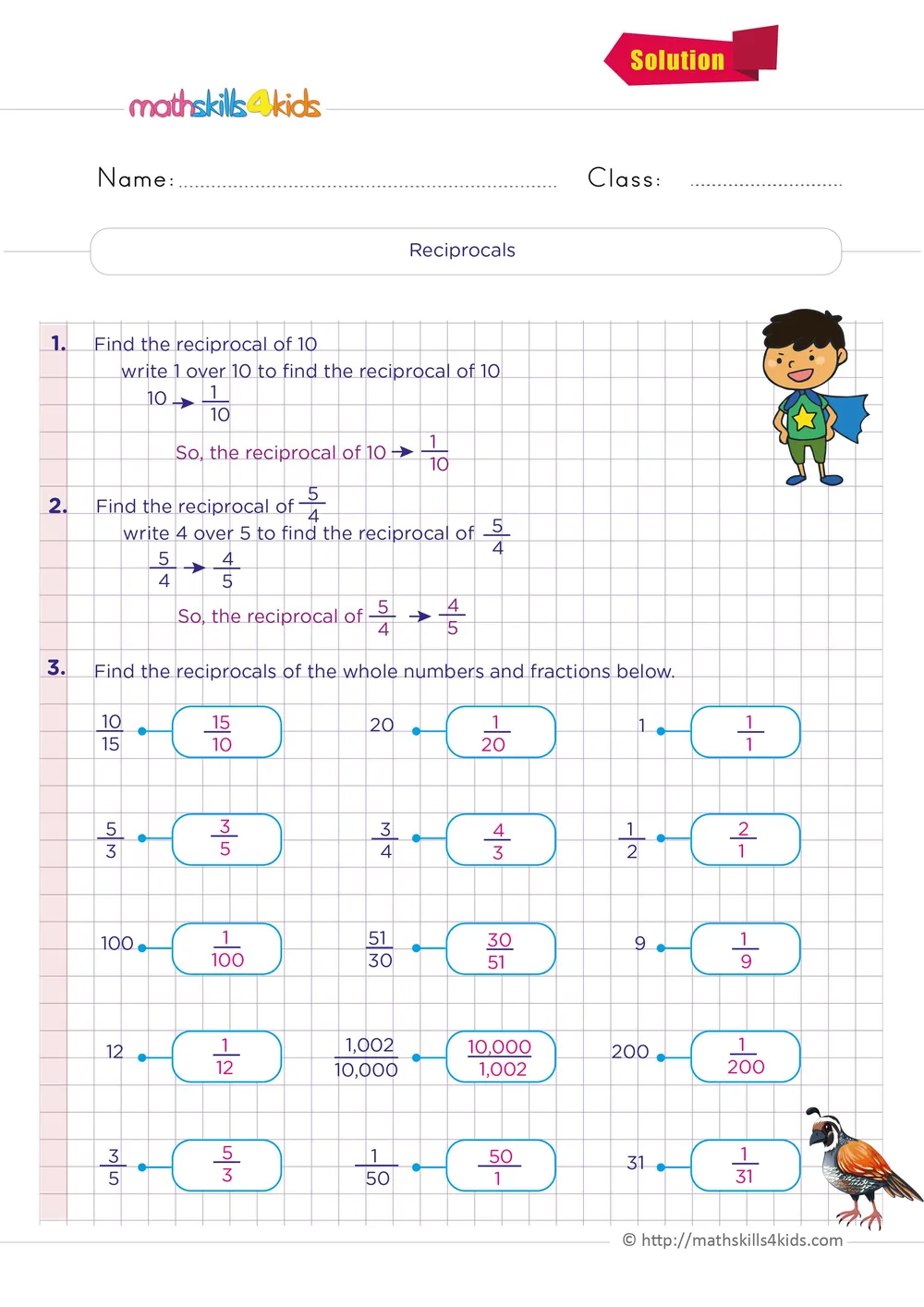
Flip 3/4 and you get 4/3, a number bigger than 1, yet the two still multiply to exactly 1. That small paradox drives everything here. Your child starts by finding reciprocals of fractions and whole numbers on two worked warm-ups, 10 and 5/4, then fills fifteen boxes that mix whole numbers like 200 with fractions like 1,002/10,000. Whole numbers need one extra move: write them over 1 first. Page 2 gives every reciprocal.
What multiplies to 1?
Two numbers are reciprocals when their product is 1. Flipping a fraction is the quick way to find the partner, and it works because 3/4 × 4/3 = 12/12. Whole numbers hide their denominator, so 12 becomes 12/1 before it flips to 1/12.
The grid mixes both kinds on purpose. Next to 1, the answer is 1 again. No other positive number is its own partner.
Reciprocals are the engine of dividing fractions by flipping the divisor, which comes later in the series.
That skill is 6.NS.A.1, computing quotients of fractions. This sheet stops just short of it and builds the tool.
Is 15/10 a finished answer?
Watch the first box, 10/15. Some children copy 10/15 back, or flip only the top and write 1/15. Ask, "What times 10/15 makes exactly 1?" and let them test 15/10 by multiplying.
The answer page leaves 15/10, 30/51 and 10,000/1,002 as they are. They are correct reciprocals, only not in lowest terms: 15/10 is 3/2, 30/51 is 10/17 and 10,000/1,002 is 5,000/501. If the teacher wants simplest form, simplify after flipping.
For 200 and 31, a quiet "Write it over 1 first" prevents the usual slip.
Uno already has a card for this
Uno players know the Reverse card: play two in a row and the direction of play is right back where it started. Reciprocals behave the same way. Flip 3/5, flip again, and you are back at 3/5; multiply the pair and you land on 1.
In the kitchen, a 1/3-cup scoop needs 3 trips to fill 1 cup, and 3 is the reciprocal of 1/3. Which scoop takes 4 trips? Let your child find it in the drawer.
Hand back the credit: "You checked each pair by multiplying, not by guessing." Dividing fractions by whole numbers in recipes is next.
About this 6th Grade divide fractions worksheet
Download the worksheet: Reciprocals
Download the PDF (opens in a new tab)Free · 2 pages · 729 KB · answer key included
🍪 Free worksheets are paid for by ads
To download for free, please accept cookies, or go Premium for an ad-free experience.
A few related activities
Dividing fractions by whole numbers in recipes
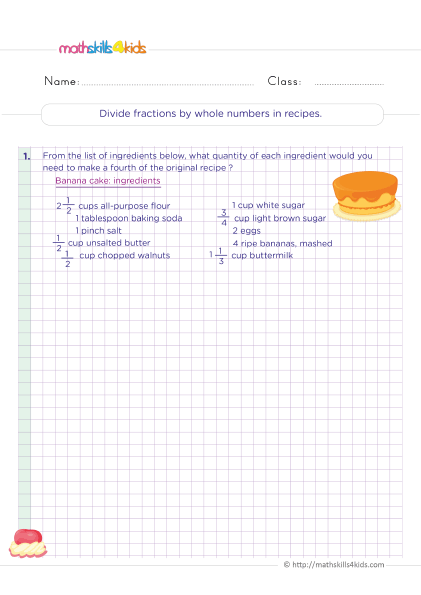
Printable PDF: 6th Grade divide fractions practice, 2 pages, answer key included.
See the activity: Dividing fractions by whole numbers in recipesEstimate quotients when dividing mixed numbers
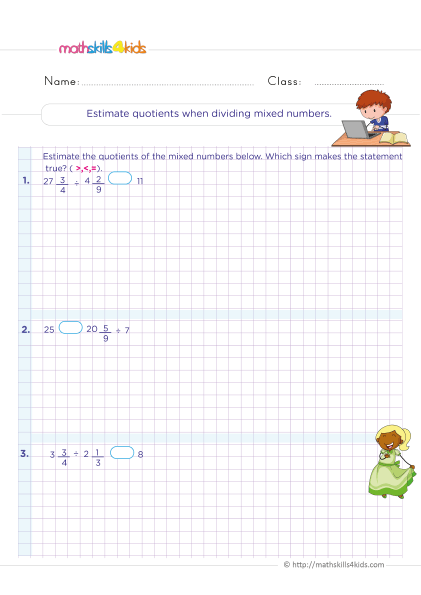
Printable PDF: 6th Grade divide fractions practice, 2 pages, answer key included.
See the activity: Estimate quotients when dividing mixed numbersDividing fractions
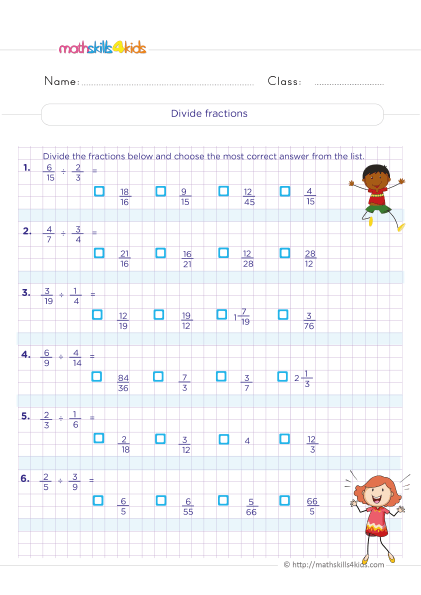
Printable PDF: 6th Grade divide fractions practice, 2 pages, answer key included.
See the activity: Dividing fractionsDividing fractions and mixed numbers word problems
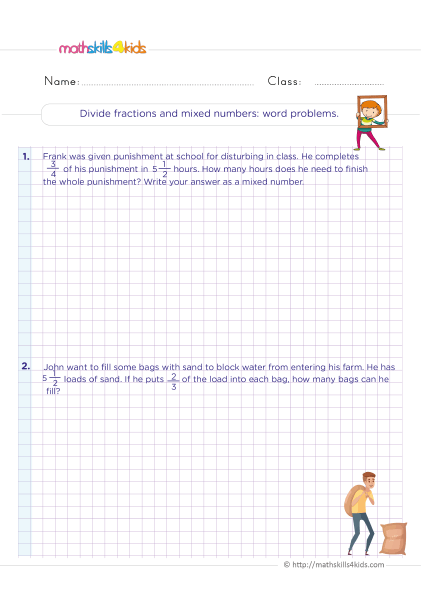
Printable PDF: 6th Grade divide fractions practice, 2 pages, answer key included.
See the activity: Dividing fractions and mixed numbers word problemsDivide whole numbers by unit fractions using models
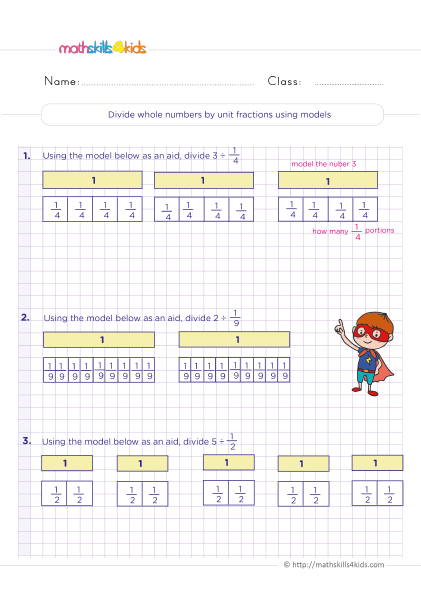
Printable PDF: 6th Grade divide fractions practice, 2 pages, answer key included.
See the activity: Divide whole numbers by unit fractions using modelsThe place value of digits in whole numbers
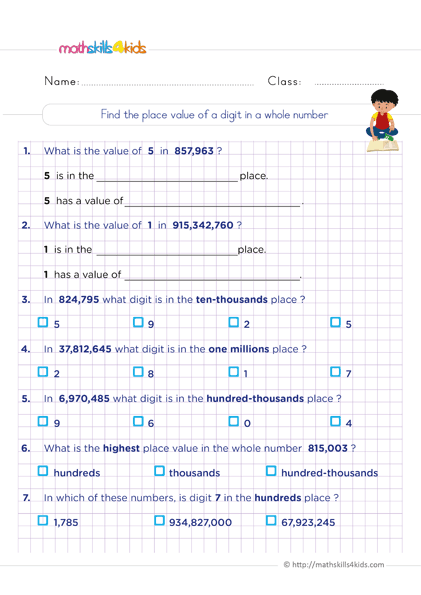
Printable PDF: 6th Grade whole numbers practice, 2 pages, answer key included.
See the activity: The place value of digits in whole numbers