Addition of decimals practice
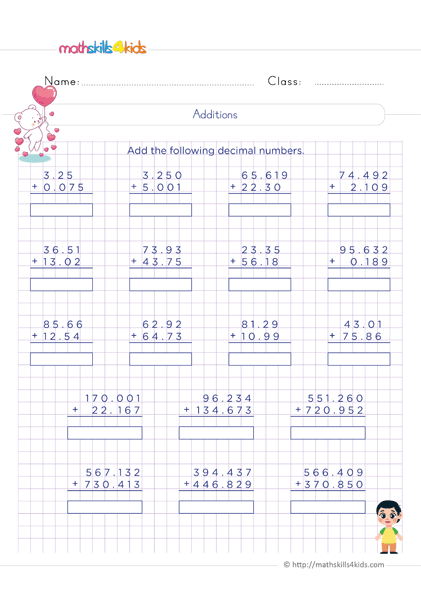
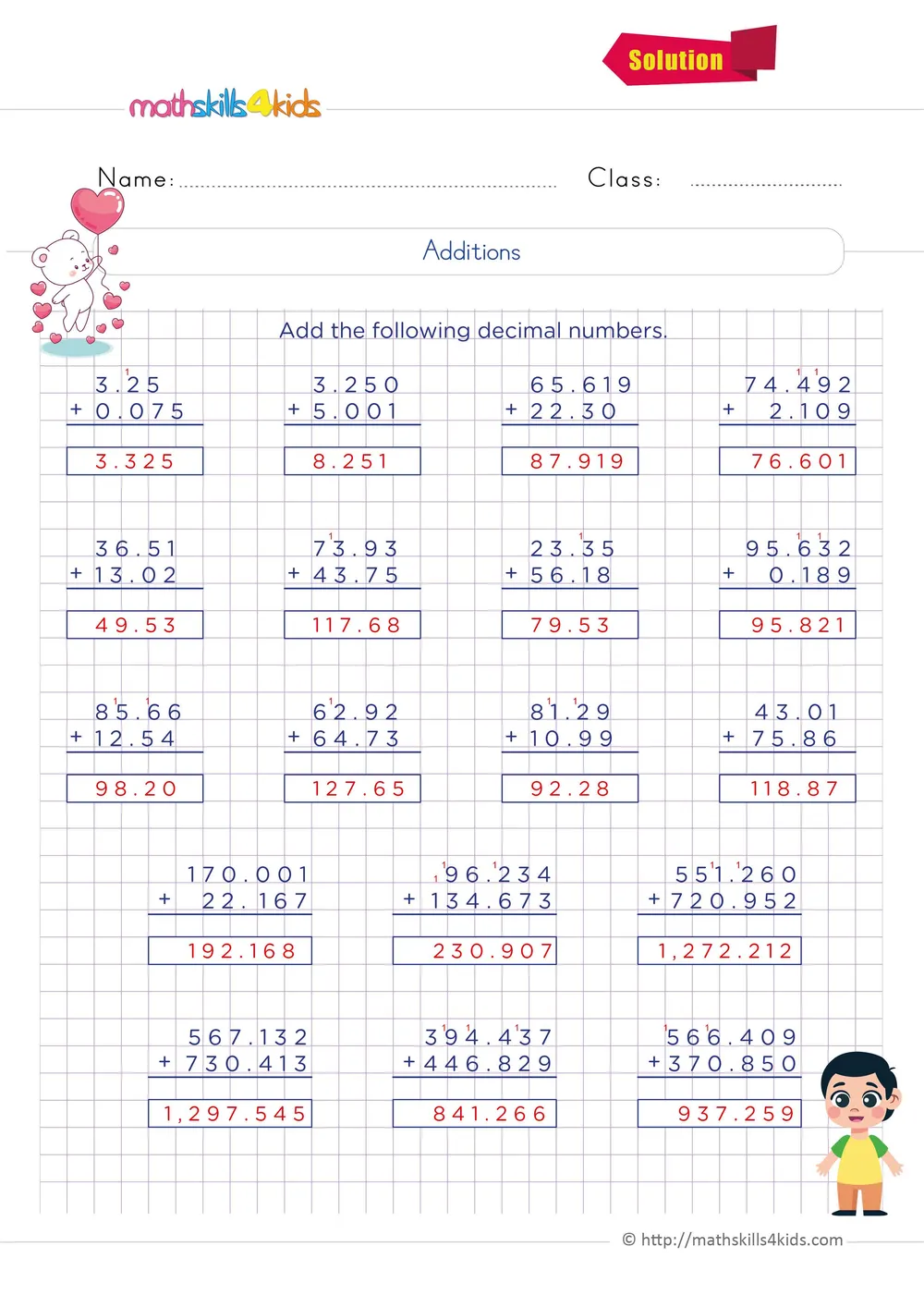
Ask a sixth grader which is bigger, 3.25 or 0.075, and the longer number often wins. That same hunch trips up column addition. On this grid, your child keeps every column honest by adding decimals by lining up the decimal points, through twelve two-number sums and six larger ones that pass 1,000, like 551.260 + 720.952. Page 2 shows each sum with its carried digits, and all of them check out.
Why the point sets the columns
Adding decimals is the same column addition your child already knows, with one new duty: tenths go under tenths and thousandths under thousandths. The decimal point is the guide that keeps them there.
The first row tests that duty right away. In 3.25 + 0.075 the numbers have different lengths, so a child who lines up the right edges adds 5 thousandths to 5 hundredths. Writing 3.250 first, with a placeholder zero, makes the columns match, and the sum becomes 3.325. Later rows carry across the point, as in 85.66 + 12.54 = 98.20, where the hundredths carry into the tenths and the tenths into the ones.
This is 6.NS.B.3 in Grade 6: fluent work with multi-digit decimals using the standard algorithm.
Where does 0.075 go?
Before any adding, point to 74.492 + 2.109 and ask, "Which digits are the tenths?" Many kids slide 2.109 to the left edge of the box because it looks short, and its 2 ends up under the 7 tens. The points should sit in one straight line.
A quick habit helps: draw a light vertical line through both points before writing anything. Then have your child name each column as they add it. "Thousandths first, then hundredths."
Two bottom sums cross 1,000: 551.260 + 720.952 and 567.132 + 730.413. Ask your child to read 1,272.212 aloud. If they stall at the comma, talk about place value on both sides of the point.
Check the store's math
Hand your child a short grocery receipt and cover the total. They line up the prices on grid paper, add them, then uncover the total to see if the store agrees.
At the kitchen scale, read a weight aloud, like 2.375 pounds of apples, and ask for a second one to add. Mixed lengths, like 2.375 and 1.5, are the best practice because they need that placeholder zero.
For a lighter evening, The Grapes of Math by Greg Tang is full of grouping tricks that make adding in the head faster.
Name what they did: "You kept every point in one line, all eighteen times." The next sheet turns the columns around for decimal subtraction, where borrowing across a zero is the new challenge.
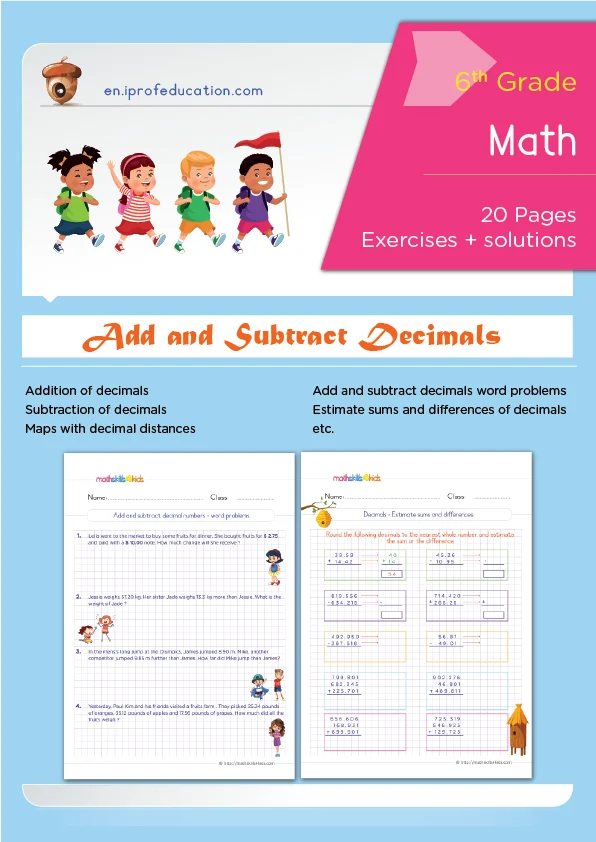
About this 6th Grade add & subtract decimals worksheet
Download the worksheet: Addition of decimals practice
Download the PDF (opens in a new tab)Free · 2 pages · 790 KB · answer key included
🍪 Free worksheets are paid for by ads
To download for free, please accept cookies, or go Premium for an ad-free experience.
A few related activities
Subtraction of decimals practice
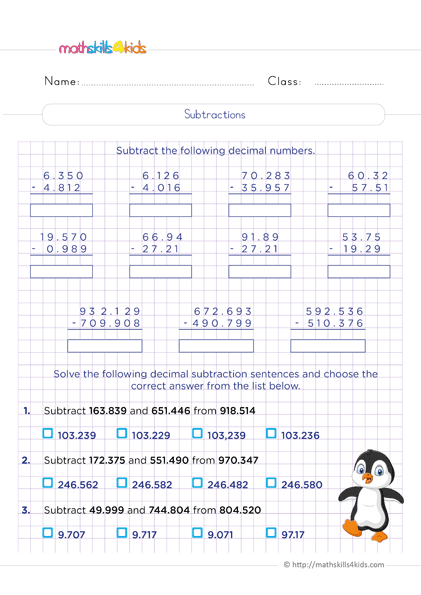
Printable PDF: 6th Grade add & subtract decimals practice, 2 pages, answer key included.
See the activity: Subtraction of decimals practiceAdding & subtracting decimals word problems
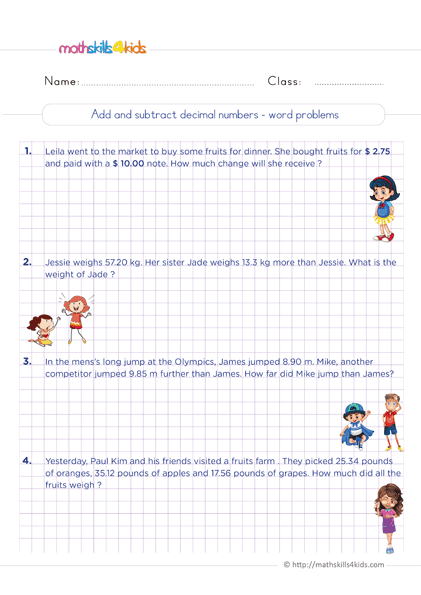
Printable PDF: 6th Grade add & subtract decimals practice, 2 pages, answer key included.
See the activity: Adding & subtracting decimals word problemsEstimating sums and differences of decimals
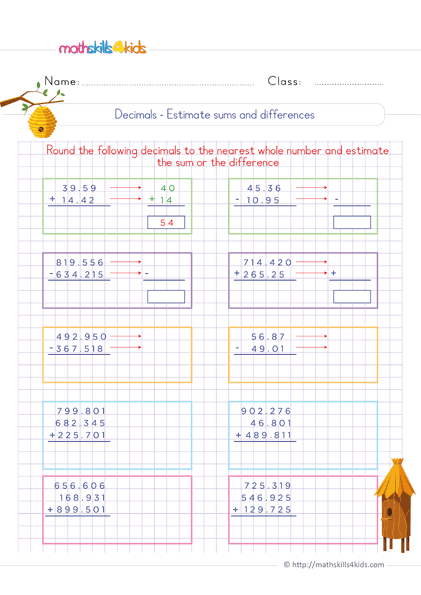
Printable PDF: 6th Grade add & subtract decimals practice, 2 pages, answer key included.
See the activity: Estimating sums and differences of decimalsMaps with decimal distances
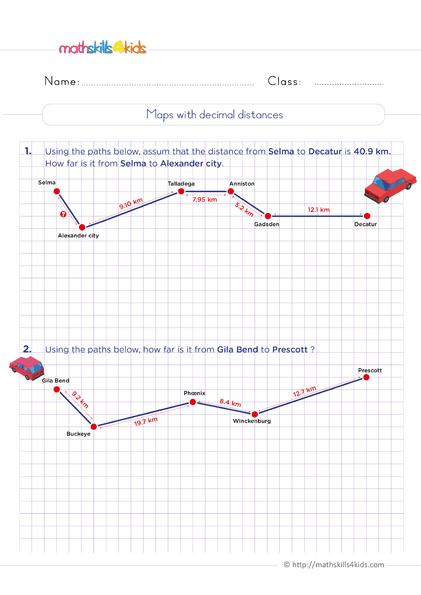
Printable PDF: 6th Grade add & subtract decimals practice, 2 pages, answer key included.
See the activity: Maps with decimal distancesThe place value of digits in whole numbers
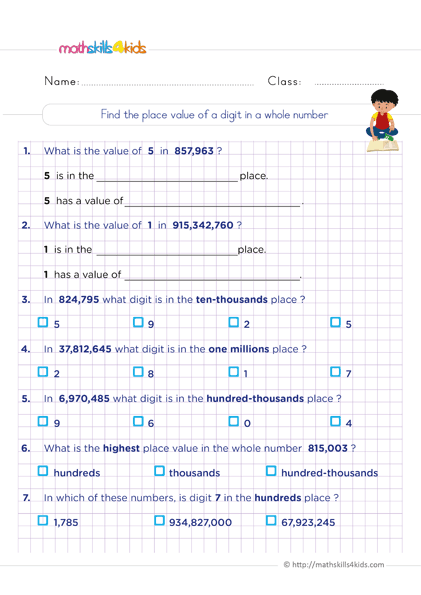
Printable PDF: 6th Grade whole numbers practice, 2 pages, answer key included.
See the activity: The place value of digits in whole numbersHow to write numbers in figures and words
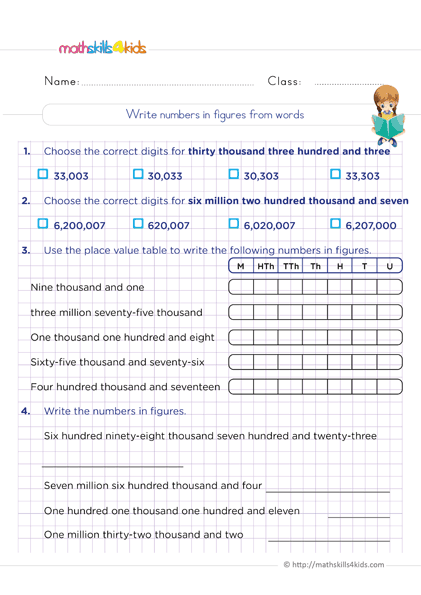
Printable PDF: 6th Grade whole numbers practice, 2 pages, answer key included.
See the activity: How to write numbers in figures and words