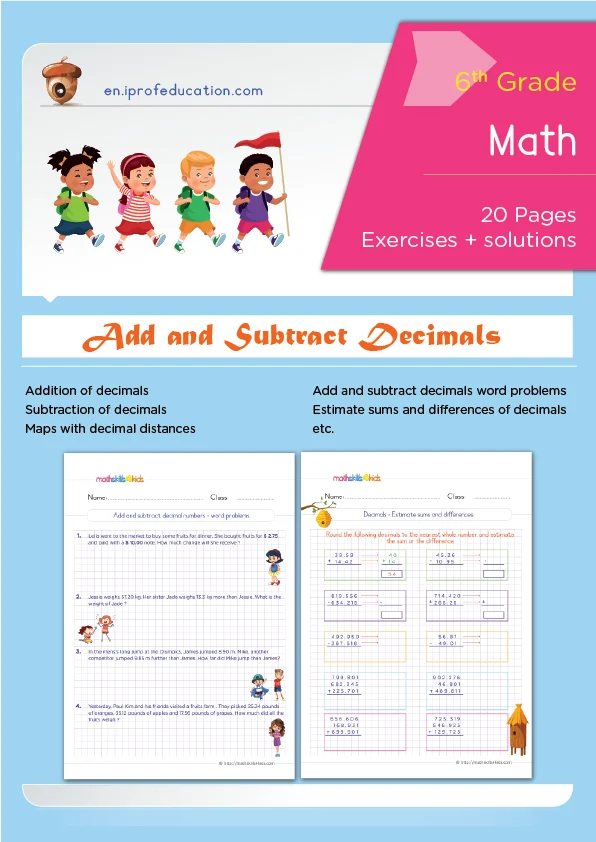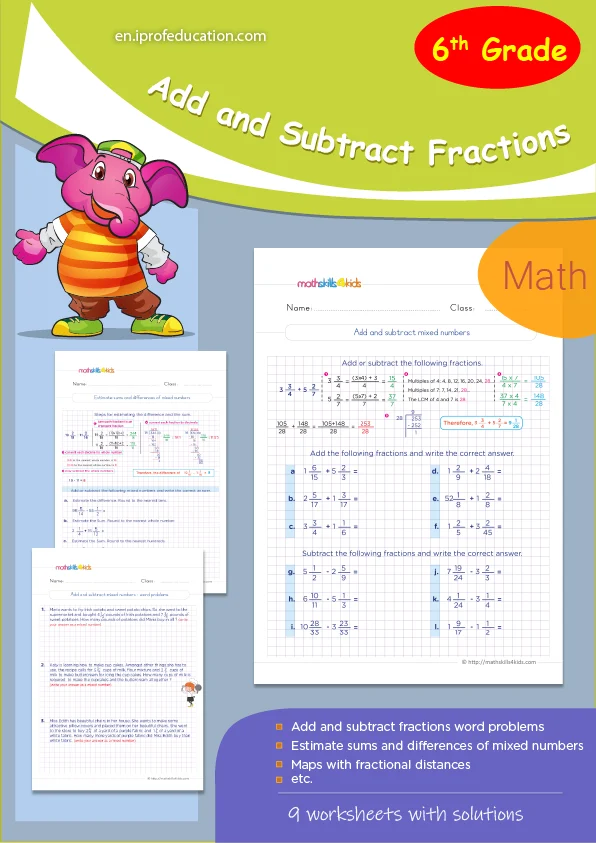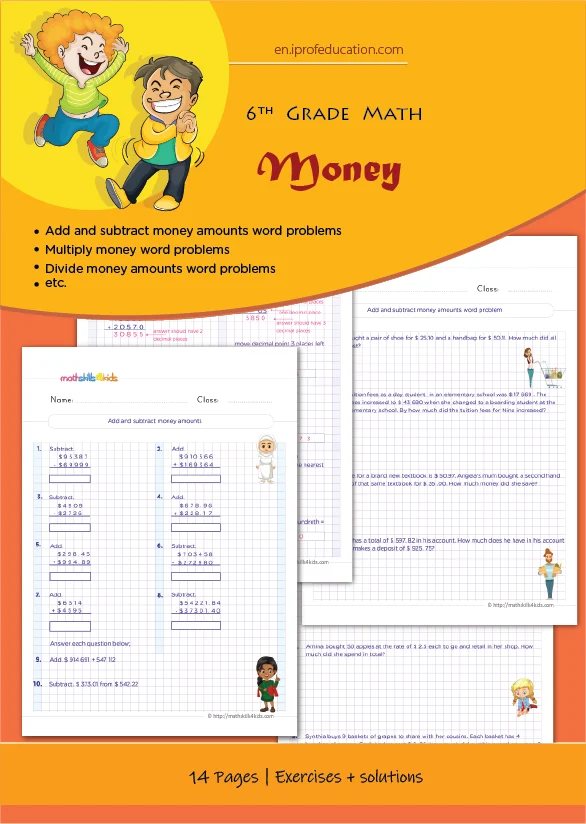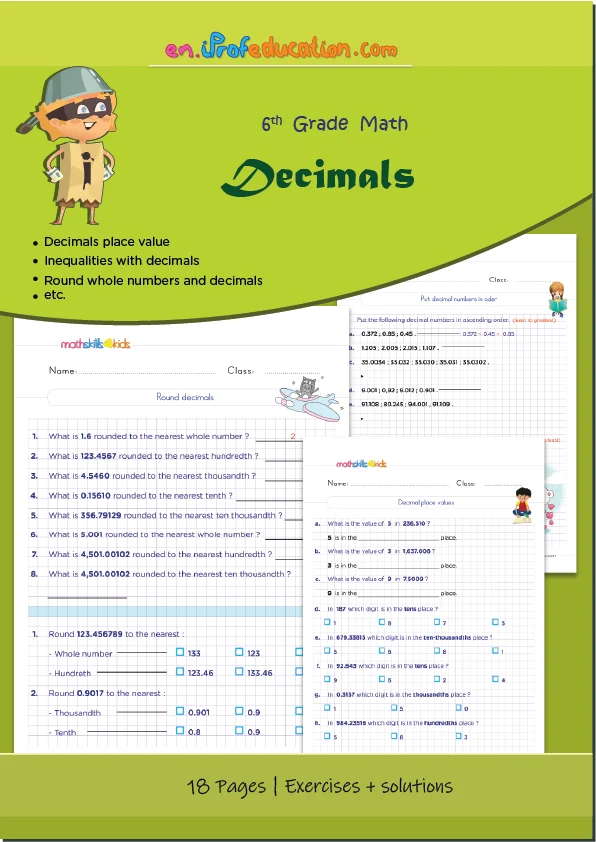
Estimating sums and differences of decimals
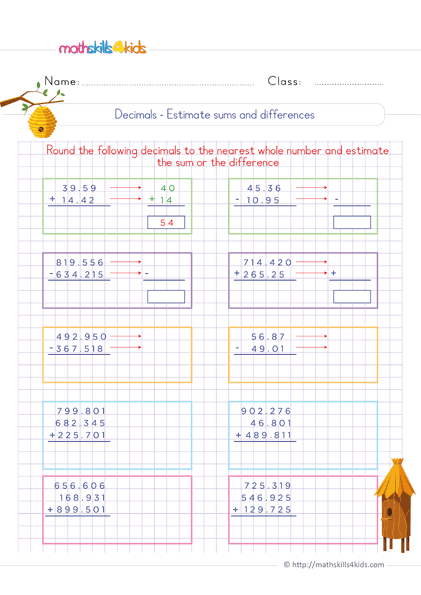
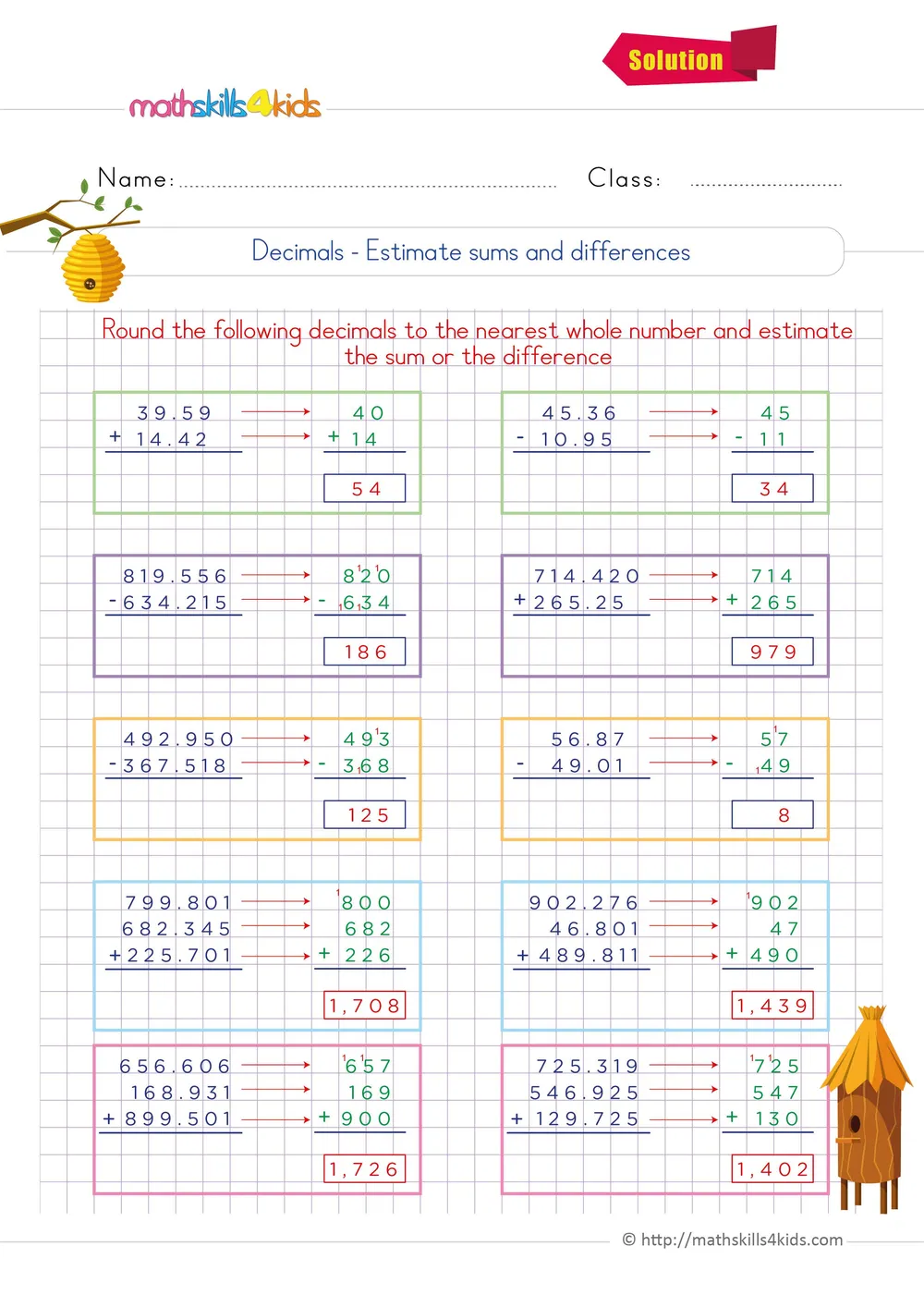
How close is close enough? When 799.801 + 682.345 + 225.701 comes out near 1,708, your child already knows the exact answer cannot be 17,078 or 170.8. That instinct grows here, as your child works on estimating decimal sums by rounding to whole numbers, then uses the same rounding for differences, across ten boxes where the first is solved as a model. Page 2 shows every rounded number and estimate, and each one is correct.
Why round before you add?
Estimating is how adults catch their own mistakes. Round each number to the nearest whole, work with the easy versions, and the exact answer must land close by.
The page rounds to the nearest whole number with the usual rule: a tenths digit of 5 or more rounds up. None of these numbers sits exactly on a half, so there is no tie to argue about. The detail worth a look is 492.950, which rounds up to 493 even though it ends in 0. In the bottom rows three numbers are rounded before adding, so 656.606 + 168.931 + 899.501 becomes 657 + 169 + 900 = 1,726, very near the exact 1,725.038. That is rounding decimals to the nearest whole number put to work.
The standards are 5.NBT.A.4 for rounding (a Grade 5 review) and 6.NS.B.3 for the operations being checked.
Place your bets on 8
Cover page 2 and start with the model in the first box. Ask, "Why did 39.59 become 40 and not 39?" If your child can say the 5 tenths pushed it up, the rest of the page is open.
The likely slip is chopping instead of rounding. On 819.556 minus 634.215, a quick pencil writes 819 minus 634 and gets 185. Ask your child to look one digit right of the ones place before writing anything.
Then turn it into a bet. Before each box, your child guesses whether the estimate will come out above or below the exact answer. For 56.87 minus 49.01 the estimate is 8, while the exact difference is 7.86. "Was your bet right?" A calculator check after the page keeps the game honest.
Round the cart before the register
A full grocery cart is the best estimating drill there is. Have your child round each price to the nearest dollar and keep a running total. At the register, compare: an estimate of $27 against a receipt of $26.84 means the plan worked.
On a road trip, round the miles on each leg of the drive and estimate the whole day before the map app says it.
How Much Is a Million? by David M. Schwartz plays with numbers too big to count, where estimating is the only way through, which is the very skill your child just practiced.
Say what they did: "You checked every answer before you even worked it out." The next sheet puts these skills on road maps, adding and subtracting decimal distances between towns.
About this 6th Grade add & subtract decimals worksheet
Download the worksheet: Estimating sums and differences of decimals
Download the PDF (opens in a new tab)Free · 2 pages · 845 KB · answer key included
🍪 Free worksheets are paid for by ads
To download for free, please accept cookies, or go Premium for an ad-free experience.
A few related activities
Maps with decimal distances
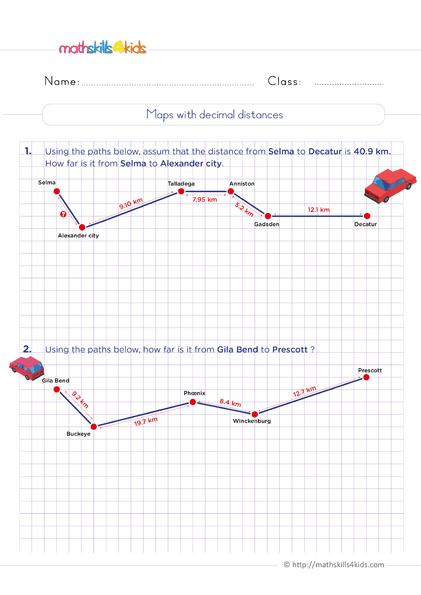
Printable PDF: 6th Grade add & subtract decimals practice, 2 pages, answer key included.
See the activity: Maps with decimal distancesAddition of decimals practice
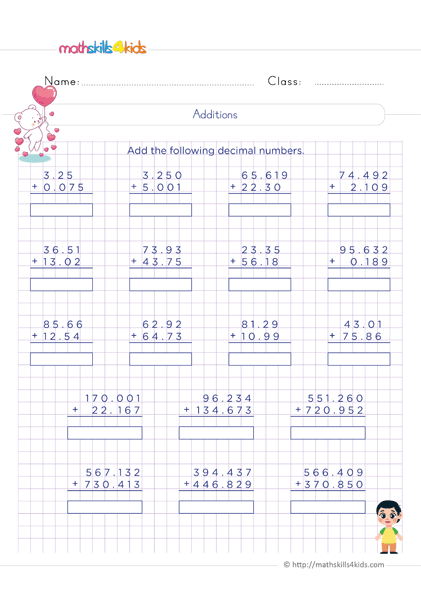
Printable PDF: 6th Grade add & subtract decimals practice, 2 pages, answer key included.
See the activity: Addition of decimals practiceSubtraction of decimals practice
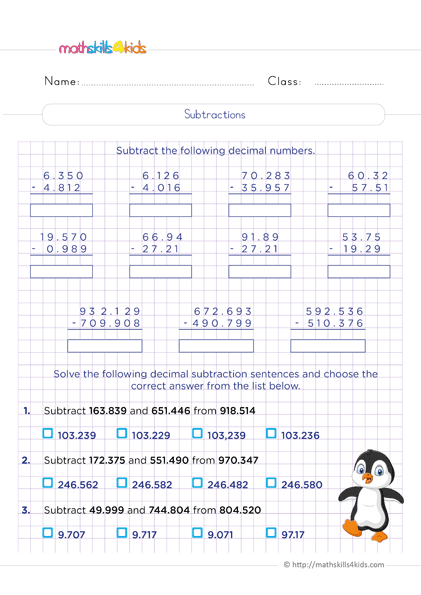
Printable PDF: 6th Grade add & subtract decimals practice, 2 pages, answer key included.
See the activity: Subtraction of decimals practiceAdding & subtracting decimals word problems
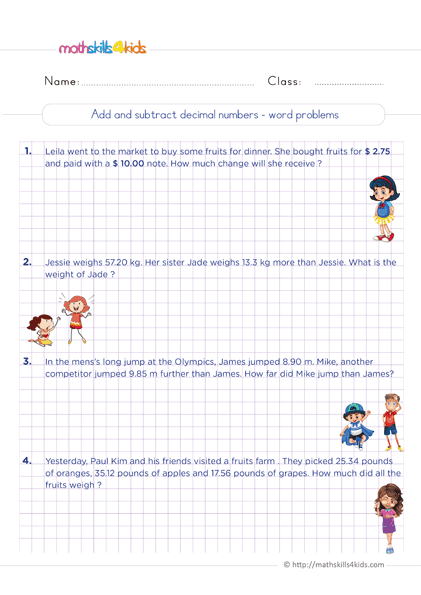
Printable PDF: 6th Grade add & subtract decimals practice, 2 pages, answer key included.
See the activity: Adding & subtracting decimals word problemsThe place value of digits in whole numbers
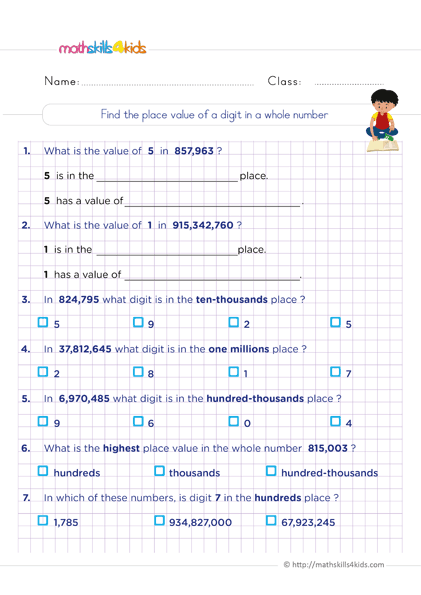
Printable PDF: 6th Grade whole numbers practice, 2 pages, answer key included.
See the activity: The place value of digits in whole numbersHow to write numbers in figures and words
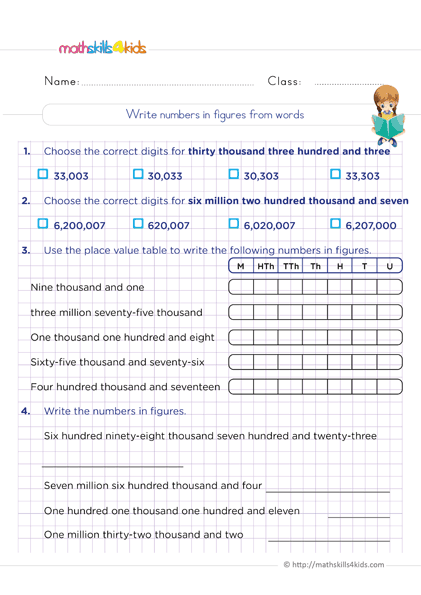
Printable PDF: 6th Grade whole numbers practice, 2 pages, answer key included.
See the activity: How to write numbers in figures and words