Subtraction of decimals practice
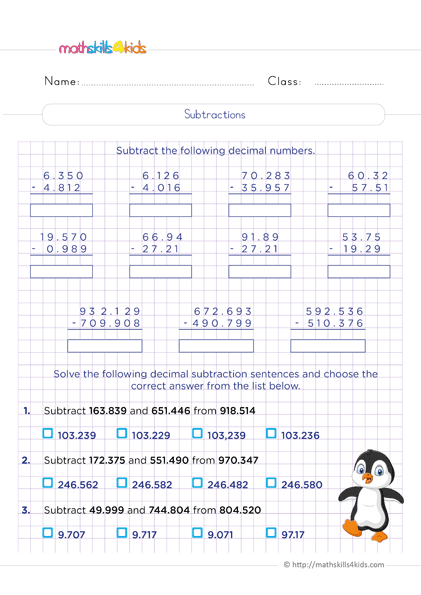
It is Tuesday night, the pencil hovers over 60.32 minus 57.51, and the zero in the ones place seems to have nothing to lend. In these columns your child practices subtracting decimals with regrouping across zeros, through eleven stacked subtractions and three sentences that take two numbers away from one, such as 918.514 minus 163.839 and 651.446. Page 2 shows every difference and ticks the right choice, and each one holds up.
A zero with nothing to lend
Borrowing works exactly as it did with whole numbers. The decimal point only decides which columns face each other. The hard part is a zero in the top number, because the borrow has to travel past it.
In 60.32 minus 57.51, the tenths need help and the ones place holds a 0, so the regroup starts in the tens: 6 tens become 5 tens and 10 ones, and one of those ones becomes 10 more tenths. The answer is 2.81. A second trap sits in 6.350 minus 4.812, where the zero in the thousandths needs a ten from the hundredths. That is borrowing in decimal subtraction at its most honest.
The Grade 6 standard here is 6.NS.B.3, which asks for fluent subtraction of multi-digit decimals with the standard algorithm.
Talk it through, one column at a time
Sit beside your child for the first row and let them talk. "I can't take 2 from 0." Good. "So who can lend?" Watch where the pencil goes next.
The likely slip is on 19.570 minus 0.989, where three columns in a row need regrouping. Many kids flip a column instead: 0 minus 9 quietly becomes 9 minus 0. Ask, "Is the top digit big enough?" before every column, not after.
In the sentences at the bottom, the wording runs backward: subtract 163.839 and 651.446 from 918.514 means start with 918.514. One choice, 103,239, uses a comma where the point belongs, so it can never be right. Let your child spot that one alone.
Change from a twenty
Next time you pay cash, let your child work out the change before the cashier does. A $20.00 bill against a $13.47 total is the same borrowing across zeros as 60.32 minus 57.51.
At home, a water bottle works too: if it holds 0.75 liters and someone drinks 0.38, how much is left? Have your child write it in columns before answering.
Math Curse by Jon Scieszka and Lane Smith follows a student who finds math problems in every minute of a school day, and it makes a good read-aloud after a page like this.
Then name the effort: "You chased every borrow to the right column." The next sheet mixes adding and subtracting in word problems about money, weight, and distance.
About this 6th Grade add & subtract decimals worksheet
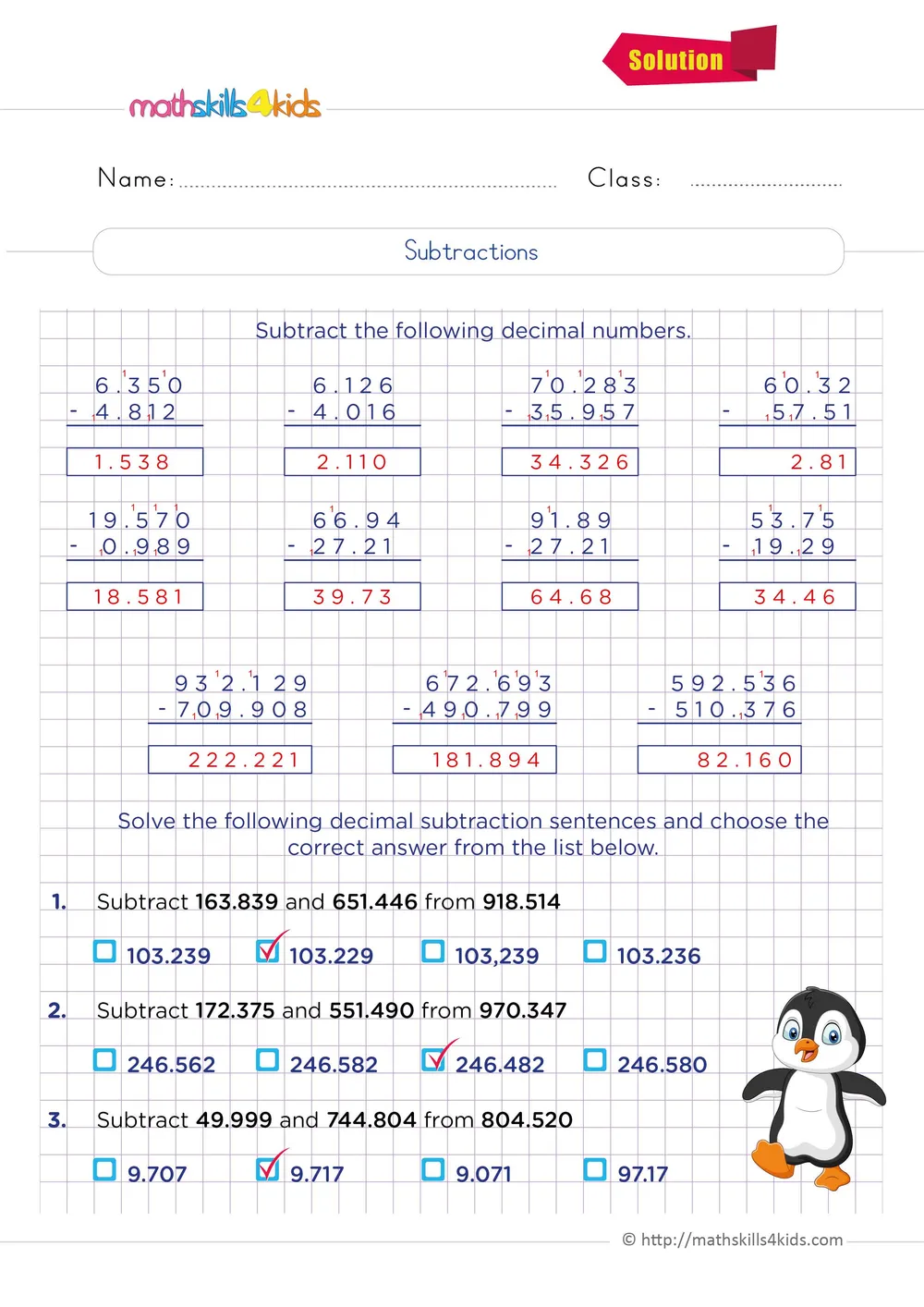
Download the worksheet: Subtraction of decimals practice
Download the PDF (opens in a new tab)Free · 2 pages · 878 KB · answer key included
🍪 Free worksheets are paid for by ads
To download for free, please accept cookies, or go Premium for an ad-free experience.
A few related activities
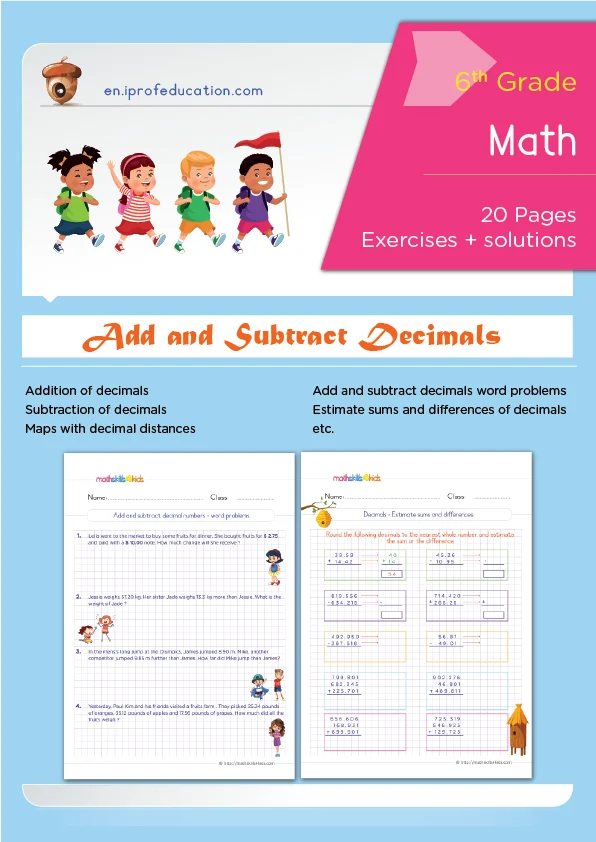
Adding & subtracting decimals word problems
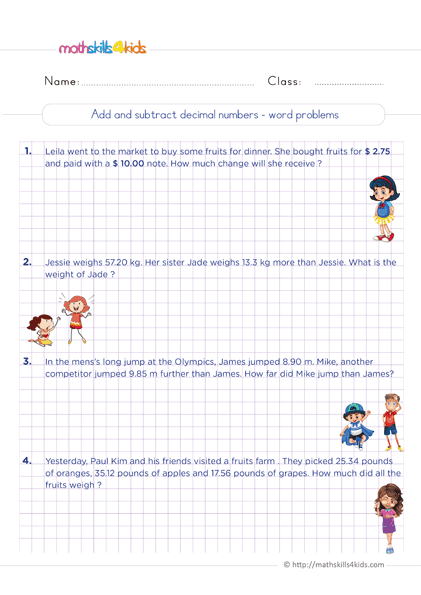
Printable PDF: 6th Grade add & subtract decimals practice, 2 pages, answer key included.
See the activity: Adding & subtracting decimals word problemsEstimating sums and differences of decimals
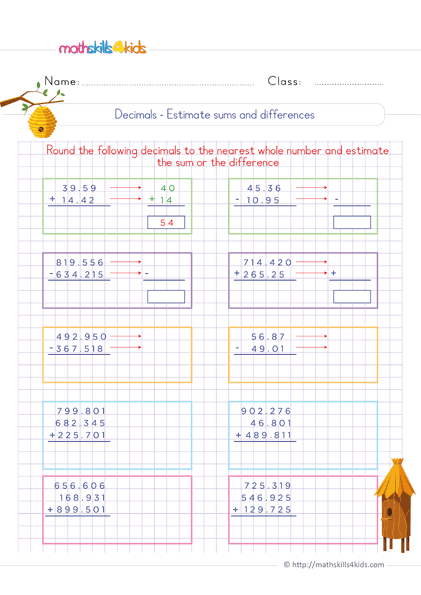
Printable PDF: 6th Grade add & subtract decimals practice, 2 pages, answer key included.
See the activity: Estimating sums and differences of decimalsMaps with decimal distances
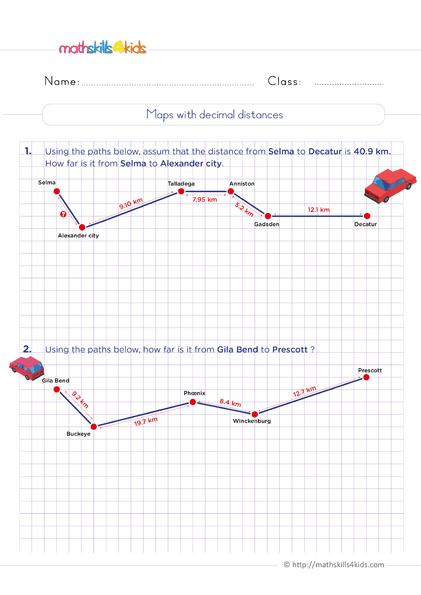
Printable PDF: 6th Grade add & subtract decimals practice, 2 pages, answer key included.
See the activity: Maps with decimal distancesAddition of decimals practice
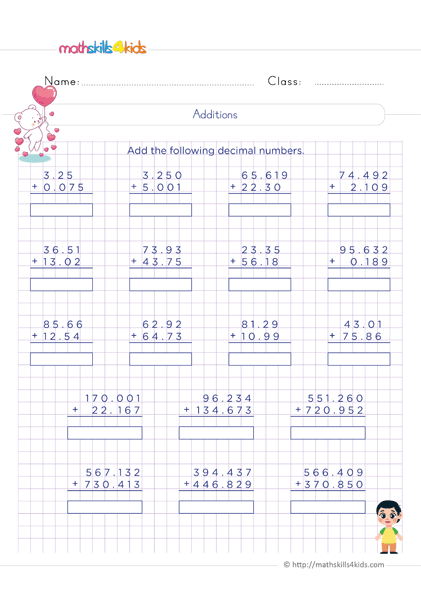
Printable PDF: 6th Grade add & subtract decimals practice, 2 pages, answer key included.
See the activity: Addition of decimals practiceThe place value of digits in whole numbers
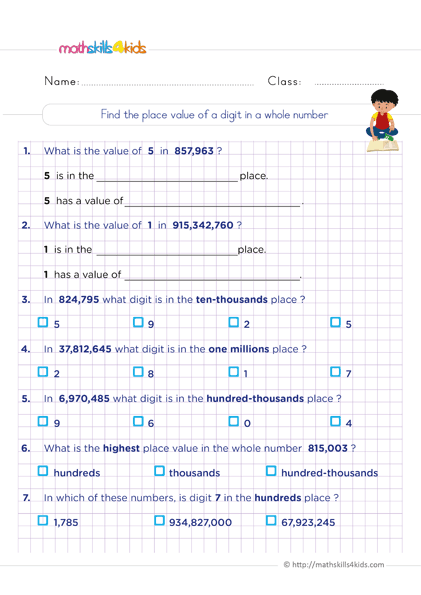
Printable PDF: 6th Grade whole numbers practice, 2 pages, answer key included.
See the activity: The place value of digits in whole numbersHow to write numbers in figures and words
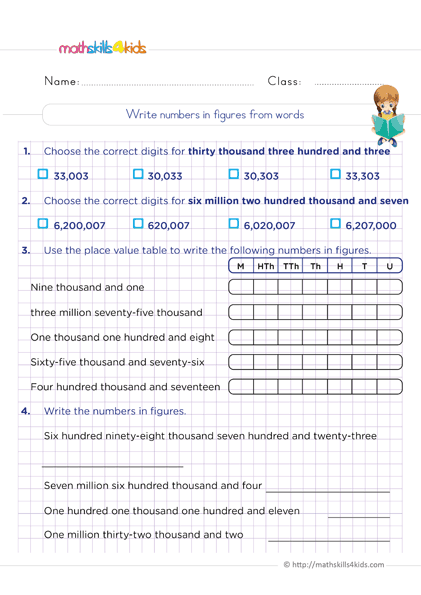
Printable PDF: 6th Grade whole numbers practice, 2 pages, answer key included.
See the activity: How to write numbers in figures and words