Inequalities with decimals
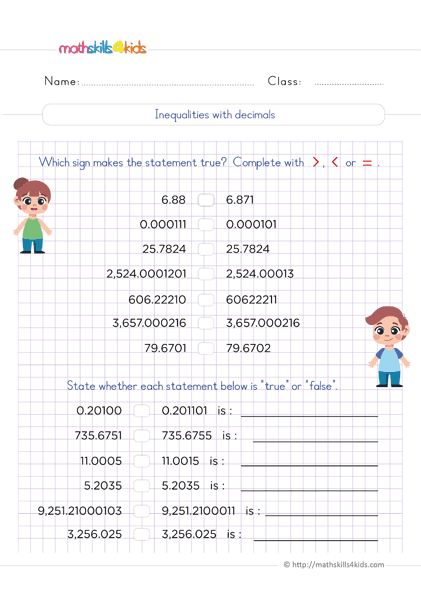
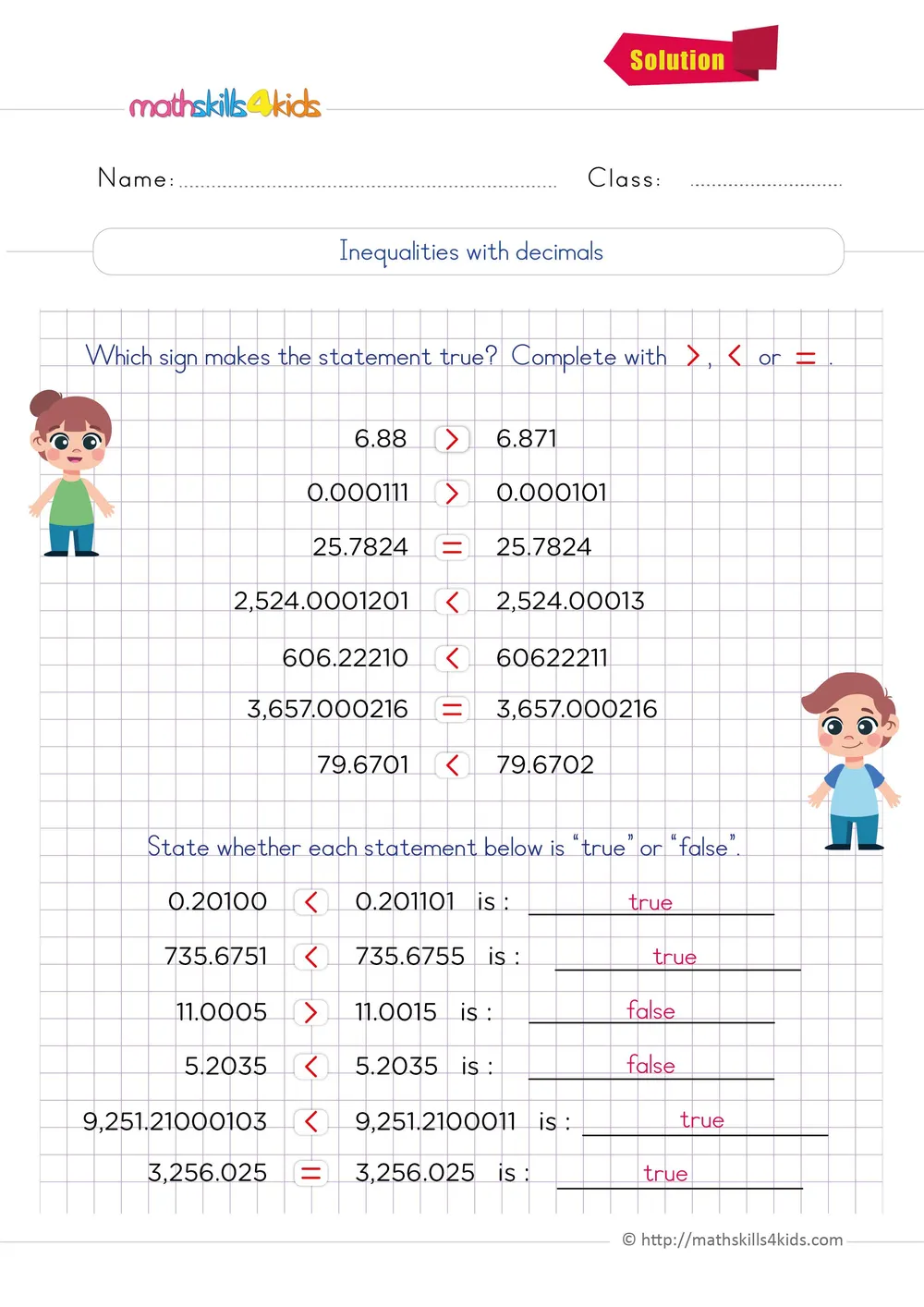
A number can have more digits and still be the smaller one, and 2,524.0001201 is the proof. Your child spends this page comparing decimals with greater than and less than signs, or an equal sign, across seven pairs, then judges six ready-made statements as true or false. Page 2 fills in every sign and verdict, and one thing on page 1 needs fixing before your child starts.
More digits, smaller number?
When two decimals are compared, the digits are matched place by place, not counted. 2,524.0001201 and 2,524.00013 agree through the thousandths, and the ten-thousandths place holds a 1 in both. The hundred-thousandths place decides, 2 against 3, so the longer number loses.
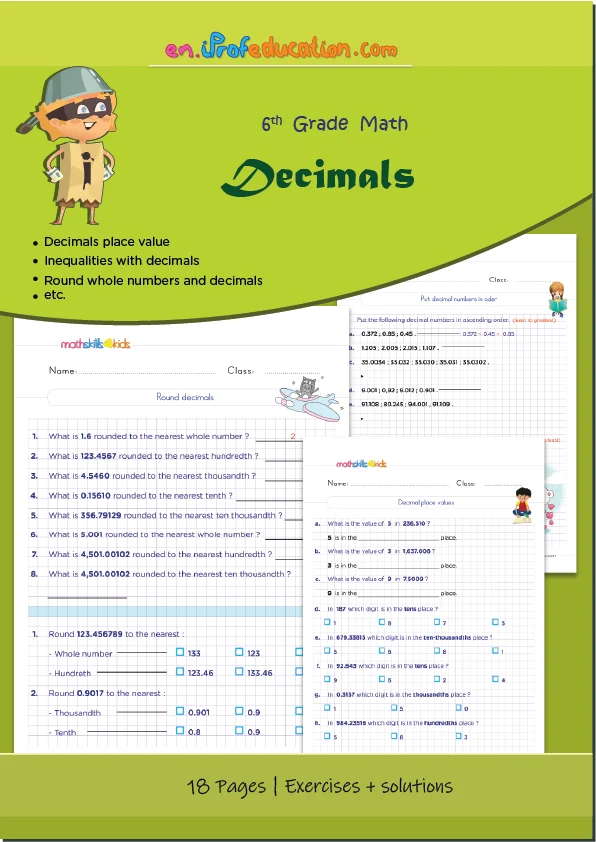
The page keeps the whole-number part identical in most pairs, so your child has to read past the decimal point every time, sometimes six places deep, as in 0.000111 against 0.000101. Two pairs are equal on purpose, a good test of reading decimals digit by digit.
The standard is 5.NBT.A.3: compare two decimals to thousandths with the greater-than, equal and less-than symbols. The longer pairs stretch it past thousandths.
Fill in the missing signs first
A note for parents: in the true-or-false part of page 1, the boxes between the numbers are empty, so the statements cannot be judged. Copy the signs from page 2 first: 0.20100 < 0.201101, 735.6751 < 735.6755, 11.0005 > 11.0015, 5.2035 < 5.2035, 9,251.21000103 < 9,251.2100011, and an equal sign for 3,256.025. In the top part, 60622211 is missing its point; read it as 606.22211.
Then ask, "Where do these two numbers first disagree?" The likely slip is 9,251.21000103, which looks bigger because it is longer. Ask your child to slide a finger under each place until the digits differ.
For 5.2035 < 5.2035, ask, "Can a number be less than itself?"
Hundredths of a second decide the race
Swim and track results are posted to hundredths of a second, and a race can be won by 0.01. Look up a sport result with your child and compare two times digit by digit, out loud. At the store, compare two unit prices on the shelf labels, such as 0.125 and 0.13 dollars per ounce, the same way.
How Much Is a Million? by David M. Schwartz stretches place value until a child can feel how big a million is. After reading it, ask which is smaller, a millionth or a thousandth.
Praise the effort: "You checked every place before you picked a sign." The next sheet, rounding decimals, uses the same place-by-place reading to decide where a number lands.
About this 6th Grade decimals worksheet
Download the worksheet: Inequalities with decimals
Download the PDF (opens in a new tab)Free · 2 pages · 802 KB · answer key included
🍪 Free worksheets are paid for by ads
To download for free, please accept cookies, or go Premium for an ad-free experience.
A few related activities
Rounding decimals
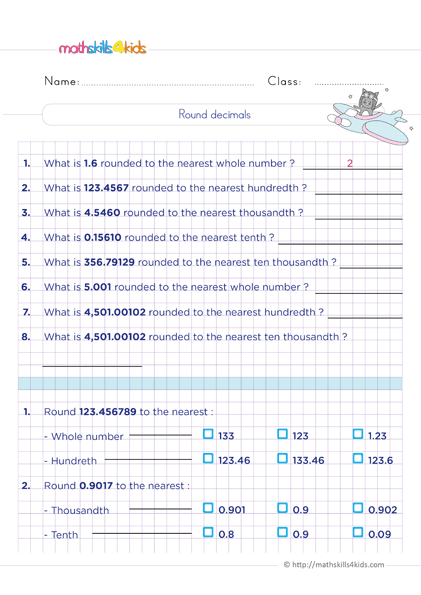
Printable PDF: 6th Grade decimals practice, 2 pages, answer key included.
See the activity: Rounding decimalsHow to place decimals on the number line practice
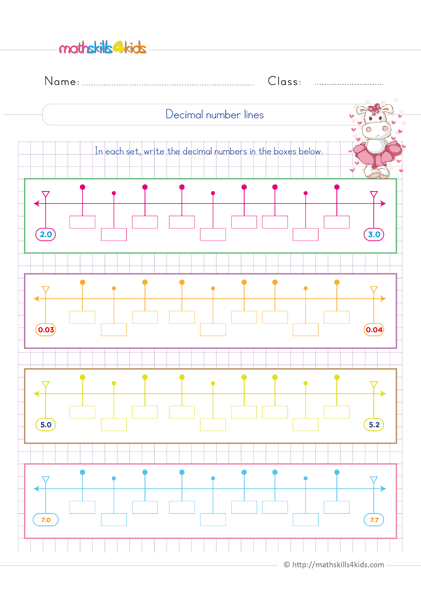
Printable PDF: 6th Grade decimals practice, 2 pages, answer key included.
See the activity: How to place decimals on the number line practiceWhich decimal number is illustrated practice
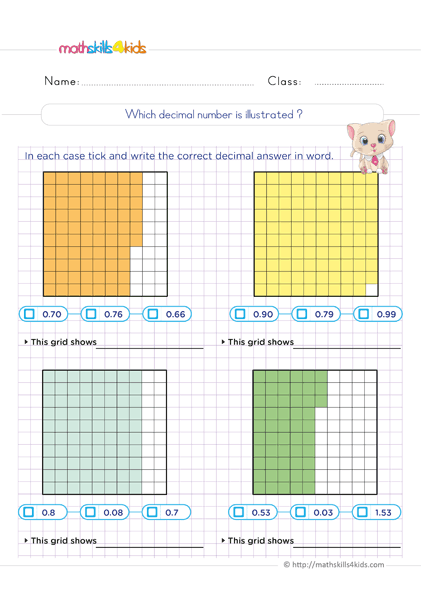
Printable PDF: 6th Grade decimals practice, 1 page.
See the activity: Which decimal number is illustrated practiceReading and writing decimals in words practice
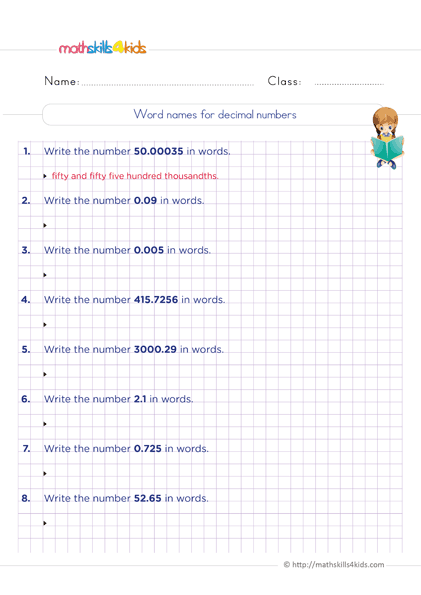
Printable PDF: 6th Grade decimals practice, 2 pages, answer key included.
See the activity: Reading and writing decimals in words practicePutting decimal numbers in orders
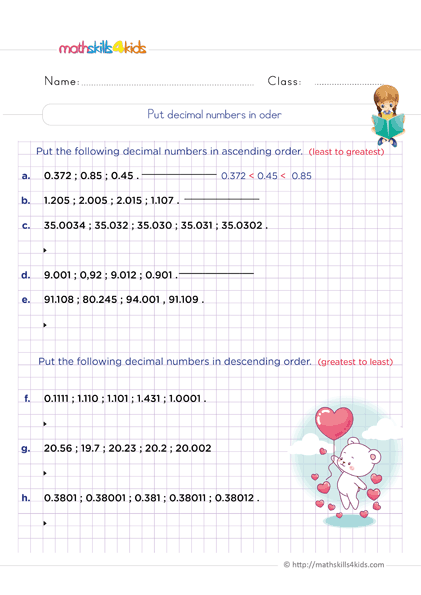
Printable PDF: 6th Grade decimals practice, 2 pages, answer key included.
See the activity: Putting decimal numbers in ordersThe place value of digits in whole numbers
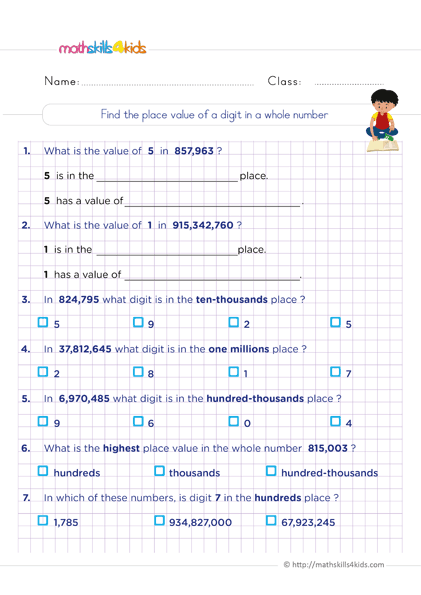
Printable PDF: 6th Grade whole numbers practice, 2 pages, answer key included.
See the activity: The place value of digits in whole numbers