Dividing decimals by power of ten
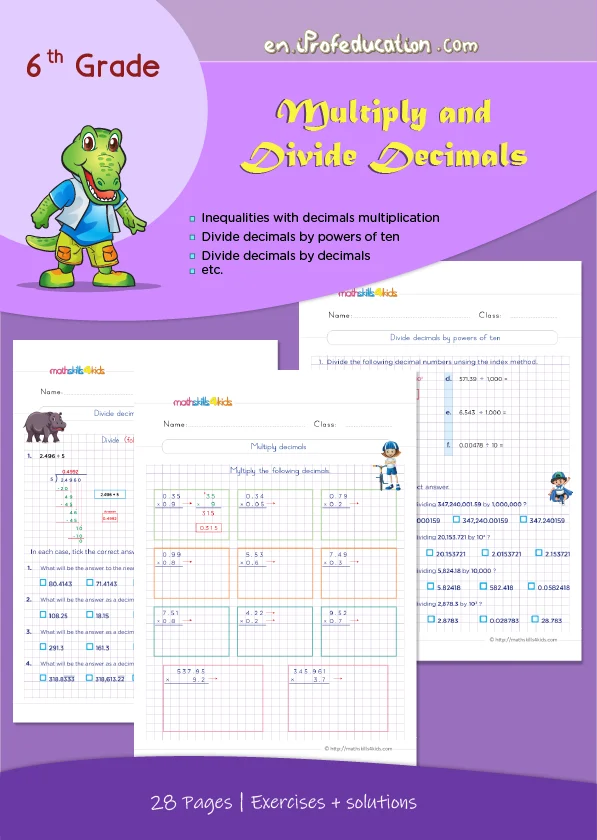
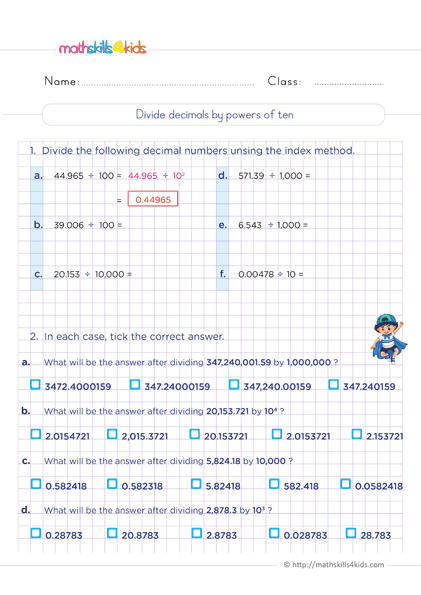
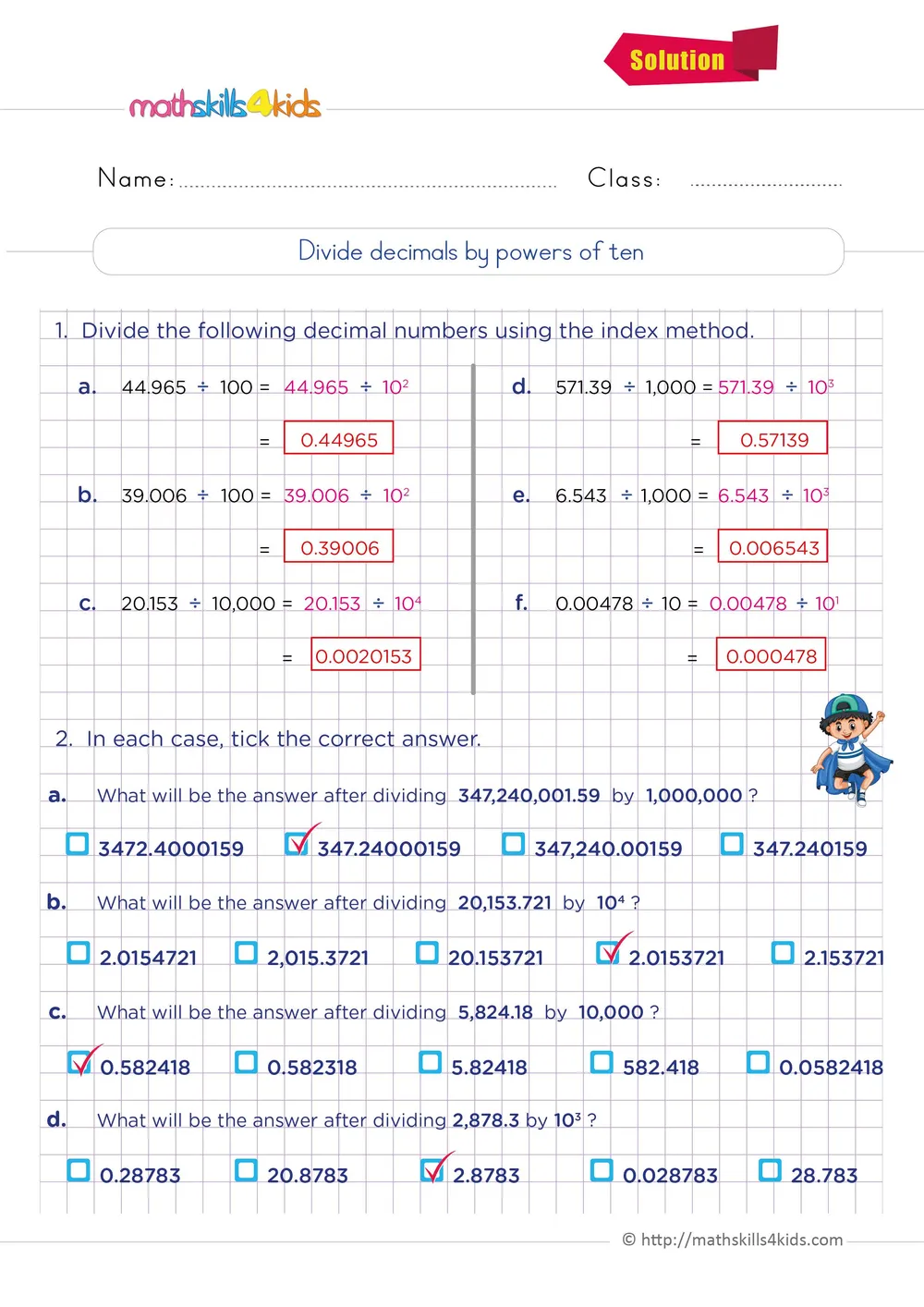
Here is a discovery most kids make with relief: divide by 100 and the digits stay exactly the same, only the decimal point moves. The page builds on it through dividing decimals by powers of ten with exponents, writing 44.965 ÷ 100 as 44.965 ÷ 10² and moving the point two places left. Six divisions come first, then four multiple-choice questions with divisors up to 1,000,000. Page 2 holds the answer key.
One zero, one jump
Our number system is built on tens, so dividing by 10 makes every digit worth one place less. On paper that looks like the decimal point moving one place left for each zero, or for each unit of the exponent.
The page asks your child to write the divisor as a power first: 100 is 10², 1,000 is 10³. The exponent then says how many jumps the point makes. Item f, 0.00478 ÷ 10, checks that the rule still works for a number that already starts with zeros, and question a pushes it to six jumps.
The standards are 5.NBT.A.2, the Grade 5 pattern of the decimal point when dividing by a power of 10, and 6.NS.B.3.
Count the hops out loud
Put a finger on the point in 20.153 and ask your child, "Divisor 10,000. How many zeros?" Four. Then hop the finger four places left, writing zeros where the digits run out.
That is where the likely slip happens. In item c, many kids stop at 0.20153, two hops short, because the digits seem to end there. Ask, "Did you hop four times?" and let them count again.
In the multiple-choice part, question b offers answers that share almost the same digits, 2.0153721 and 20.153721 among them. Your child can sort them by estimating the size of a quotient first: 20,153 ÷ 10,000 should be about 2.
Meters, grams, and dimes
Measure a table with a metric tape: 1,250 millimeters is 1.25 meters, a division by 1,000 your child can say out loud. Then read a food label in grams and turn it into kilograms the same way.
With money, ask what one tenth of a $57.20 grocery bill is. The digits stay, the point moves, and $5.72 appears.
Millions to Measure by David M. Schwartz walks through the metric system with Marvelosissimo the magician, and nearly every conversion in it is a power of ten.
Let your child hear what they did well: "You let the exponent count the jumps." The next sheet turns things around and divides whole numbers by decimals, where answers grow.
About this 6th Grade multiply & divide decimals worksheet
Download the worksheet: Dividing decimals by power of ten
Download the PDF (opens in a new tab)Free · 2 pages · 909 KB · answer key included
🍪 Free worksheets are paid for by ads
To download for free, please accept cookies, or go Premium for an ad-free experience.
A few related activities
How to divide with decimal quotient
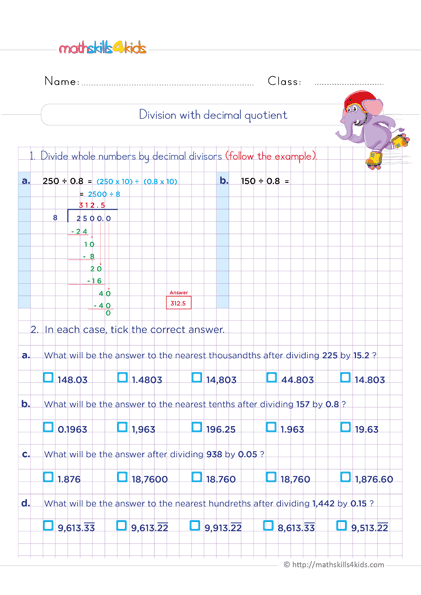
Printable PDF: 6th Grade multiply & divide decimals practice, 2 pages, answer key included.
See the activity: How to divide with decimal quotientSolving inequalities with decimals
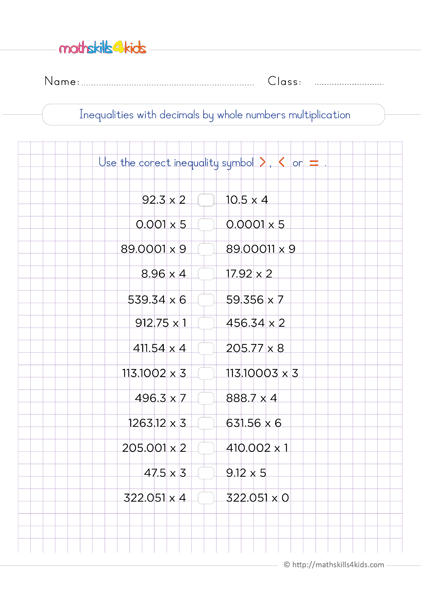
Printable PDF: 6th Grade multiply & divide decimals practice, 2 pages, answer key included.
See the activity: Solving inequalities with decimalsMultiplying decimals
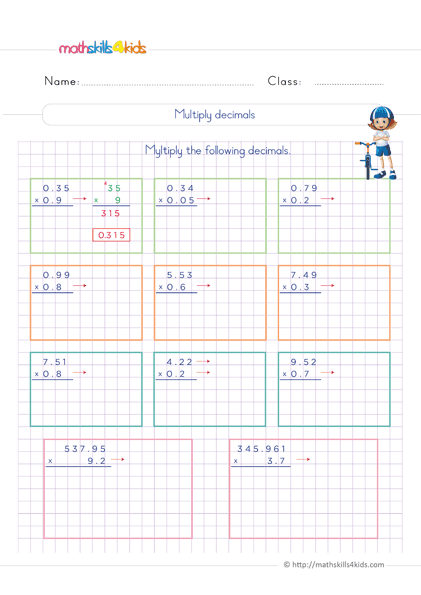
Printable PDF: 6th Grade multiply & divide decimals practice, 2 pages, answer key included.
See the activity: Multiplying decimalsDivide with decimal quotient
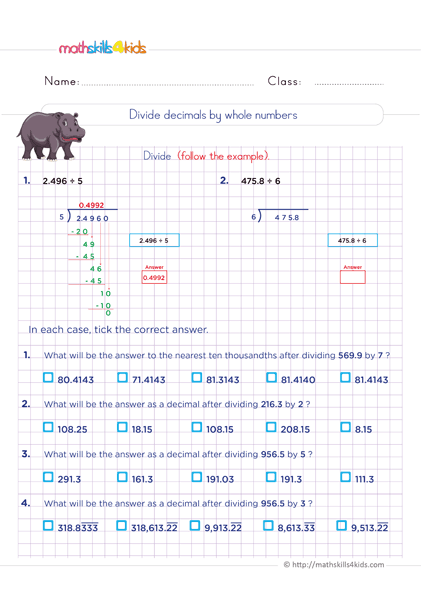
Printable PDF: 6th Grade multiply & divide decimals practice, 2 pages, answer key included.
See the activity: Divide with decimal quotientDivide decimals by whole numbers word problems
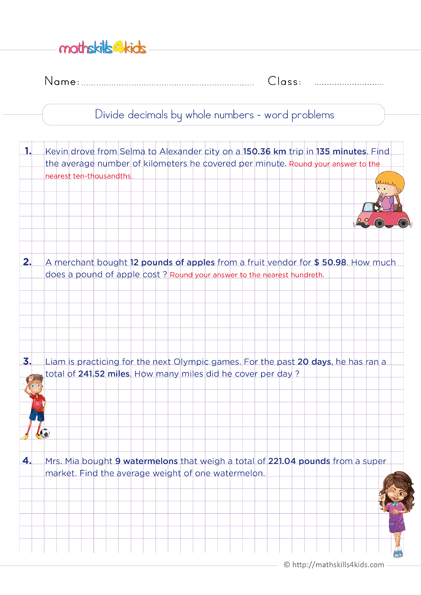
Printable PDF: 6th Grade multiply & divide decimals practice, 2 pages, answer key included.
See the activity: Divide decimals by whole numbers word problemsThe place value of digits in whole numbers
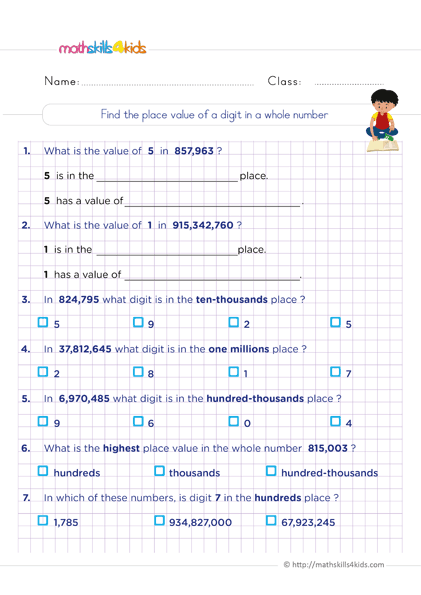
Printable PDF: 6th Grade whole numbers practice, 2 pages, answer key included.
See the activity: The place value of digits in whole numbers