Multiplying decimals
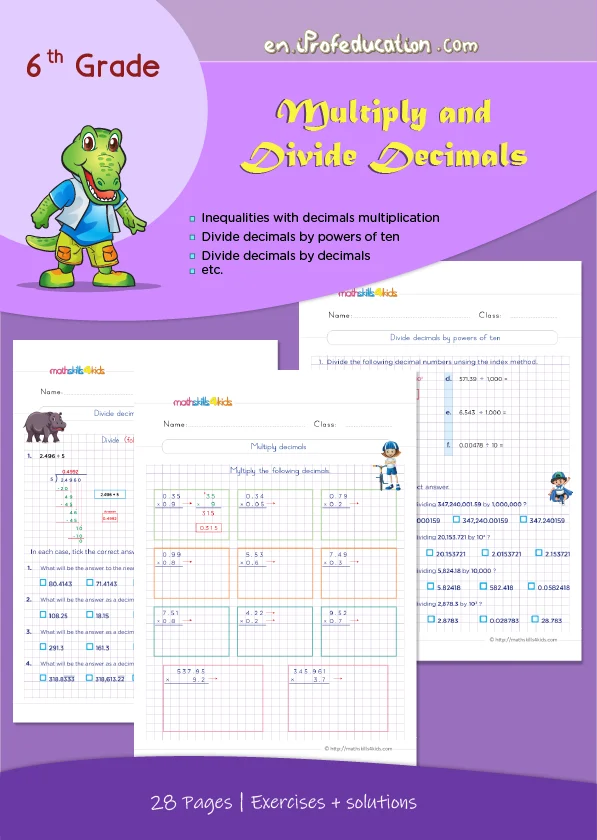
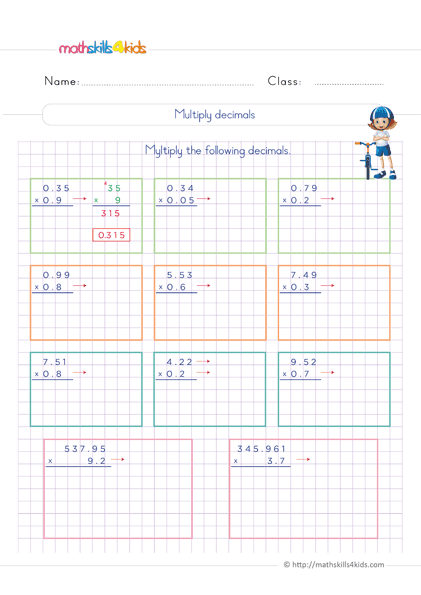
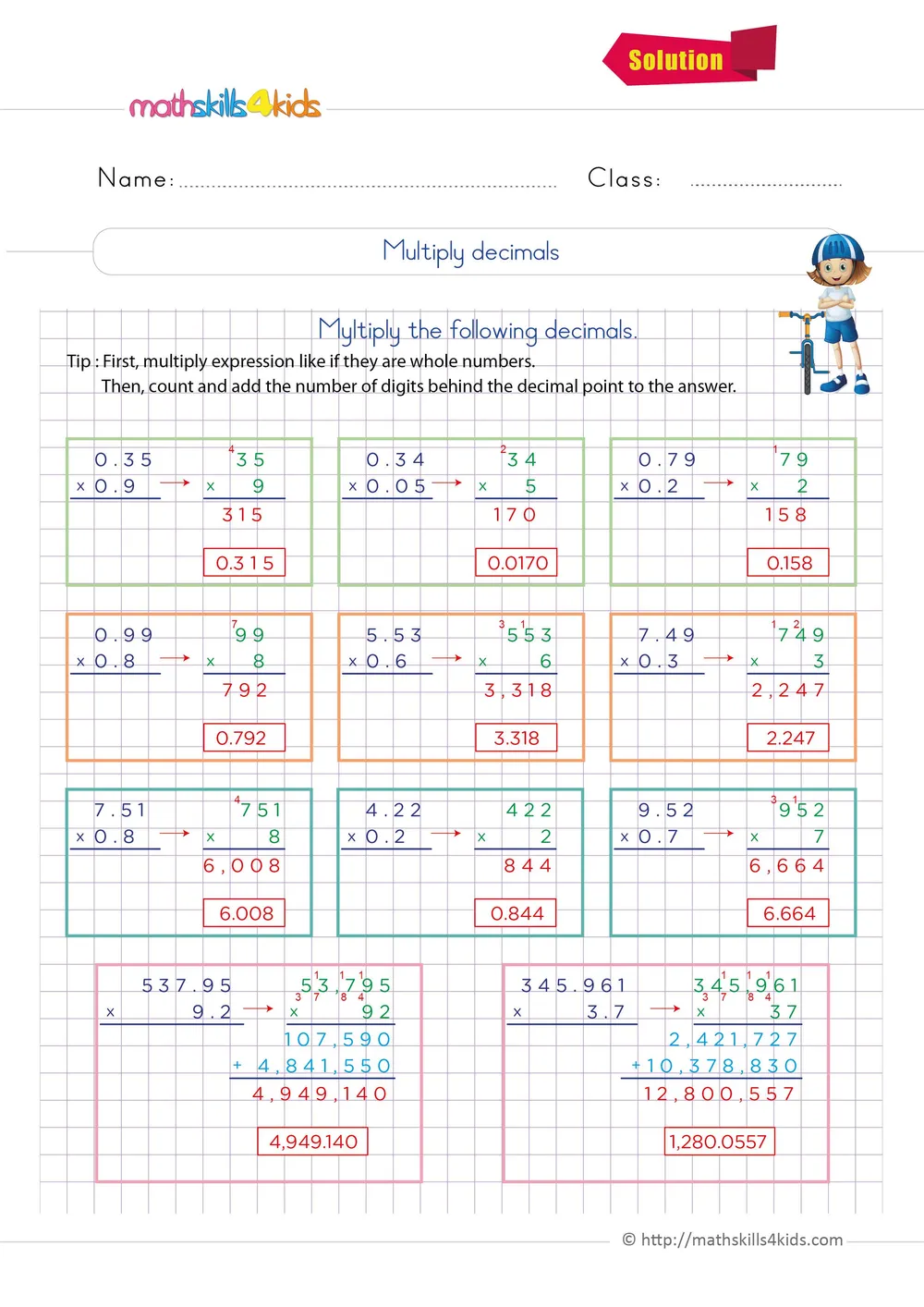
Guess first: does 0.35 × 0.9 come out bigger or smaller than 0.35? Most kids say bigger, because multiplying has always made numbers grow. The page proves otherwise. After one worked example, your child tackles ten products by multiplying decimals by counting decimal places: multiply as if the numbers were whole, count the digits behind each point, and set the point in the answer. Page 2 shows every column and the answer key.
Why the answer gets smaller
Multiplying by a decimal less than 1 means taking a part of a number, so 0.35 × 0.9 lands just under 0.35. Seeing that before computing gives your child a way to check every answer.
The page leans on one routine, shown in the worked example: multiply 35 × 9 as whole numbers to get 315, then count the decimal places in both factors, two plus one, and place the point so the answer has three: 0.315. The last two boxes stretch the same routine to long multiplication with decimals, 537.95 × 9.2 and 345.961 × 3.7.
The standard is 6.NS.B.3, fluent multiplication of multi-digit decimals with the standard algorithm, with 5.NBT.B.7 as Grade 5 review.
The zero hiding in 0.0170
Start with the second box. "How many decimal places in 0.34? In 0.05?" Let your child count out loud, two and two, before multiplying 34 × 5.
This is where the likely slip happens. The whole-number product is 170, and many kids write 0.170 because they see only three digits. Ask, "How many digits must sit behind the point?" and wait. The answer page shows 0.0170, the same value as 0.017.
In box 6, 7.49 × 0.3, have them estimate first: "About 7 times a third, so near 2." Then 2.247 makes sense, and so does the habit of checking size before trusting digits.
Dinner math with a price tag
At the deli counter, read the price per pound and the weight on the label, say 0.6 pounds of cheese at $5.53 a pound. Ask your child to estimate, multiply, and compare with the printed total. It is box 5 on a sticker.
In the kitchen, halve a recipe: 0.75 cup times 0.5 is a small decimal product your child can measure with real cups.
For a story to share, Spaghetti and Meatballs for All! by Marilyn Burns turns tables and seats into area, the same rectangle picture behind a product like 0.9 × 0.35.
Name what they did: "You counted the places before trusting the point." The next sheet flips the operation and divides decimals by whole numbers with long division.
About this 6th Grade multiply & divide decimals worksheet
Download the worksheet: Multiplying decimals
Download the PDF (opens in a new tab)Free · 2 pages · 787 KB · answer key included
🍪 Free worksheets are paid for by ads
To download for free, please accept cookies, or go Premium for an ad-free experience.
A few related activities
Divide with decimal quotient
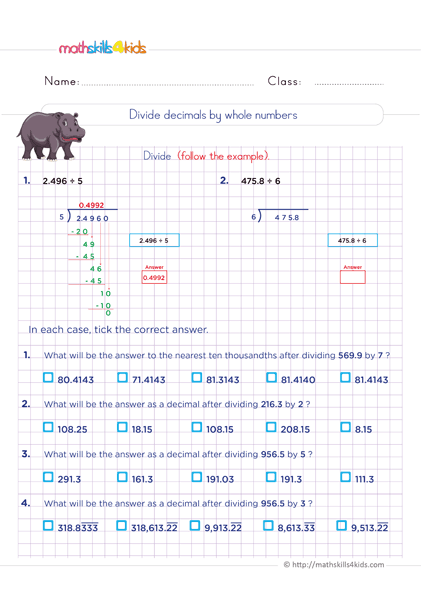
Printable PDF: 6th Grade multiply & divide decimals practice, 2 pages, answer key included.
See the activity: Divide with decimal quotientDivide decimals by whole numbers word problems
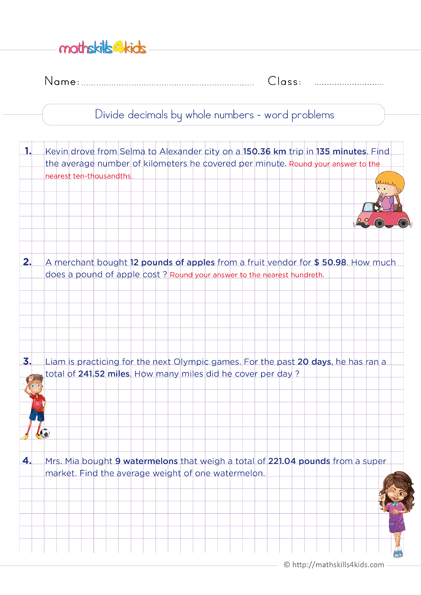
Printable PDF: 6th Grade multiply & divide decimals practice, 2 pages, answer key included.
See the activity: Divide decimals by whole numbers word problemsDividing decimals by power of ten
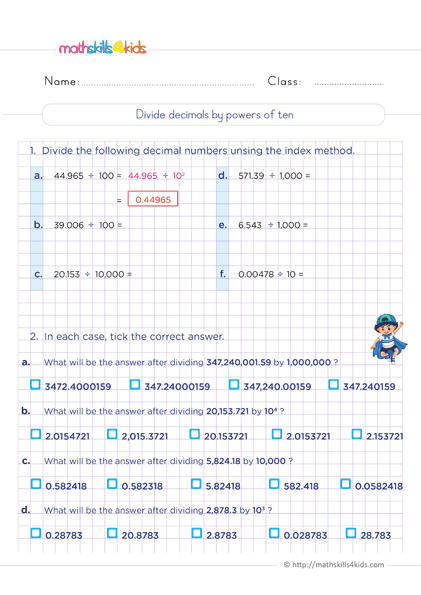
Printable PDF: 6th Grade multiply & divide decimals practice, 2 pages, answer key included.
See the activity: Dividing decimals by power of tenHow to divide with decimal quotient
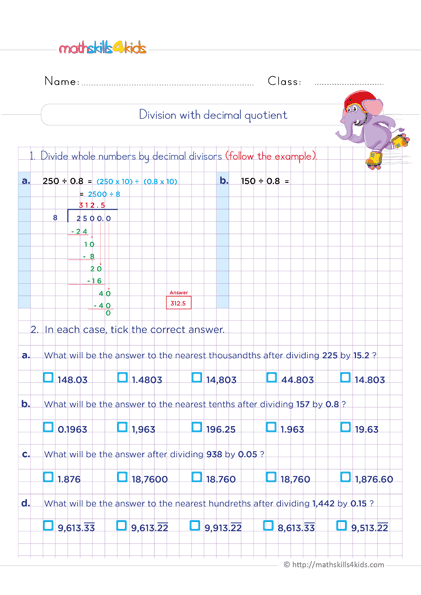
Printable PDF: 6th Grade multiply & divide decimals practice, 2 pages, answer key included.
See the activity: How to divide with decimal quotientSolving inequalities with decimals
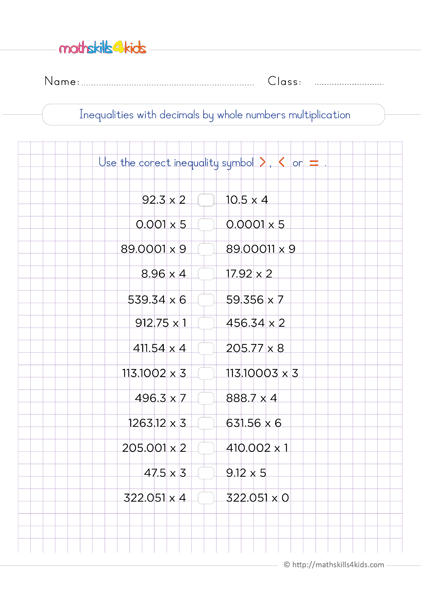
Printable PDF: 6th Grade multiply & divide decimals practice, 2 pages, answer key included.
See the activity: Solving inequalities with decimalsThe place value of digits in whole numbers
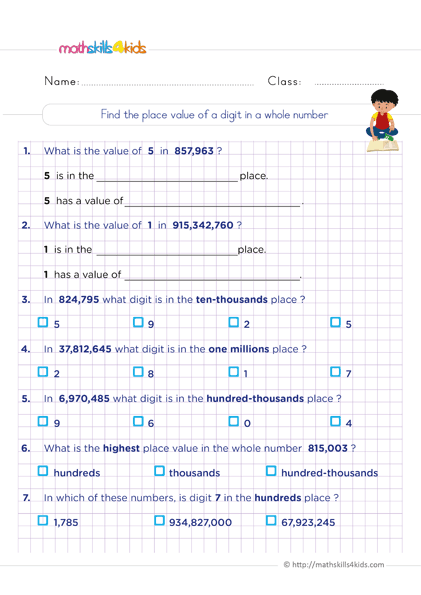
Printable PDF: 6th Grade whole numbers practice, 2 pages, answer key included.
See the activity: The place value of digits in whole numbers