Multiplying two fractions using models
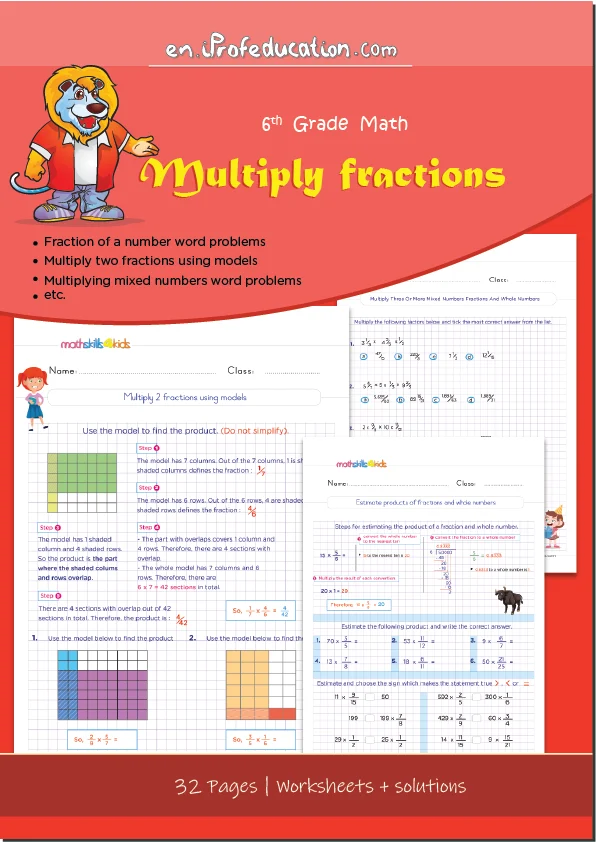
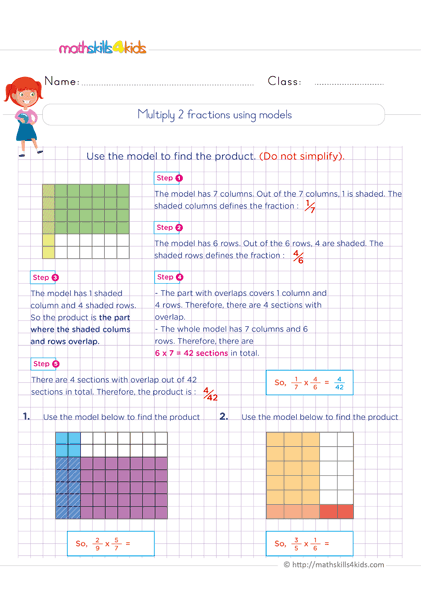
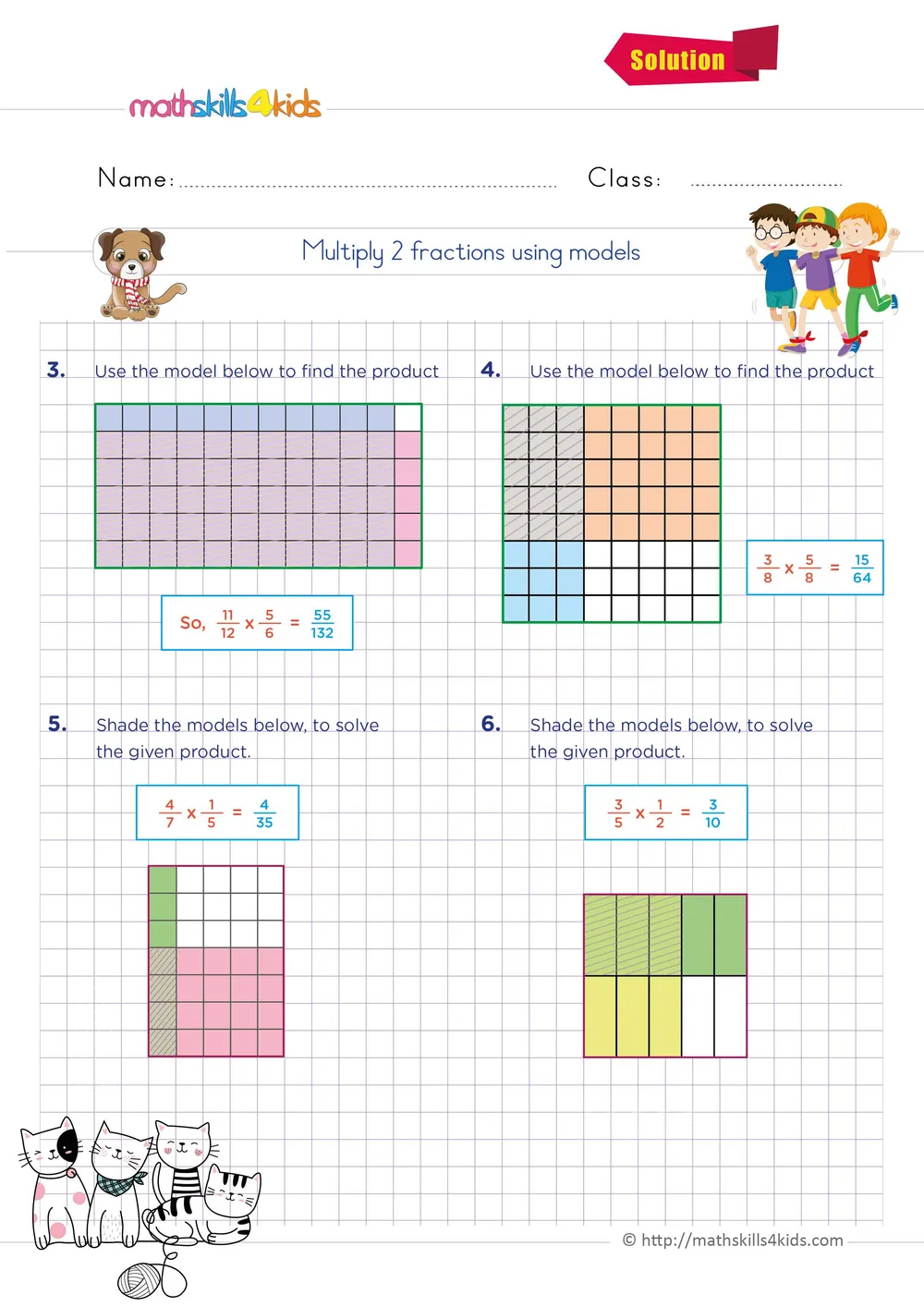
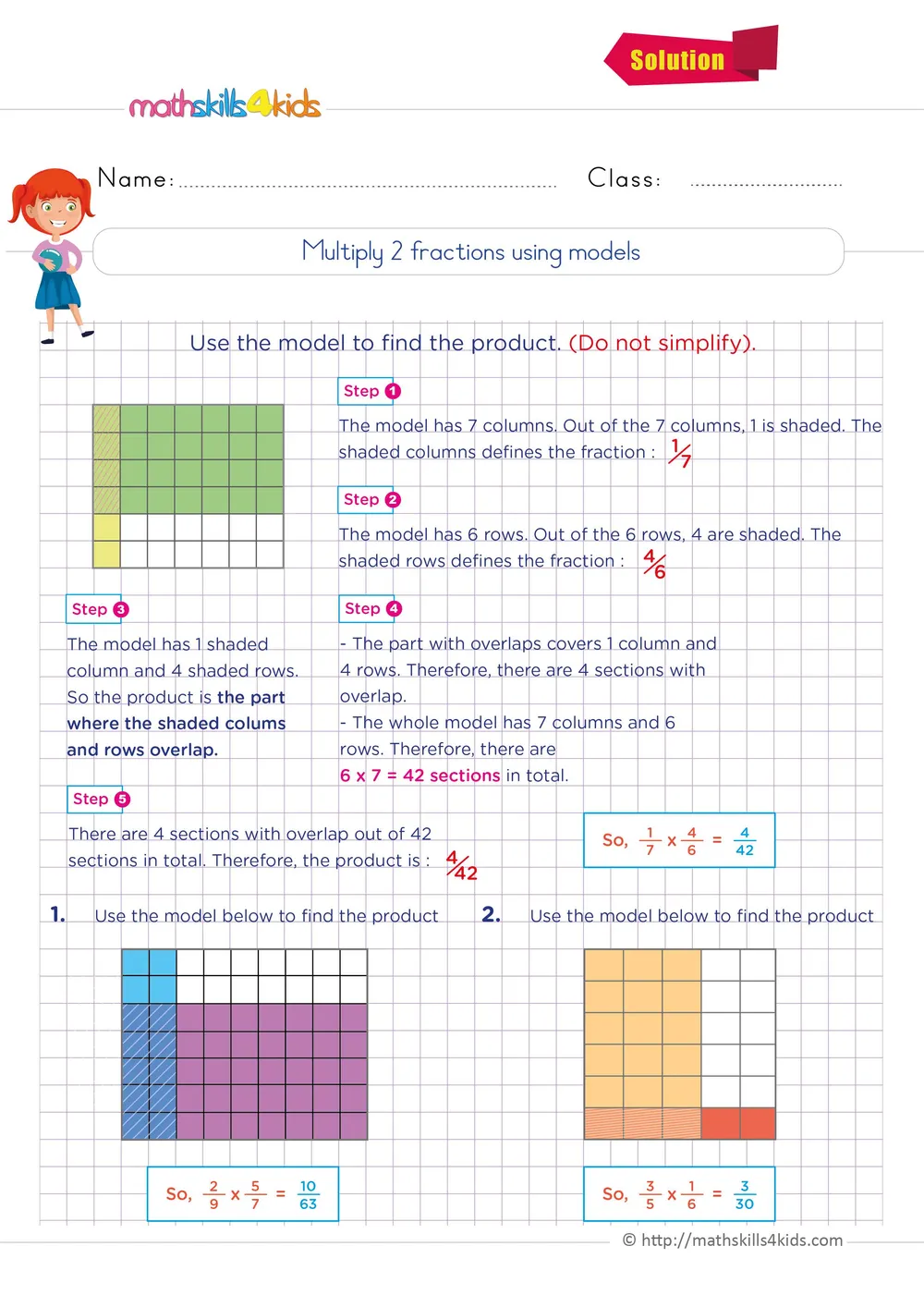
A rectangle of 42 squares sits on the table, one column shaded yellow and four rows shaded green, and your child counts the 4 squares where the colors overlap. That overlap is the product, 1/7 × 4/6 = 4/42, and the page builds multiplying fractions with area models from there: read four ready-made grids, then draw and shade two of your own. Two of the four pages are answer pages, so every count can be checked.
Where do the colors cross?
An area model turns a product of fractions into a count. Columns show the first fraction, rows show the second, and the cells shaded twice are the answer, over the total number of cells. The page spells this out in five steps on 1/7 × 4/6: 4 overlapping cells out of 6 × 7 = 42.
It also says do not simplify, on purpose. Count, do not compute. Keeping 4/42 instead of 2/21 lets the numerator stay a number your child can point to.
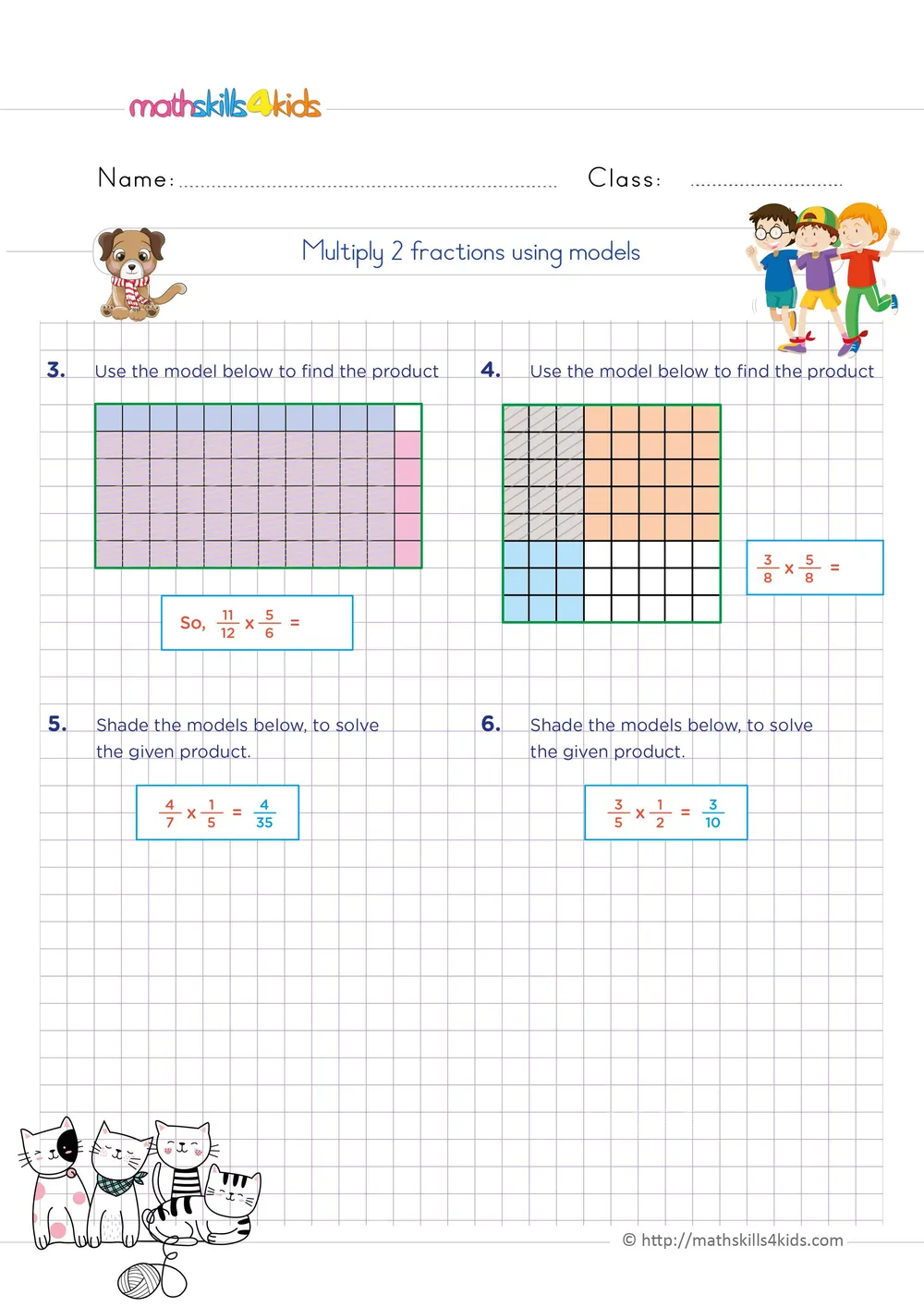
Later grids get bigger, 12 by 6 and 8 by 8, so counting gives way to multiplying rows by columns. The standard is 5.NF.B.4.b: finding area by tiling and showing it matches the product of the side lengths.
72 cells, not 132
Point at problem 3 and ask, "How many columns? How many rows?" Count them. Twelve and six make 72 cells, and 55 of them carry both colors.
One correction for you: the answer key prints 55/132 for problem 3. The model has 72 cells, so the product is 55/72.
The pages are also out of order in the file. The first sheet holds the example with problems 1 and 2, the last sheet holds problems 3 to 6, and the two middle sheets are answers, so print the first and last for your child. Problems 5 and 6 show the product but no grid: your child draws a 5-by-7 rectangle and a 5-by-2 rectangle, then shades them.
Graph paper at the party table
Graph paper turns any recipe into an area model. Half of 3/4 cup of milk: draw 4 columns and 2 rows, shade 3 columns and 1 row, and your child counts 3 of 8 cells before pouring 3/8 cup.
In the garden, a bed that is 2/3 planted, with half of that in tomatoes, makes a model to sketch in the dirt. What fraction of the bed holds tomatoes? One third.
Spaghetti and Meatballs for All! by Marilyn Burns pushes square tables together for a family reunion, a friendly way into grids and area.
Let your child hear what counted: "You found the overlap before you counted it." Word problems with fraction multiplication come next.
About this 6th Grade multiply fractions worksheet
Download the worksheet: Multiplying two fractions using models
Download the PDF (opens in a new tab)Free · 4 pages · 1.7 MB · answer key included
🍪 Free worksheets are paid for by ads
To download for free, please accept cookies, or go Premium for an ad-free experience.
A few related activities
Multiplication of fractions word problems
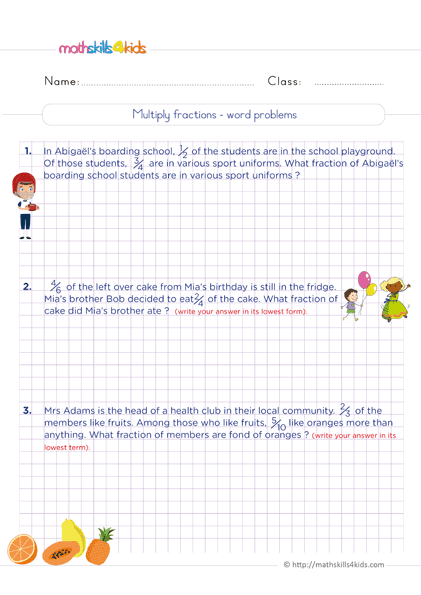
Printable PDF: 6th Grade multiply fractions practice, 2 pages, answer key included.
See the activity: Multiplication of fractions word problemsMultiply three or more fractions and whole numbers
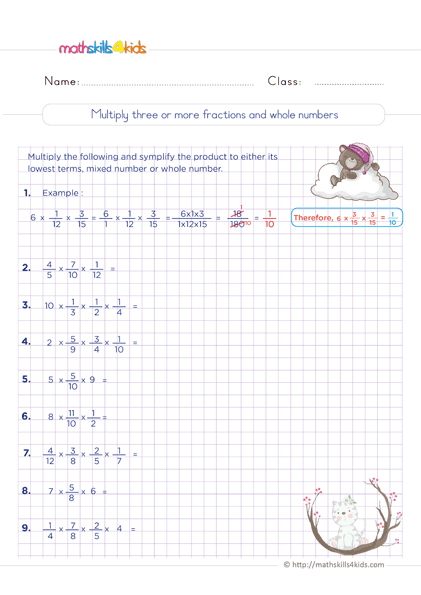
Printable PDF: 6th Grade multiply fractions practice, 2 pages, answer key included.
See the activity: Multiply three or more fractions and whole numbersFractions of whole number exercises
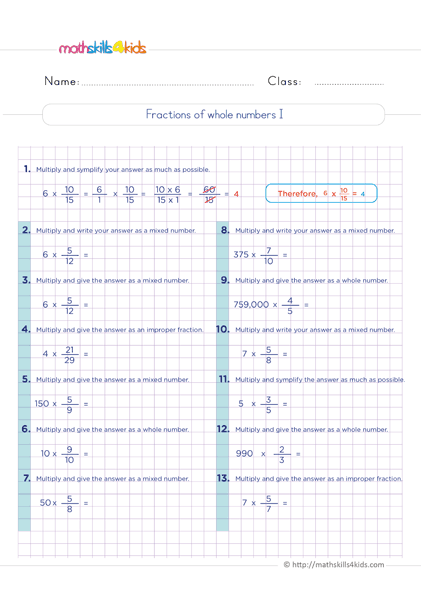
Printable PDF: 6th Grade multiply fractions practice, 2 pages, answer key included.
See the activity: Fractions of whole number exercisesFinding fractions of whole numbers
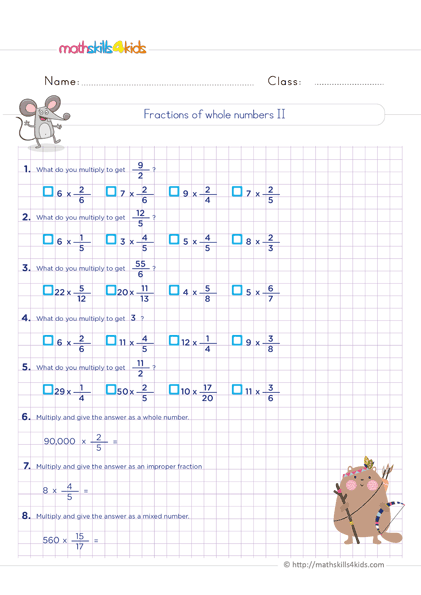
Printable PDF: 6th Grade multiply fractions practice, 2 pages, answer key included.
See the activity: Finding fractions of whole numbersEstimating products of fractions & whole numbers
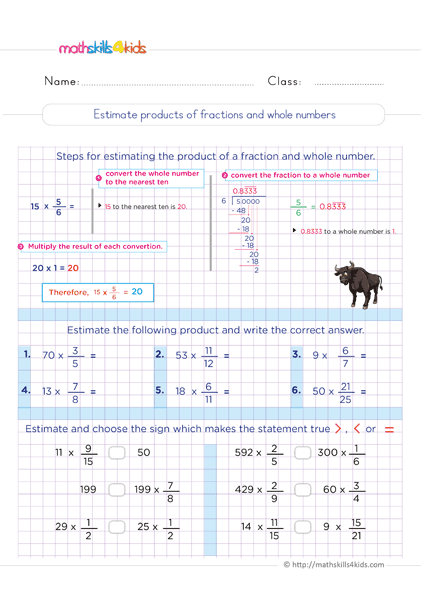
Printable PDF: 6th Grade multiply fractions practice, 2 pages, answer key included.
See the activity: Estimating products of fractions & whole numbersThe place value of digits in whole numbers
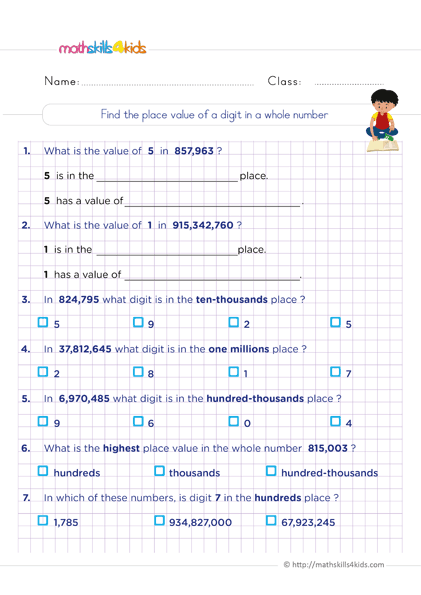
Printable PDF: 6th Grade whole numbers practice, 2 pages, answer key included.
See the activity: The place value of digits in whole numbers