Add and subtract fractions with unlike denominators
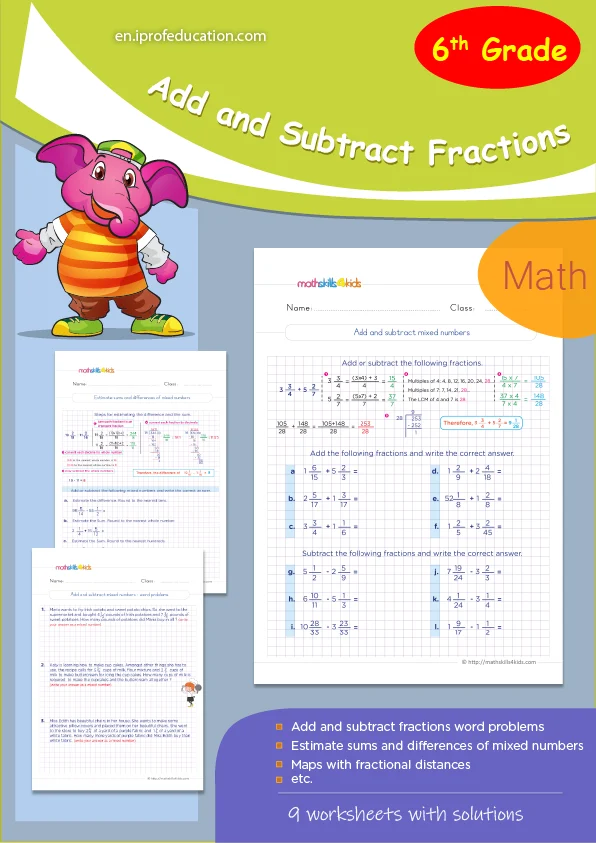
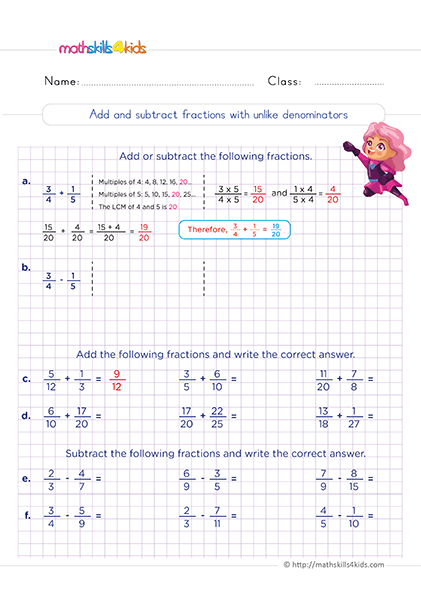
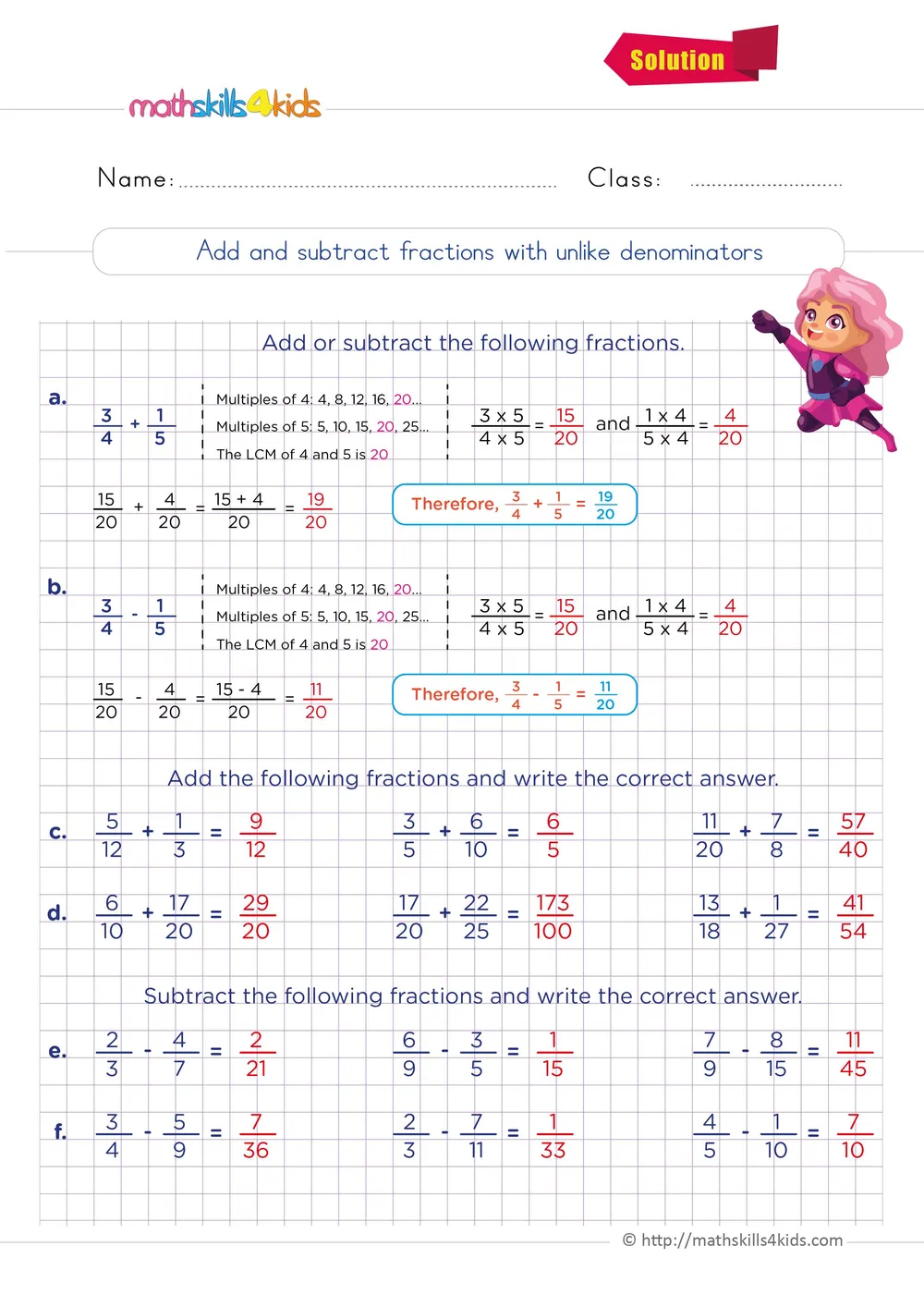
Why can't 3/4 and 1/5 be added the way they look? Fourths and fifths are different pieces, so your child first hunts for a size both can turn into, here twentieths. Listing multiples to find the LCM is the method the first two problems model, and the rest is practice in finding a common denominator to add and subtract fractions: six sums, then six differences. Page 2 gives the answer key.
What do 4 and 5 have in common?
Adding fractions only works when the pieces match. Fourths and fifths do not, so both get rewritten as twentieths: 3/4 becomes 15/20, 1/5 becomes 4/20, and now the tops can be added. Twenty is the least common multiple of 4 and 5, and finding it is most of the work.
The page teaches one dependable way to find it. Problem a lists the multiples of each denominator side by side until a number shows up in both lists, then multiplies top and bottom by the same factor. Problem b leaves the same setup empty for a difference, so your child copies the method once before the open rows.
The standard is 5.NF.A.1, adding and subtracting fractions with unlike denominators by rewriting them as equivalent fractions.
Can 9/12 get any smaller?
Row c starts with an answer already filled in: 5/12 + 1/3 = 9/12. Point at it and ask, "Can 9/12 get any smaller?" Both 9 and 12 divide by 3, so 3/4 is the same amount in simpler form. The answer page keeps 9/12, and every other answer there is already in lowest terms.
The trap sits in row d: 13/18 + 1/27. Children who multiply the two denominators land on 486ths and drown in big numbers. Ask, "Is there a smaller number both 18 and 27 go into?" Listing multiples of 27 finds 54 on the second try, and 41/54 follows.
For the subtraction rows, have your child say the common denominator out loud before writing anything.
Rulers already speak in sixteenths
Pull out a tape measure and the inch already splits into eighths and sixteenths. Ask your child to find 3/4 inch and 1/8 inch, then say both in eighths before adding them: 6/8 and 1/8 make 7/8.
Recipes do it too. If one bowl needs 2/3 cup of flour and another needs 1/4 cup, how much flour leaves the bag? Twelfths answer it: 8/12 and 3/12 make 11/12 cup.
In Math Curse by Jon Scieszka and Lane Smith, a student starts seeing math problems in every part of the day; borrow the idea and spot one fraction sum before dinner.
Praise the hunt rather than the answer: "You listed multiples until they matched." Word problems with unlike denominators come next.
About this 6th Grade add & subtract fractions worksheet
Download the worksheet: Add and subtract fractions with unlike denominators
Download the PDF (opens in a new tab)Free · 2 pages · 830 KB · answer key included
🍪 Free worksheets are paid for by ads
To download for free, please accept cookies, or go Premium for an ad-free experience.
A few related activities
Adding and subtracting unlike fractions word problems
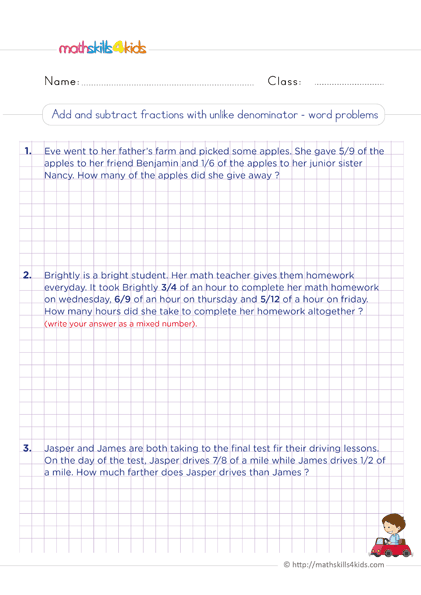
Printable PDF: 6th Grade add & subtract fractions practice, 2 pages, answer key included.
See the activity: Adding and subtracting unlike fractions word problemsAdding and subtracting mixed numbers
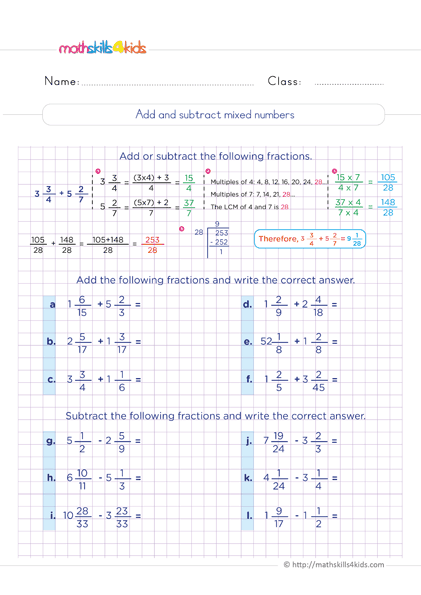
Printable PDF: 6th Grade add & subtract fractions practice, 2 pages, answer key included.
See the activity: Adding and subtracting mixed numbersAdd and subtract mixed numbers word problems
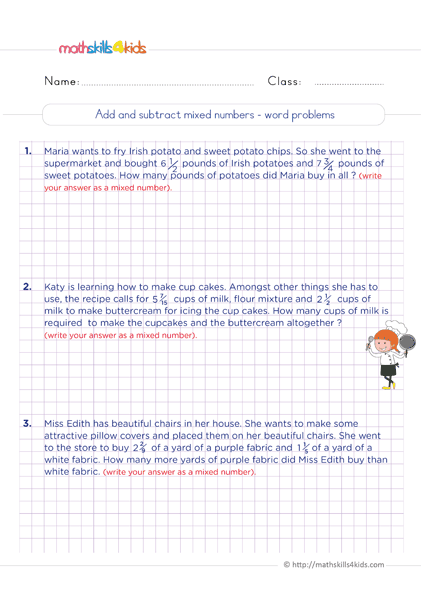
Printable PDF: 6th Grade add & subtract fractions practice, 2 pages, answer key included.
See the activity: Add and subtract mixed numbers word problemsHow to estimate sums and differences of mixed numbers
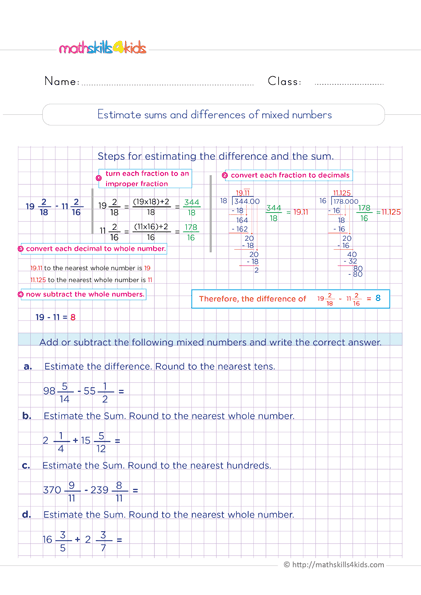
Printable PDF: 6th Grade add & subtract fractions practice, 2 pages, answer key included.
See the activity: How to estimate sums and differences of mixed numbersAdding and subtracting fractions with same denominator
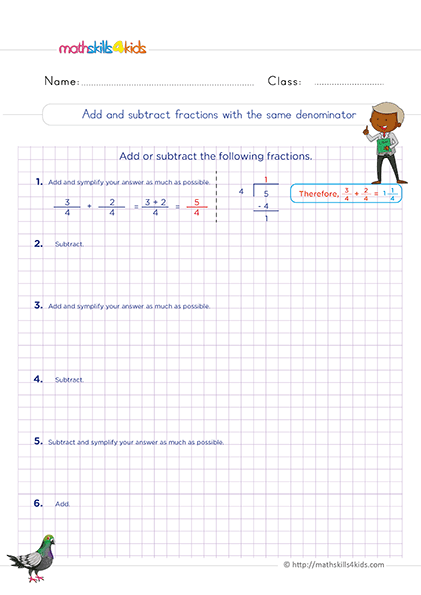
Printable PDF: 6th Grade add & subtract fractions practice, 2 pages, answer key included.
See the activity: Adding and subtracting fractions with same denominatorThe place value of digits in whole numbers
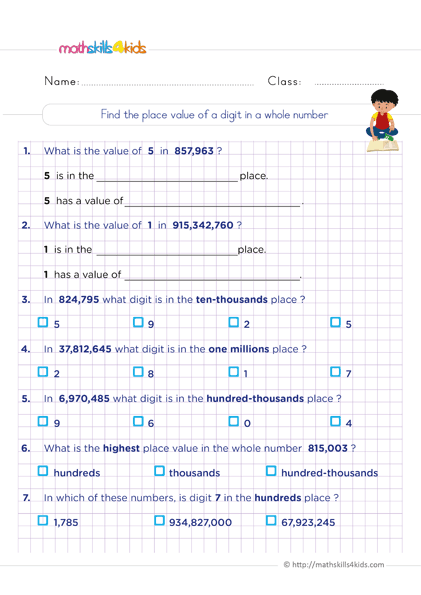
Printable PDF: 6th Grade whole numbers practice, 2 pages, answer key included.
See the activity: The place value of digits in whole numbers