Adding and subtracting unlike fractions word problems
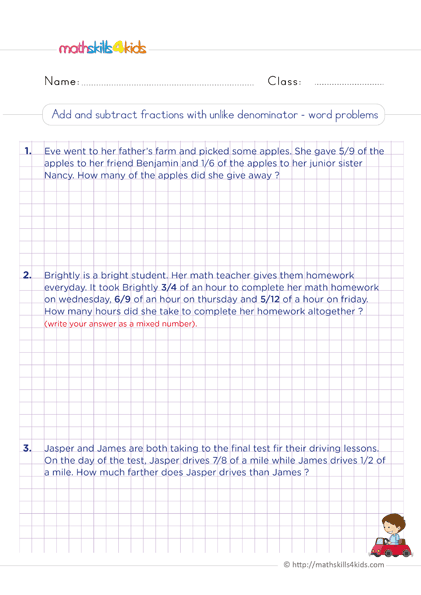
Picture a farm, a bowl of apples, and Eve handing 5/9 to Benjamin and 1/6 to her sister Nancy. How much of the harvest is gone? Three short stories on page 1 ask your child to pull the fractions out of the words, find a shared denominator, and decide whether to add or subtract. That is solving fraction word problems with unlike denominators, with answers kept as fractions or mixed numbers. Page 2 holds a worked answer key.
Words first, numbers second
Word problems add a step that bare fractions skip: deciding which operation the story asks for. Giving away apples to two people means joining two parts of the same apples, so Eve's problem is a sum. "How much farther" compares two distances, so the driving problem is a difference.
Each story also mixes denominators on purpose. Brightly's homework times, 3/4, 6/9 and 5/12 of an hour, need a common denominator of 36 before they can be added, and the page asks for the result as a mixed number. The worked answers list each person's fraction and the LCM before any arithmetic, a habit worth copying.
The standard is 5.NF.A.2, solving word problems with fractions of the same whole, including unlike denominators.
Three fractions, one hour
Start with Brightly in problem 2, the hardest of the set. Have your child underline the three times, then ask, "Are these pieces of a minute or of an hour?" Hours, which is why an answer above one hour must become a mixed number.
Watch the 6/9. Some children simplify it to 2/3 first, others leave it; both routes reach 11/6. The slip to look for is adding straight across, 3 + 6 + 5 over 4 + 9 + 12, which gives 14/25, less than one hour for three evenings of homework. Ask, "Does under an hour sound right for three days?"
On problem 3, a quick sketch of two roads, 7/8 and 1/2 mile long, makes "farther" easy to see.
Homework minutes are fractions too
Around the house, time hides the same sums. Fifteen minutes is 1/4 hour and twenty minutes is 1/3 hour; ask how much of an hour two chores take together, and let twelfths check it: 7/12.
On the next car ride, read a road sign that says 3/4 mile and ask how much farther that exit is than a turn 1/2 mile away.
Millions to Measure by David M. Schwartz tells how people came to agree on miles, feet and other units, a good companion to the 7/8 of a mile in problem 3.
Before you put the page away, say what you noticed: "You decided add or subtract before you calculated." Next in the series: adding and subtracting mixed numbers.
About this 6th Grade add & subtract fractions worksheet
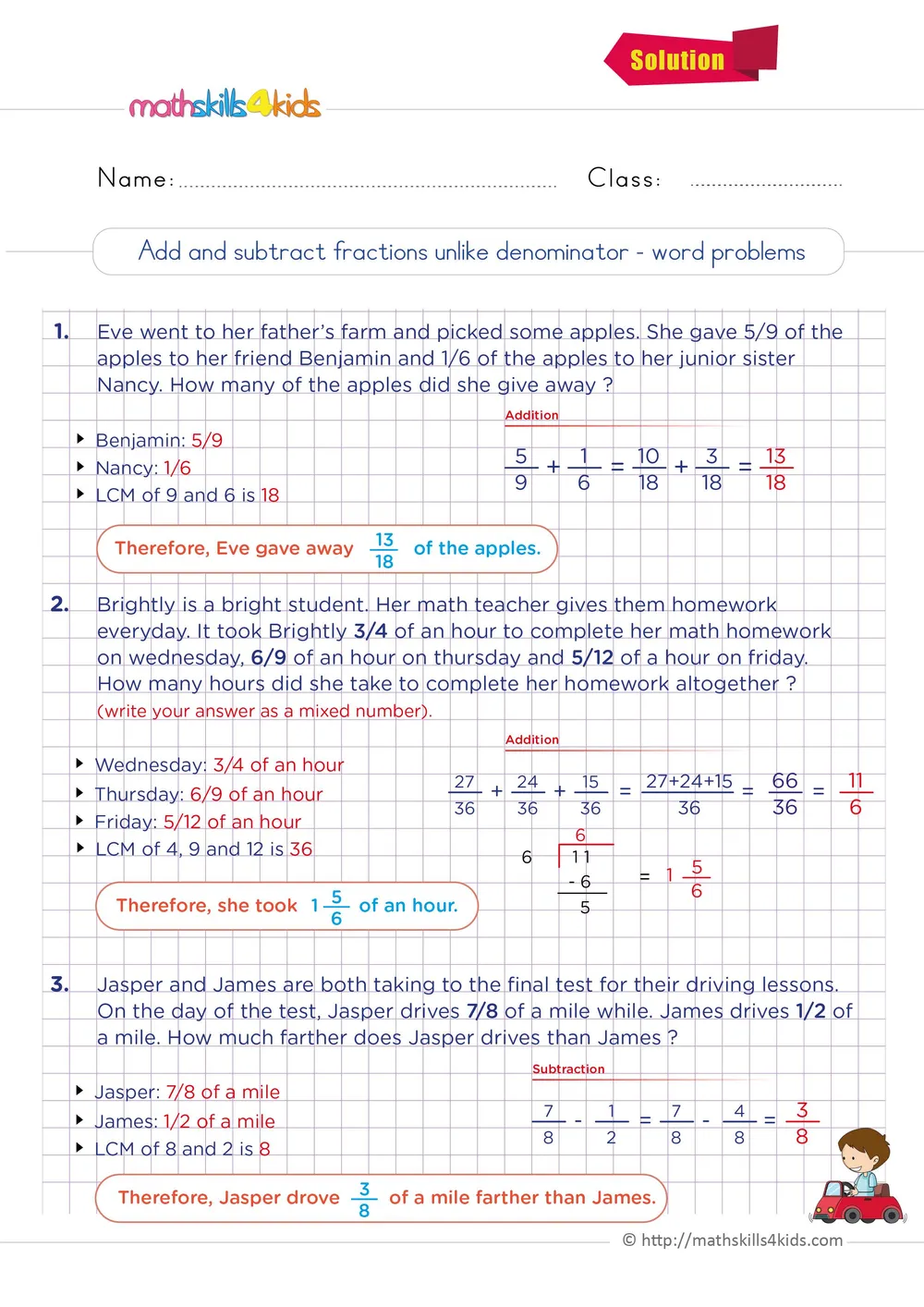
Download the worksheet: Adding and subtracting unlike fractions word problems
Download the PDF (opens in a new tab)Free · 2 pages · 984 KB · answer key included
🍪 Free worksheets are paid for by ads
To download for free, please accept cookies, or go Premium for an ad-free experience.
A few related activities
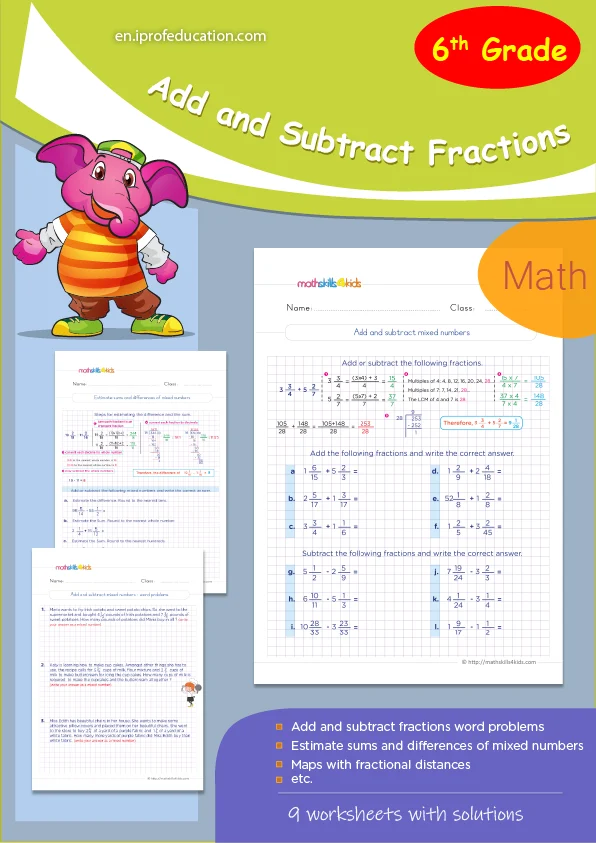
Adding and subtracting mixed numbers
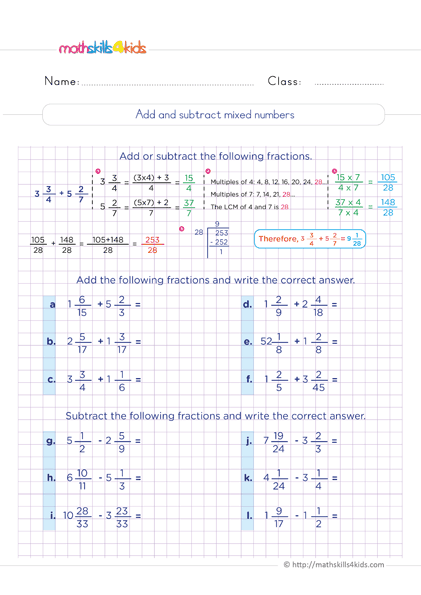
Printable PDF: 6th Grade add & subtract fractions practice, 2 pages, answer key included.
See the activity: Adding and subtracting mixed numbersAdd and subtract mixed numbers word problems
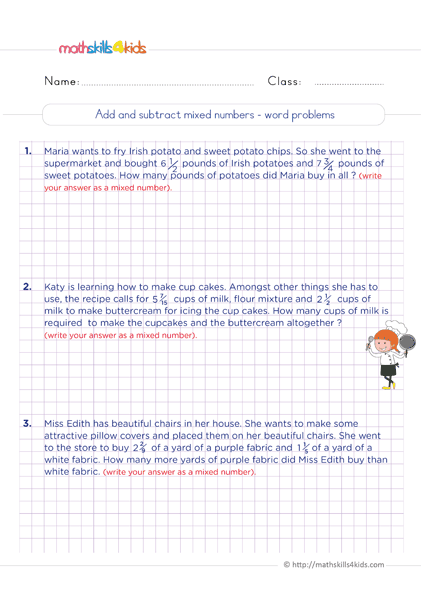
Printable PDF: 6th Grade add & subtract fractions practice, 2 pages, answer key included.
See the activity: Add and subtract mixed numbers word problemsHow to estimate sums and differences of mixed numbers
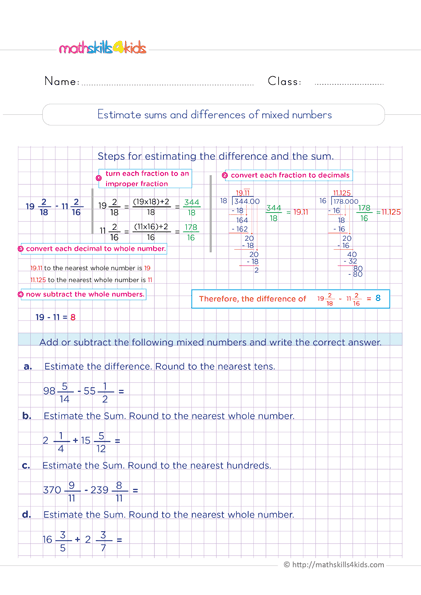
Printable PDF: 6th Grade add & subtract fractions practice, 2 pages, answer key included.
See the activity: How to estimate sums and differences of mixed numbersAdding and subtracting fractions with same denominator
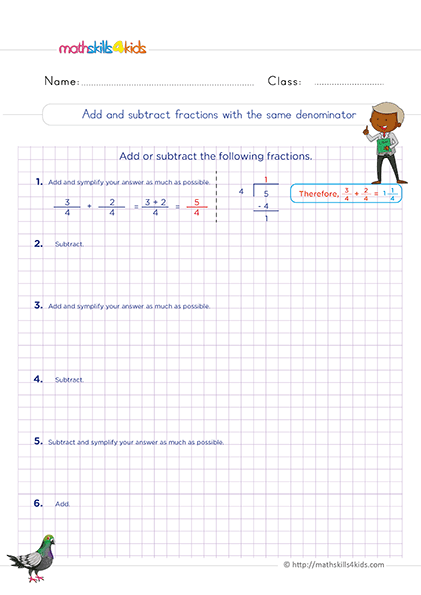
Printable PDF: 6th Grade add & subtract fractions practice, 2 pages, answer key included.
See the activity: Adding and subtracting fractions with same denominatorAdd and subtract fractions with unlike denominators
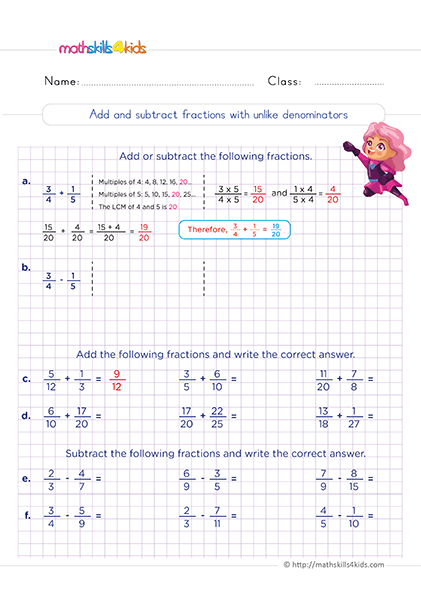
Printable PDF: 6th Grade add & subtract fractions practice, 2 pages, answer key included.
See the activity: Add and subtract fractions with unlike denominatorsThe place value of digits in whole numbers
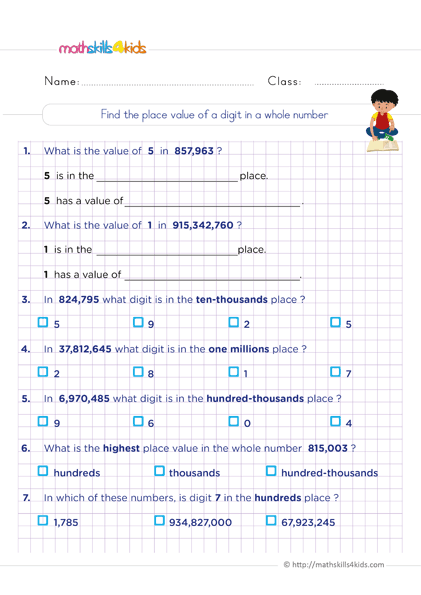
Printable PDF: 6th Grade whole numbers practice, 2 pages, answer key included.
See the activity: The place value of digits in whole numbers