Compare fractions with like and unlike denominator
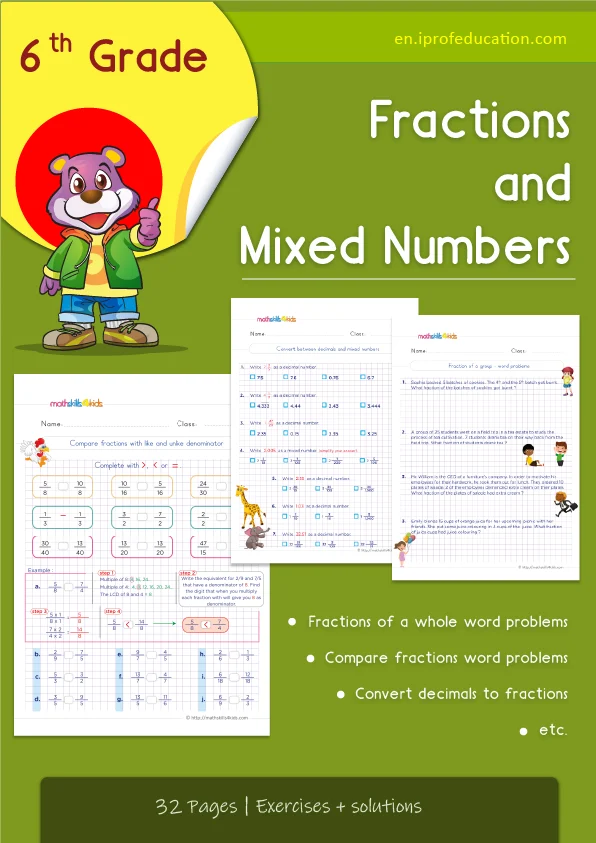
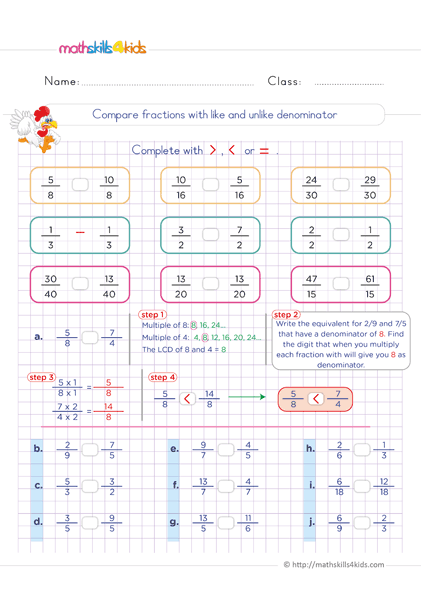
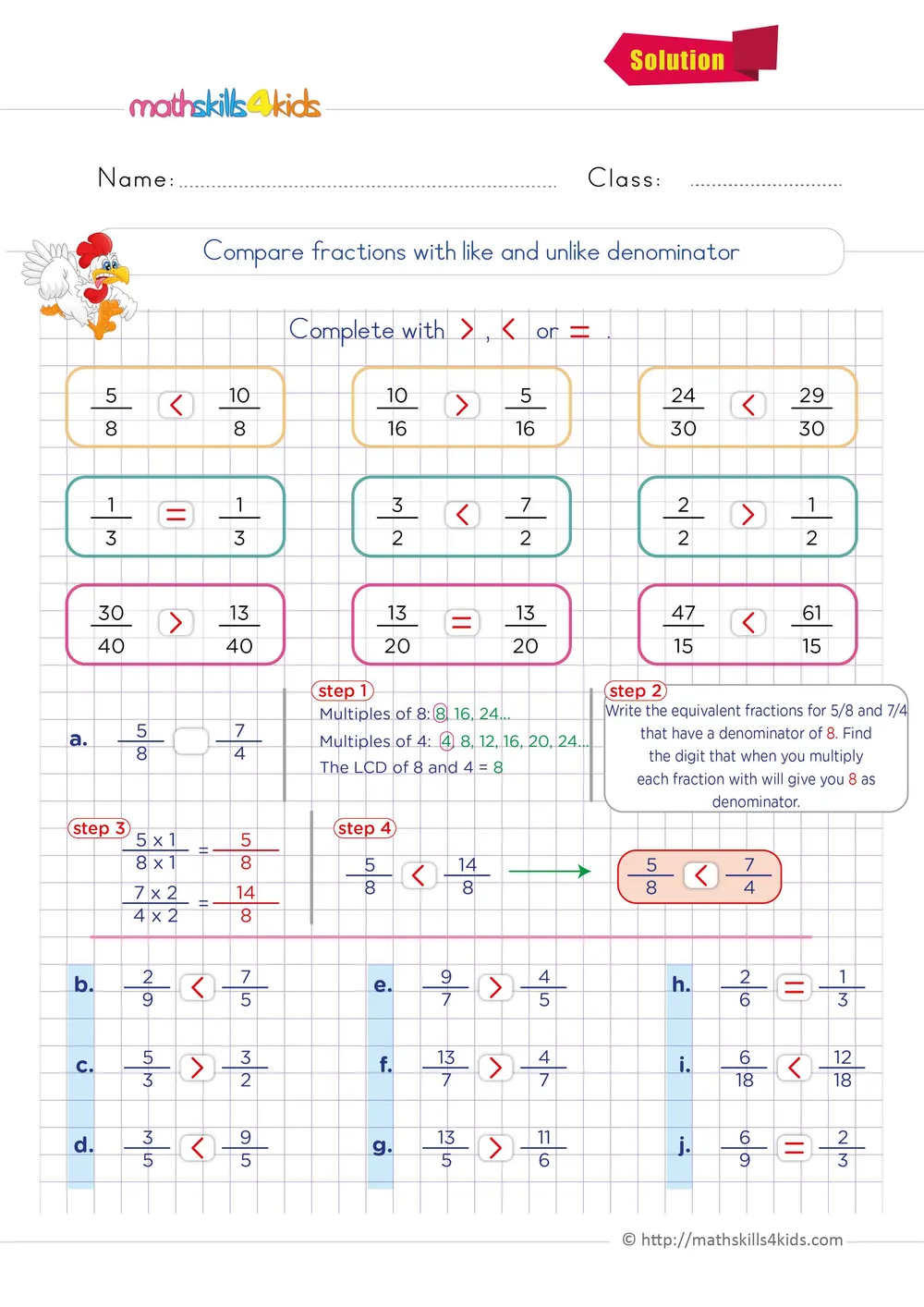
Many children believe a bigger bottom number means a bigger fraction, because 16 sounds like more than 8. This page tests that belief in two rounds. First come nine pairs that share a denominator, like 10/16 and 5/16. Then a worked example rewrites 7/4 as 14/8 before nine harder pairs, so your child is comparing fractions with like and unlike denominators using greater than, less than, or equal. The answer key is on page 2.
Same-size pieces first
Two fractions can only be compared fairly when their pieces are the same size. With a shared denominator, the numerators do all the talking: 30/40 beats 13/40 because 30 pieces beat 13 of the same piece.
With unlike denominators, the page models four steps on 5/8 and 7/4: list multiples, find the LCD of 8, scale each fraction, then compare 5/8 with 14/8. Two of the last pairs, h and j, reward a different eye, since 2/6 and 1/3 are the same number written two ways, and so are 6/9 and 2/3.
The page works on 4.NF.A.2, comparing fractions with different numerators and denominators.
The same-denominator rows review 3.NF.A.3.d.
Can a bigger bottom number win?
Pair e, 9/7 against 4/5, is where the old habit shows. A child who trusts the bigger denominator, or simply the bigger digits, picks wrong and moves on. "Is 9/7 more or less than one whole?" That single question settles it, since 9/7 is past 1 and 4/5 is not.
Why does it happen? Whole-number habits say bigger digits win, and fractions break that rule both ways.
Pair g, 13/5 against 11/6, invites the same check with whole parts. Have your child say each answer as a sentence, "Thirteen fifths is greater than eleven sixths," before writing the sign.
A note for parents: the step 2 box on page 1 names 2/9 and 7/5; it means 5/8 and 7/4, as page 2 shows.
Eighths of a birthday cake
In Full House: An Invitation to Fractions, Dayle Ann Dodds fills an inn with guests who each take one eighth of a cake, which turns 5/8 against 14/8 into a picture your child can draw.
At home, cut one pizza into 8 slices and another into 4. Is 3 of the quarters more or less than 5 of the eighths? Let your child prove it by stacking slices.
While you bake, fill a measuring cup to 2/3 and another to 3/4 and compare the heights.
Whatever the score, notice the method: "You checked each pair against one whole before guessing." The next page puts these comparisons inside word problems.
About this 6th Grade fractions & mixed numbers worksheet
Download the worksheet: Compare fractions with like and unlike denominator
Download the PDF (opens in a new tab)Free · 2 pages · 824 KB · answer key included
🍪 Free worksheets are paid for by ads
To download for free, please accept cookies, or go Premium for an ad-free experience.
A few related activities
Comparing fractions word numbers
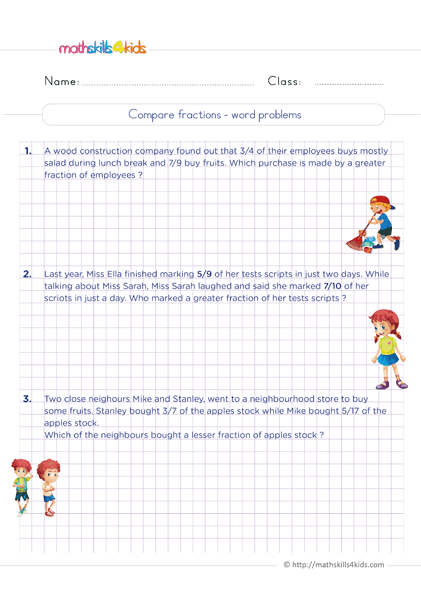
Printable PDF: 6th Grade fractions & mixed numbers practice, 2 pages, answer key included.
See the activity: Comparing fractions word numbersOrdering fractions and decimals
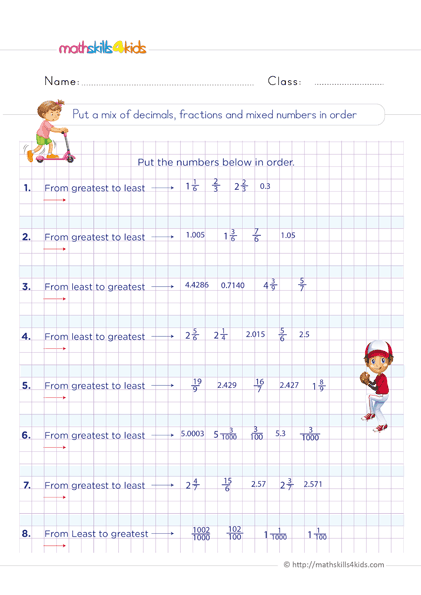
Printable PDF: 6th Grade fractions & mixed numbers practice, 2 pages, answer key included.
See the activity: Ordering fractions and decimalsUnderstanding fractions as division word-problems
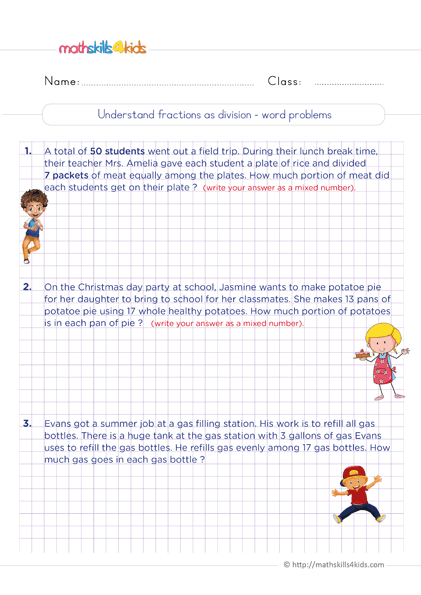
Printable PDF: 6th Grade fractions & mixed numbers practice, 2 pages, answer key included.
See the activity: Understanding fractions as division word-problemsHow to place fractions on a number line
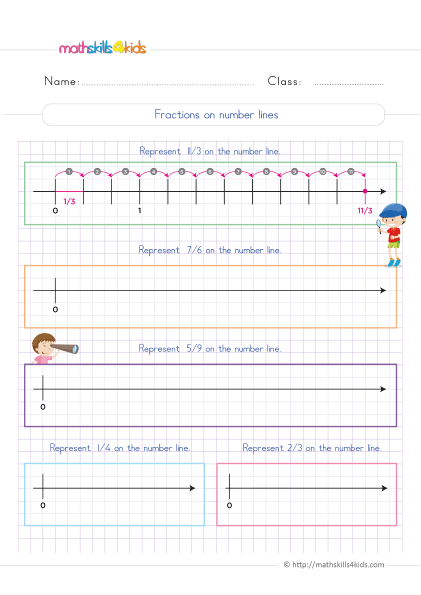
Printable PDF: 6th Grade fractions & mixed numbers practice, 2 pages, answer key included.
See the activity: How to place fractions on a number lineHow to find the least common denominator
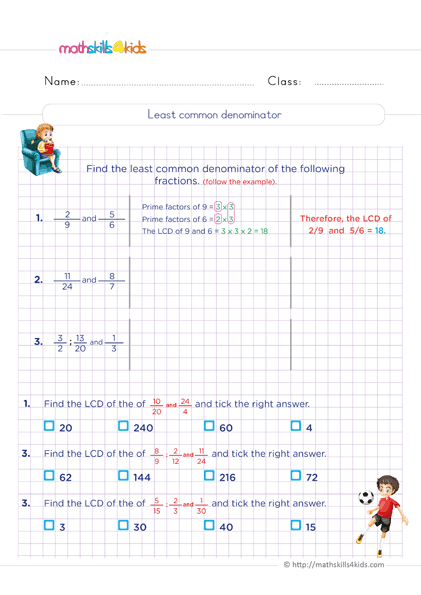
Printable PDF: 6th Grade fractions & mixed numbers practice, 2 pages, answer key included.
See the activity: How to find the least common denominatorThe place value of digits in whole numbers
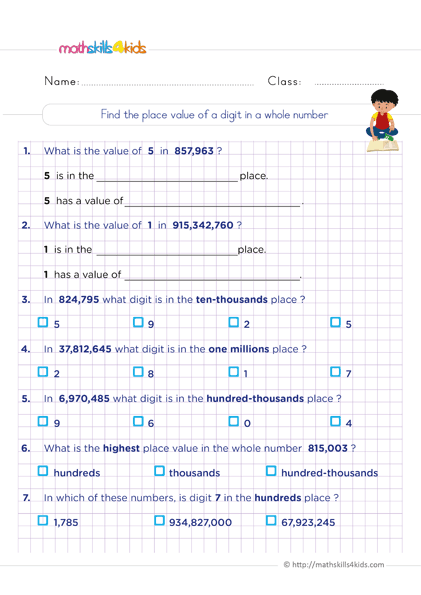
Printable PDF: 6th Grade whole numbers practice, 2 pages, answer key included.
See the activity: The place value of digits in whole numbers