How to place fractions on a number line
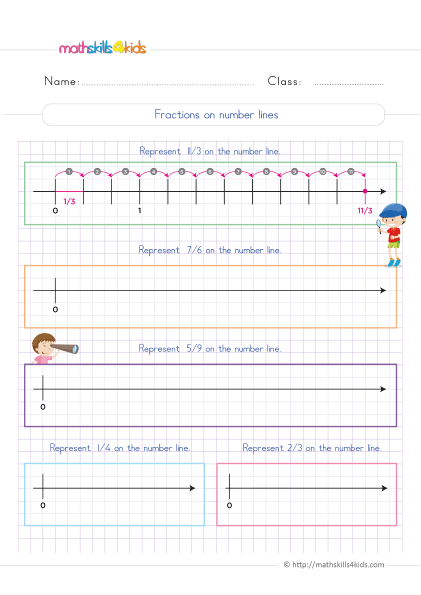
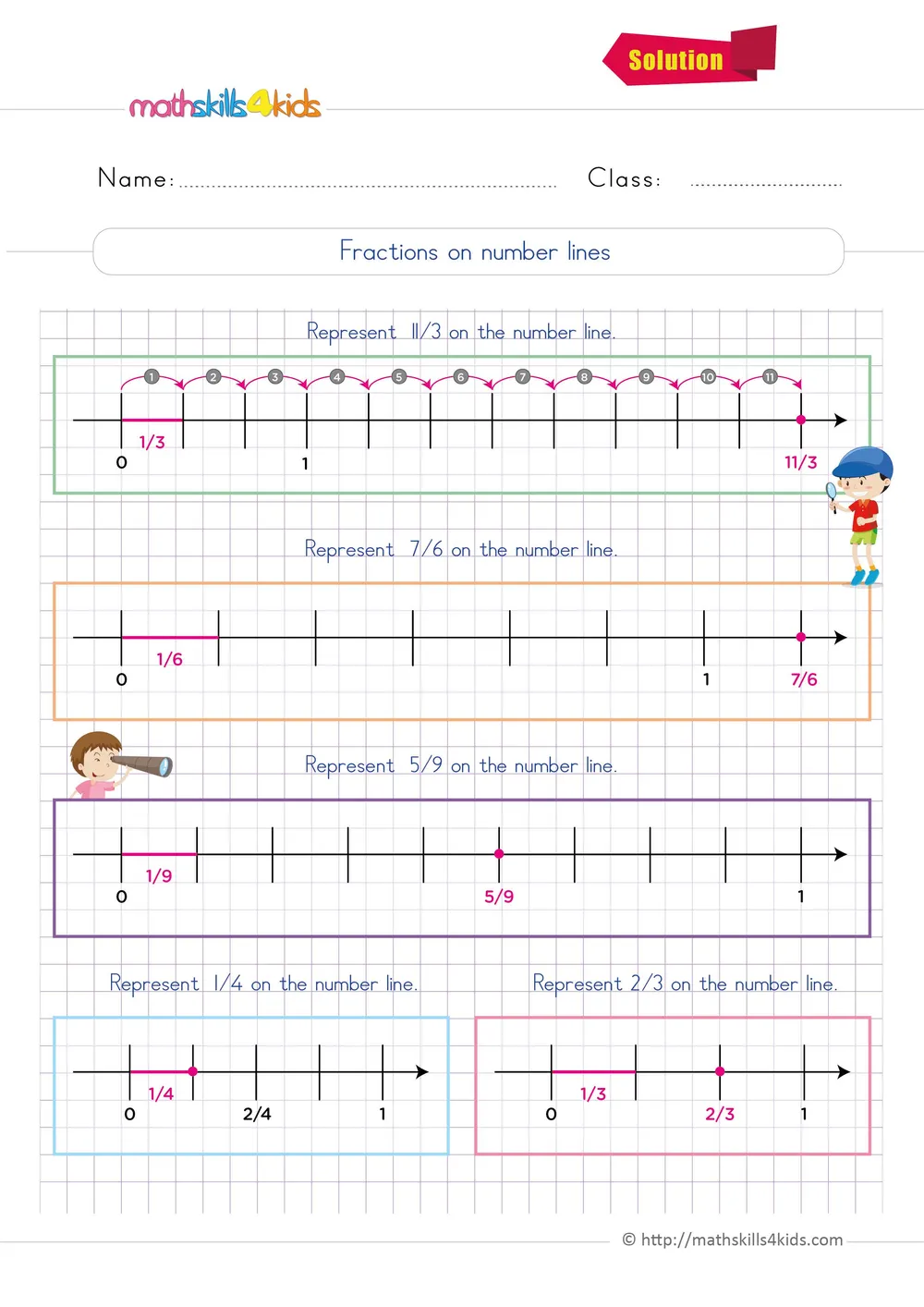
Hold a ruler next to the first number line and the idea clicks: each inch is cut into equal parts, and you count them. The page opens with 11/3, eleven pink jumps of one third, already drawn. Then your child marks 7/6, 5/9, 1/4, and 2/3 on empty lines, splitting each whole before placing fractions on a number line by counting jumps. Page 2 shows every point in pink so you can check together.
A fraction is a place, not only a slice
Most children meet fractions as slices of a pie. The number line asks for something harder: a fraction is a distance from 0, so 7/6 is a real place just past 1. That shift is what makes comparing and ordering possible later in this series.
The page builds it with one worked line. In the 11/3 example, the stretch from 0 to 1 holds three jumps, and the count keeps going past 1 and 2 until the eleventh jump. The empty lines after it show only a 0 mark, so your child decides how long one whole is and how many parts it needs.
This is 3.NF.A.2, revisited in grade 6 as 6.NS.C.6.c, positioning rational numbers on a number line.
Where does 7/6 land?
Start with the line for 7/6. "How many sixths make one whole?" Let your child draw six equal jumps and write 1 under the sixth tick before going one jump further.
The likely slip lives on that same line: a child who sees 7 and 6 as two separate numbers marks seven parts and stops, as if 7/6 were less than 1. The 5/9 line brings a quieter trap, where nine tiny jumps make it easy to lose count. "Is your point before or after the middle?"
The 1/4 and 2/3 lines are short, so even spacing matters more than size. Point to each jump while your child counts aloud.
A tape measure in the hallway
A tape measure is a number line your child can hold. Find the 2 1/4 inch mark together, then ask how many quarter inches it took to get there.
At dinner, cut a strip of flatbread into sixths and lay the pieces end to end past one whole, the way 7/6 goes past 1 on the page.
In Millions to Measure, David M. Schwartz shows why people agreed on equal units, which is the same promise every tick on these lines makes.
When the last pink point sits where it belongs, tell your child what you saw: "You split each whole fairly before you counted." Finding the least common denominator comes next.
About this 6th Grade fractions & mixed numbers worksheet
Download the worksheet: How to place fractions on a number line
Download the PDF (opens in a new tab)Free · 2 pages · 667 KB · answer key included
🍪 Free worksheets are paid for by ads
To download for free, please accept cookies, or go Premium for an ad-free experience.
A few related activities
How to find the least common denominator
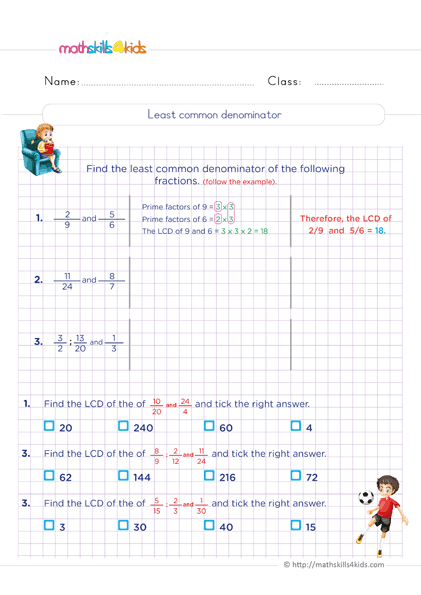
Printable PDF: 6th Grade fractions & mixed numbers practice, 2 pages, answer key included.
See the activity: How to find the least common denominatorCompare fractions with like and unlike denominator
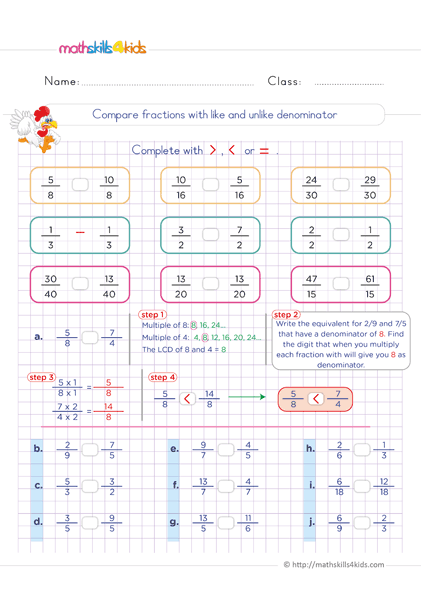
Printable PDF: 6th Grade fractions & mixed numbers practice, 2 pages, answer key included.
See the activity: Compare fractions with like and unlike denominatorComparing fractions word numbers
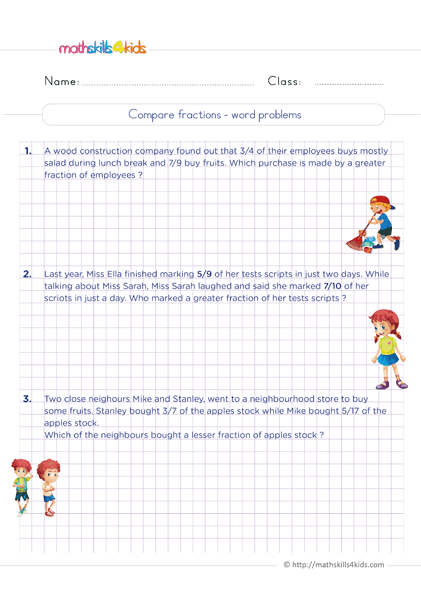
Printable PDF: 6th Grade fractions & mixed numbers practice, 2 pages, answer key included.
See the activity: Comparing fractions word numbersOrdering fractions and decimals
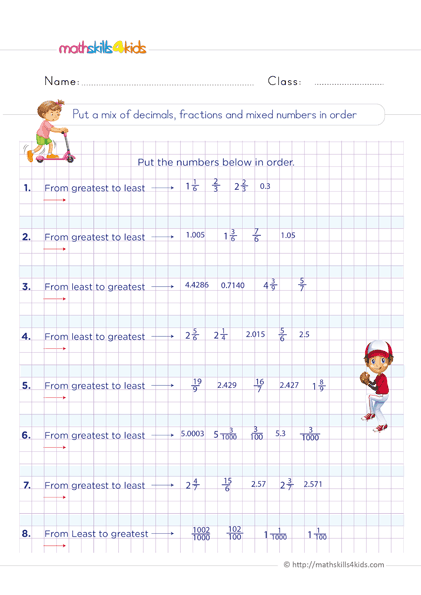
Printable PDF: 6th Grade fractions & mixed numbers practice, 2 pages, answer key included.
See the activity: Ordering fractions and decimalsUnderstanding fractions as division word-problems
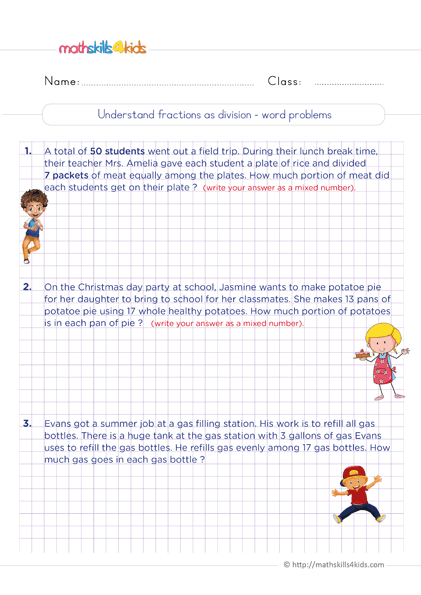
Printable PDF: 6th Grade fractions & mixed numbers practice, 2 pages, answer key included.
See the activity: Understanding fractions as division word-problemsThe place value of digits in whole numbers
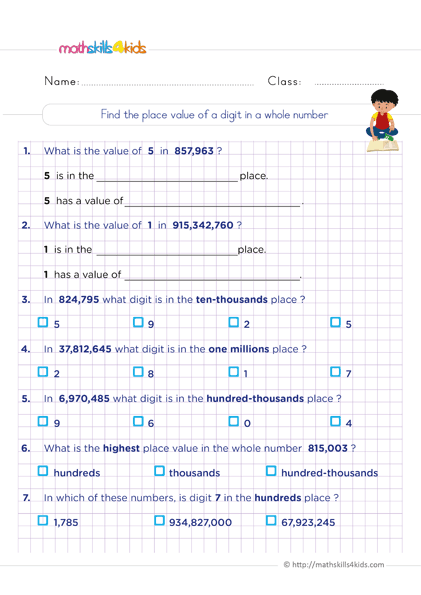
Printable PDF: 6th Grade whole numbers practice, 2 pages, answer key included.
See the activity: The place value of digits in whole numbers