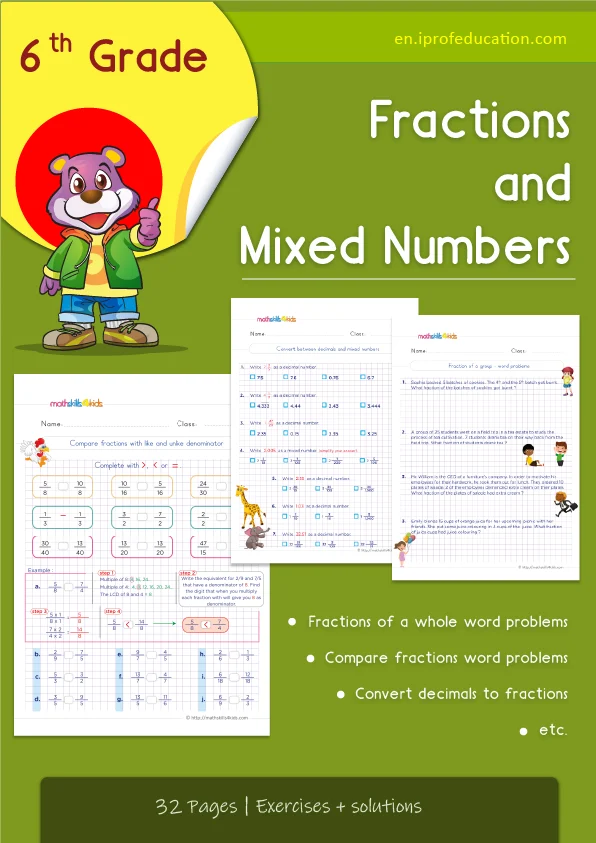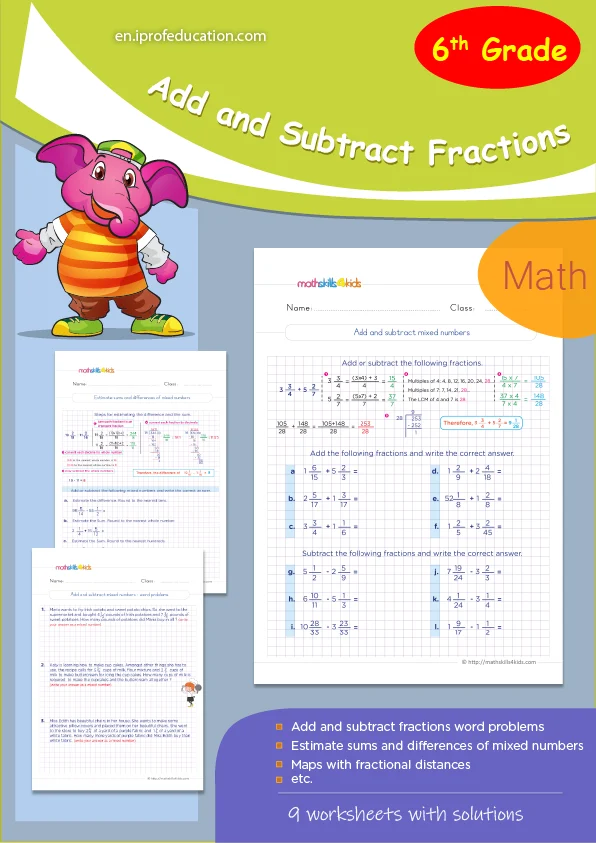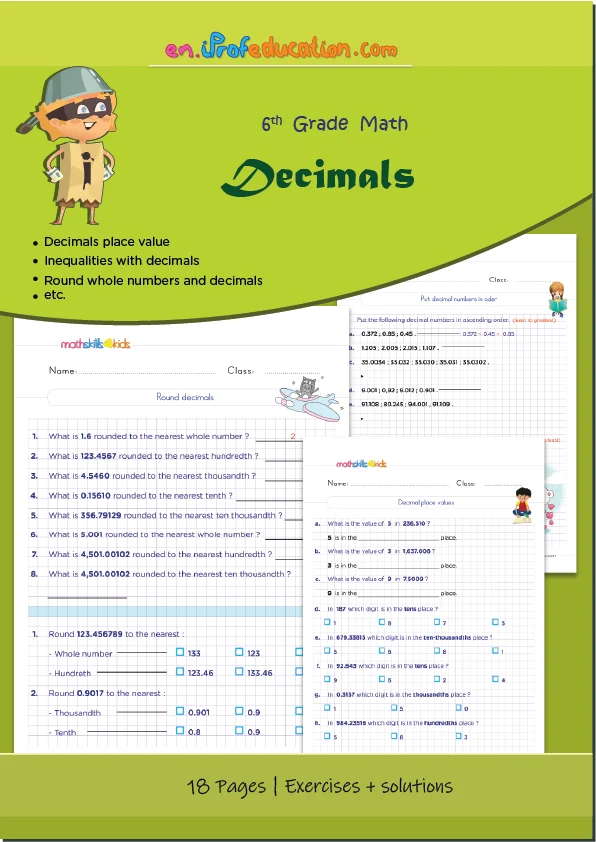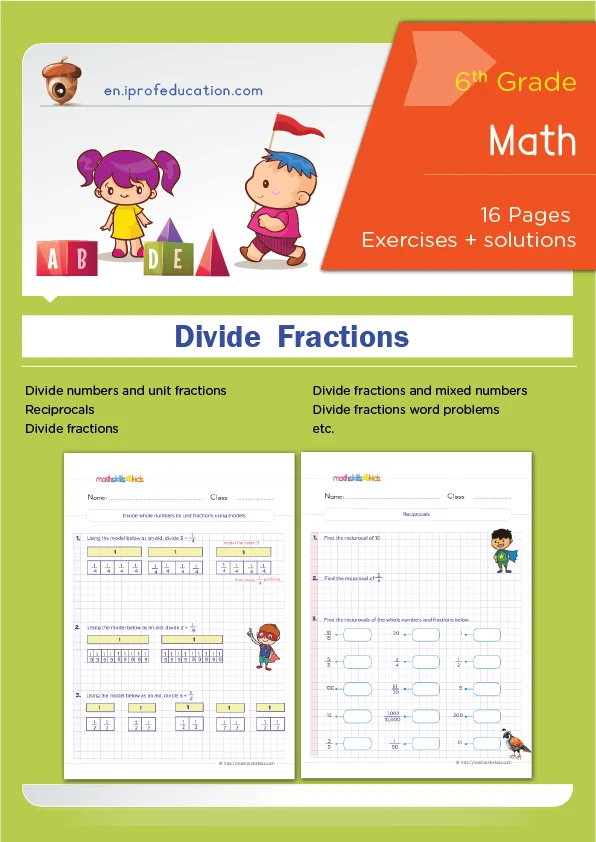
Comparing fractions word numbers
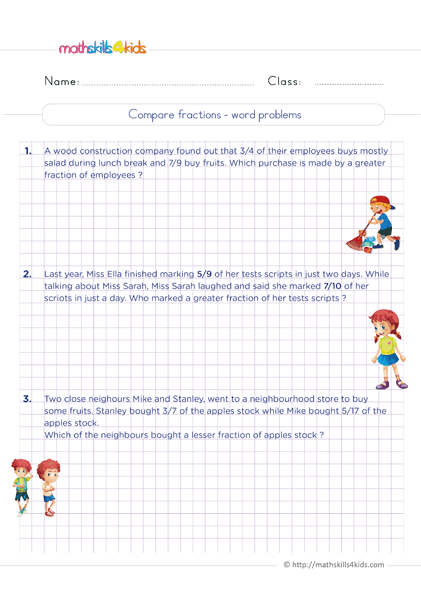
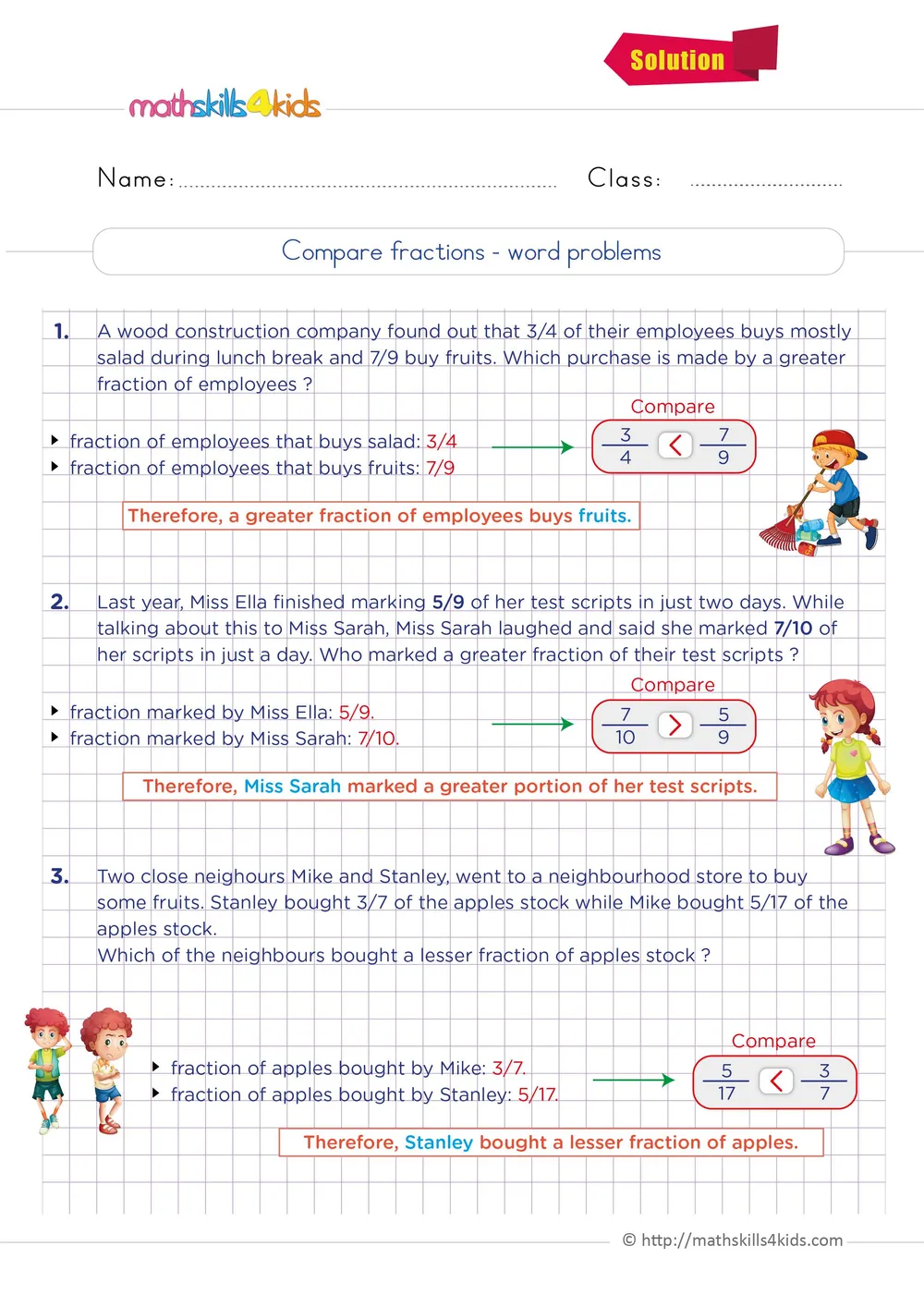
Fractions turn up in everyday talk: three quarters of the class, seven tenths of the job done. This page gives your child three short stories, about salad at lunch, a teacher marking tests, and apples at a store, each ending with a question about who has more or less. Reading the story, pulling out two fractions, and naming the winner is comparing fractions in word problems the way adults do it. Page 2 has the worked answers, with one name corrected below.
From story to sign
A word problem adds one step that a row of fractions skips: deciding which number belongs to which person before any comparing happens. At this age, that bookkeeping causes more errors than the arithmetic.
The solution page models a habit worth copying. Each story gets two labeled lines, such as the fraction of employees that buys salad, 3/4, then a boxed comparison, then a full-sentence answer. Problem 3 also flips the question to ask who bought a lesser fraction, which forces a careful reread.
The comparing itself is 4.NF.A.2.
Explaining an order in a real context is 6.NS.C.7.b.
Who really bought less?
Read problem 3 aloud together and stop after the second sentence. "Who bought 3/7, and who bought 5/17?" Have your child underline each name with its fraction before comparing.
Then the comparison: 5/17 against 3/7. Cross-multiplying gives 35 against 51, so 5/17 is smaller. The probable slip here is the bigger denominator again, since 17 looks like more than 7.
A note for parents on problem 3: the story says Stanley bought 3/7 and Mike bought 5/17, but the solution swaps the names and concludes Stanley. Mike bought the lesser fraction. Problems 1 and 2 are correct: fruits win with 7/9, and Miss Sarah marked more with 7/10.
Two teams and two fractions
Turn on a basketball game and the word problems write themselves. If one team made 7 of 10 free throws and another made 5 of 9, have your child decide which team shot better and explain how.
At the grocery store, two bags of apples with a few bruised ones in each make the same kind of comparison: 2 of 9 against 3 of 12.
Math Curse, by Jon Scieszka and Lane Smith, follows a student who sees every part of the day as a math problem; reading it after this page makes the stories feel less like homework.
If your child spotted the swapped names in problem 3, praise the reading: "You matched every name to its number." Ordering a mix of fractions and decimals comes next.
About this 6th Grade fractions & mixed numbers worksheet
Download the worksheet: Comparing fractions word numbers
Download the PDF (opens in a new tab)Free · 2 pages · 969 KB · answer key included
🍪 Free worksheets are paid for by ads
To download for free, please accept cookies, or go Premium for an ad-free experience.
A few related activities
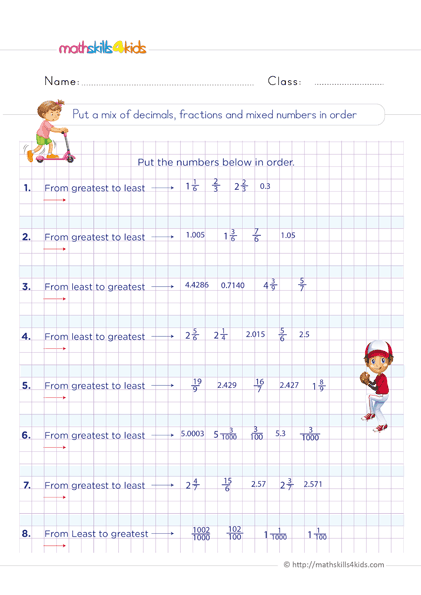
Ordering fractions and decimals
Printable PDF: 6th Grade fractions & mixed numbers practice, 2 pages, answer key included.
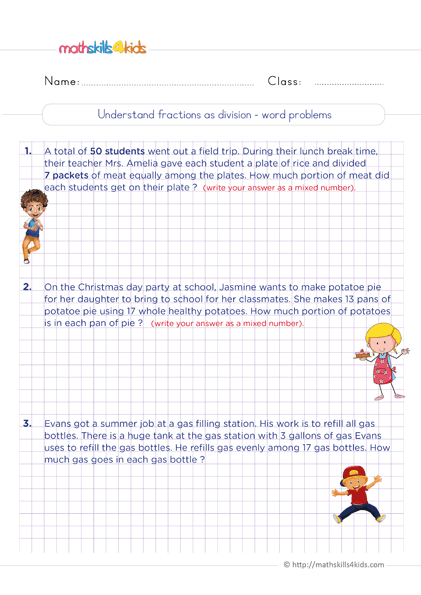
See the activity: Ordering fractions and decimalsUnderstanding fractions as division word-problems
Printable PDF: 6th Grade fractions & mixed numbers practice, 2 pages, answer key included.
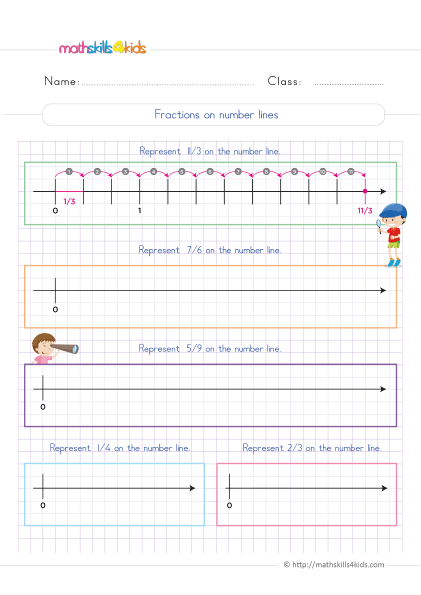
See the activity: Understanding fractions as division word-problemsHow to place fractions on a number line
Printable PDF: 6th Grade fractions & mixed numbers practice, 2 pages, answer key included.
See the activity: How to place fractions on a number lineHow to find the least common denominator
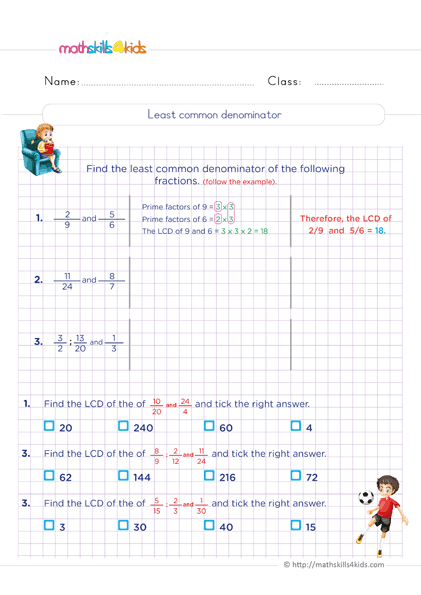
Printable PDF: 6th Grade fractions & mixed numbers practice, 2 pages, answer key included.
See the activity: How to find the least common denominatorCompare fractions with like and unlike denominator
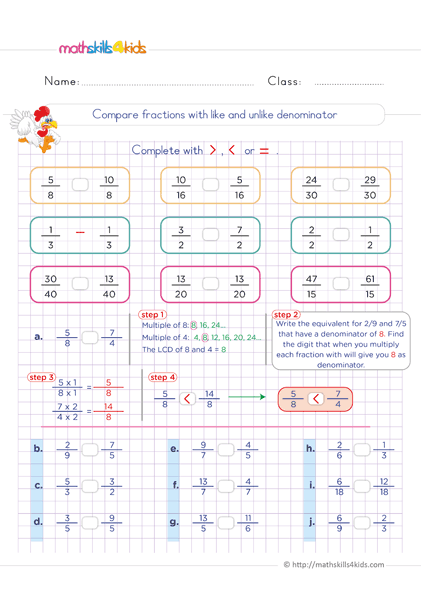
Printable PDF: 6th Grade fractions & mixed numbers practice, 2 pages, answer key included.
See the activity: Compare fractions with like and unlike denominatorThe place value of digits in whole numbers
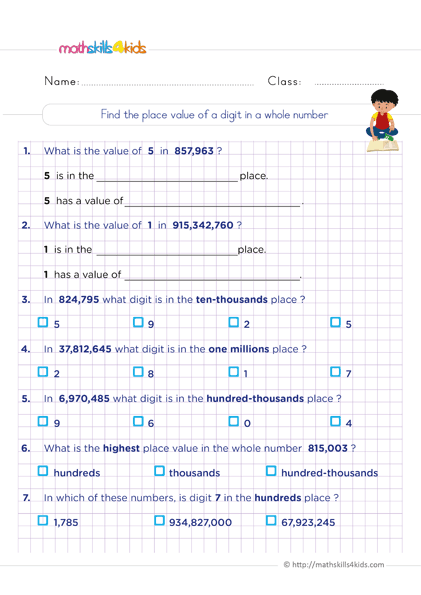
Printable PDF: 6th Grade whole numbers practice, 2 pages, answer key included.
See the activity: The place value of digits in whole numbers