How to find the least common denominator
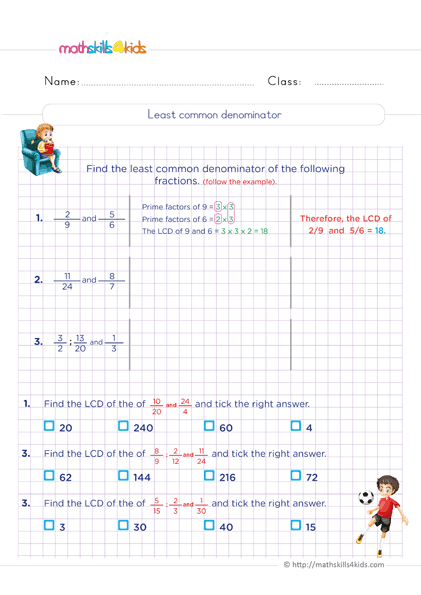
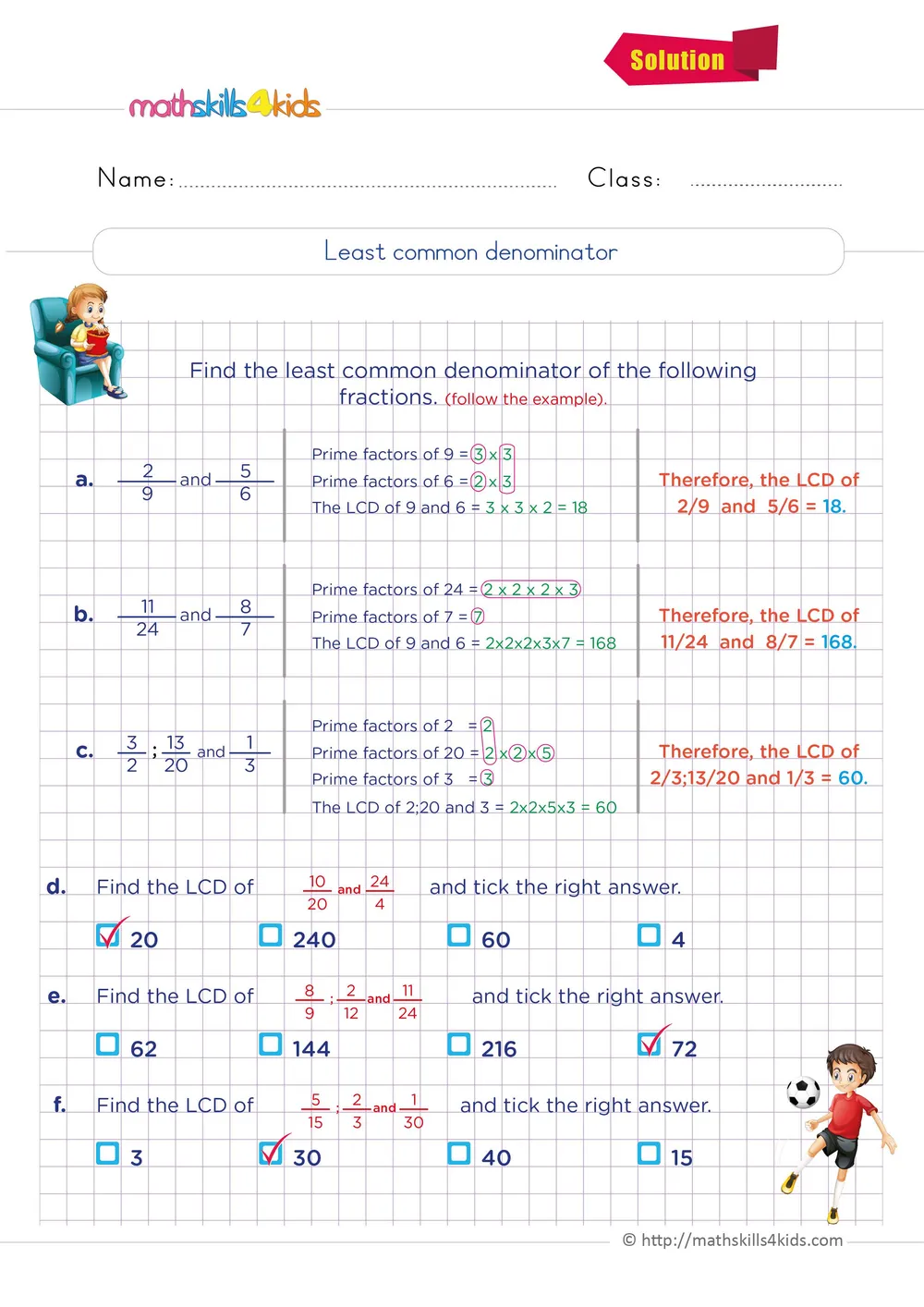
Why do 2/9 and 5/6 need 18 and not 54? The worked example answers with prime factors: 9 is 3 × 3, 6 is 2 × 3, and the shared 3 counts only once. Your child copies that layout for 11/24 and 8/7, then for three fractions at once, before three tick-the-box questions. It is steady practice finding the least common denominator with prime factors, and page 2 has the answer key.
Counting a shared factor only once
A common denominator lets two fractions be measured in the same size of piece. Any common multiple works, but the least one keeps the numbers small, and small numbers mean fewer slips when your child adds or compares later.
The page teaches the prime-factor route instead of listing multiples. Each denominator is broken into primes, the primes are circled, and the LCD takes each prime as many times as it appears in the denominator that holds the most of it. Item b brings a quiet surprise: 24 and 7 share nothing, so their LCD, 168, is simply their product.
This is 6.NS.B.4, least common multiples, here stretched past the standard's limit of 12, put to work as in 5.NF.A.1.
Is the product always the answer?
Turn to item e, with 8/9, 2/12, and 11/24. The trap is to multiply two denominators and stop: 9 × 24 gives 216, and 216 sits right there among the boxes. "Is 216 the smallest number all three go into?"
Let your child write 9, 12, and 24 as primes before ticking anything. "Which prime shows up most in one number?" Three 2s from 24 and two 3s from 9 build 72.
Item d hides a different shortcut, since 24/4 is the whole number 6 and only 20 really matters.
A note for parents: the three tick-the-box questions are numbered 1, 3, 3 on page 1 and d, e, f on page 2. In c, the solution writes 2/3 where the problem shows 3/2; the LCD, 60, is still right.
Hot dogs come in tens and buns in eights
The grocery store hands you a least common multiple at the checkout. Hot dogs often come 10 to a pack and buns 8 to a bag. Have your child work out how many of each to buy so nothing is left over, then confirm with primes: 2 × 5 and 2 × 2 × 2 make 40.
On a calendar, mark one chore every 4 days and another every 6 days, and find the first day both land together.
Before the next session, deal a few cards from the 24 Game and let your child break 24 into primes the way item b does.
When item e comes out as 72 and not 216, say what happened: "You looked for the smallest, not the first." Comparing fractions with like and unlike denominators is next.
About this 6th Grade fractions & mixed numbers worksheet
Download the worksheet: How to find the least common denominator
Download the PDF (opens in a new tab)Free · 2 pages · 830 KB · answer key included
🍪 Free worksheets are paid for by ads
To download for free, please accept cookies, or go Premium for an ad-free experience.
A few related activities
Compare fractions with like and unlike denominator
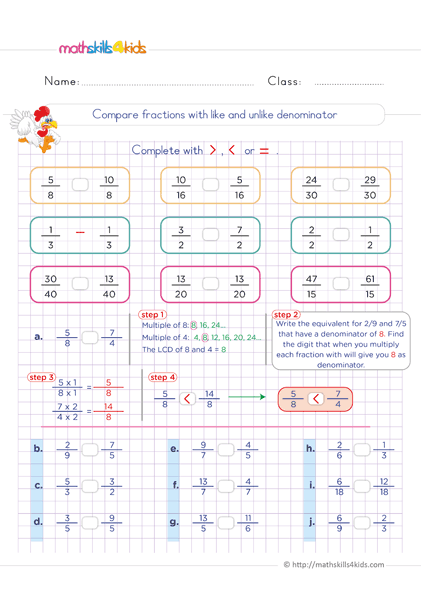
Printable PDF: 6th Grade fractions & mixed numbers practice, 2 pages, answer key included.
See the activity: Compare fractions with like and unlike denominatorComparing fractions word numbers
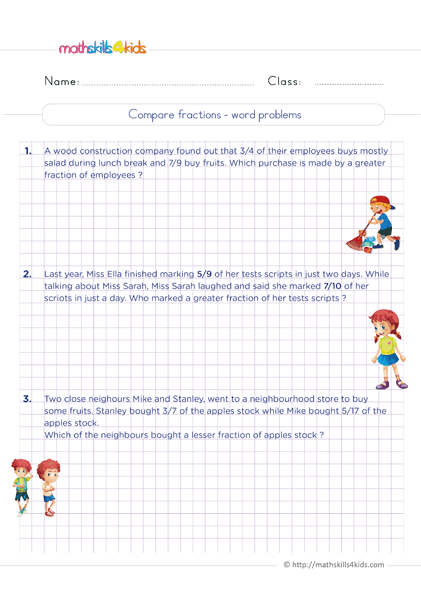
Printable PDF: 6th Grade fractions & mixed numbers practice, 2 pages, answer key included.
See the activity: Comparing fractions word numbersOrdering fractions and decimals
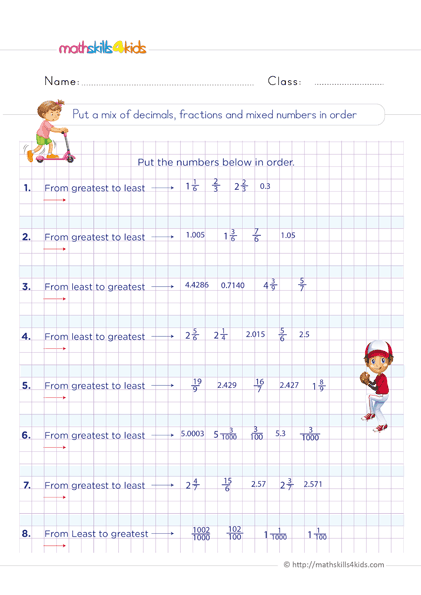
Printable PDF: 6th Grade fractions & mixed numbers practice, 2 pages, answer key included.
See the activity: Ordering fractions and decimalsUnderstanding fractions as division word-problems
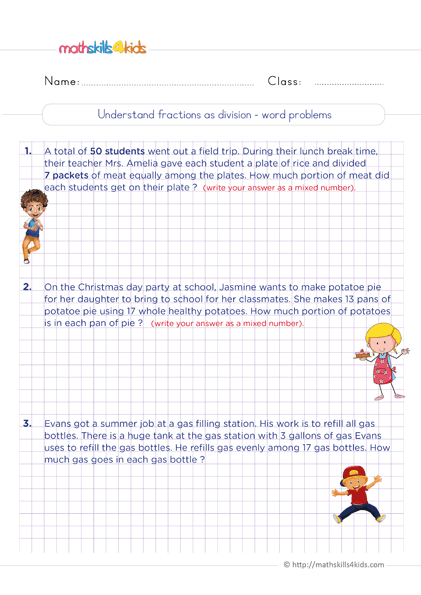
Printable PDF: 6th Grade fractions & mixed numbers practice, 2 pages, answer key included.
See the activity: Understanding fractions as division word-problemsHow to place fractions on a number line
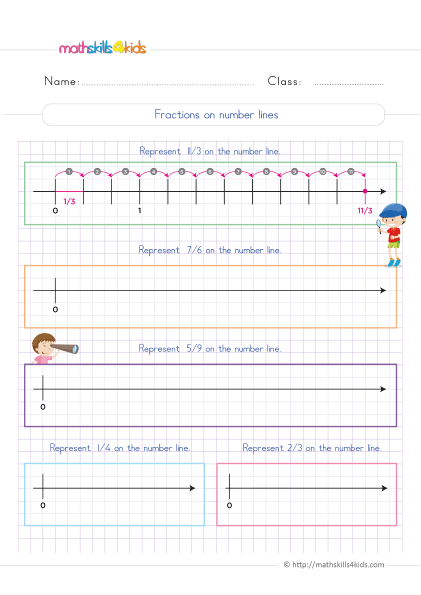
Printable PDF: 6th Grade fractions & mixed numbers practice, 2 pages, answer key included.
See the activity: How to place fractions on a number lineThe place value of digits in whole numbers
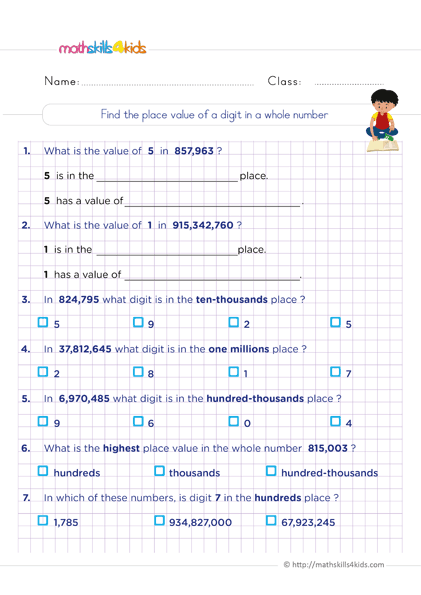
Printable PDF: 6th Grade whole numbers practice, 2 pages, answer key included.
See the activity: The place value of digits in whole numbers