How do you find the GCF and LCM in word problems
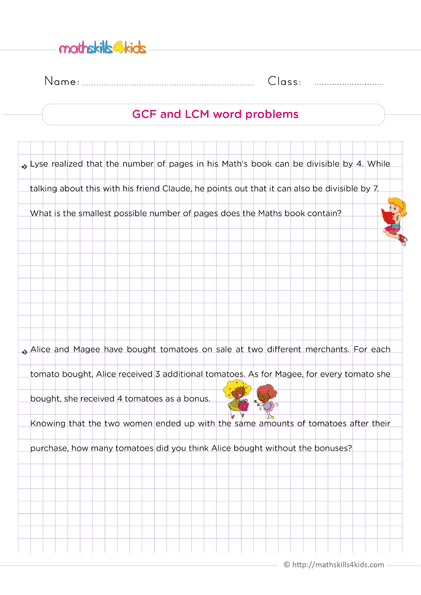
Two friends flip through a math book: one says its page count divides by 4, the other says it also divides by 7. How short could the book be? Your child gets there by solving least common multiple word problems, one about book pages and one about tomatoes with bonus deals. Both stories call for the LCM, not the GCF. The page count is 28; the tomato answer on the solution page needs a second look.
When a story hides a times table
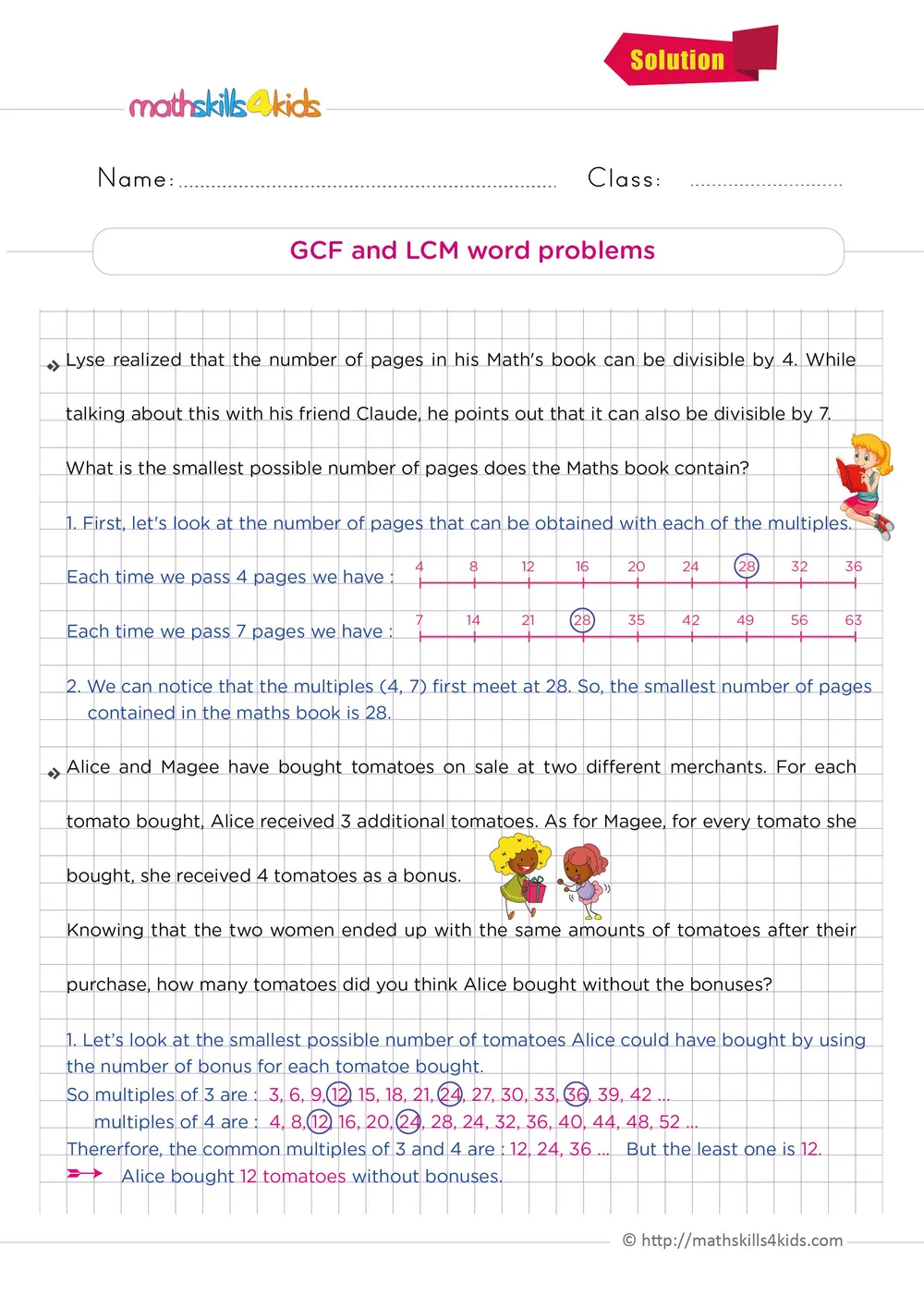
A word problem asks your child to see the math before doing it. In the first story, a page count divides by 4 and by 7, so it must sit on both lists of multiples. The smallest such number is the LCM, 28. The solution page shows this with two number lines that meet at 28, a picture worth copying.
The second story is harder to read than to solve, and that is part of the lesson. The title says GCF and LCM, but both stories on this sheet are LCM stories. A clue helps: when a story asks for the smallest amount that works for both, think multiples.
This is the LCM part of 6.NS.B.4, applied to real-world LCM problems.
Read the tomato deal twice
Read the tomato problem aloud with your child, slowly. Then ask, "For each tomato Alice pays for, how many go home?" The answer is 4: the one she bought plus 3 free. Magee takes home 5 for each one she buys.
Now the question becomes: what is the smallest total that is a multiple of both 4 and 5? That is 20, so Alice bought 5 tomatoes and Magee bought 4.
A note for you: the solution page lists the multiples of 3 and 4 and answers 12, which does not fit the story. If your child lands on 5, they read it more carefully than the key did. Ask them to explain why 12 cannot work: 12 tomatoes would bring Alice 48, and 48 is not a multiple of 5.
Buy-one deals and road trip stops
The tomato stand runs the same kind of deal you see at the store. Next time a sign says buy one, get two free, ask, "How many come home if we buy 4?" Then flip it: how many must we buy to carry home 15?
On a car trip, if a rest stop comes every 4 exits and a gas station every 7, ask at which exit they line up.
For a laugh, read Math Curse by Jon Scieszka and Lane Smith. A teacher says almost anything can be thought of as a math problem, and the girl telling the story finds her whole day turning into word problems.
Name what your child did: "You read the story twice before you picked numbers." Next in this series, the classify numbers sheet sorts numbers into families.
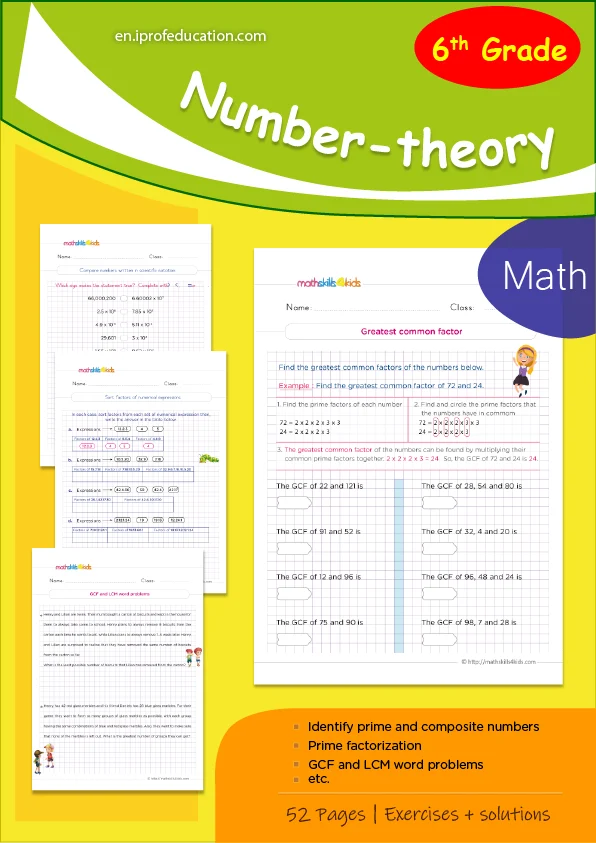
About this 6th Grade number theory worksheet
Download the worksheet: How do you find the GCF and LCM in word problems
Download the PDF (opens in a new tab)Free · 2 pages · 941 KB · answer key included
🍪 Free worksheets are paid for by ads
To download for free, please accept cookies, or go Premium for an ad-free experience.
A few related activities
Difference between whole numbers, rational numbers and integers
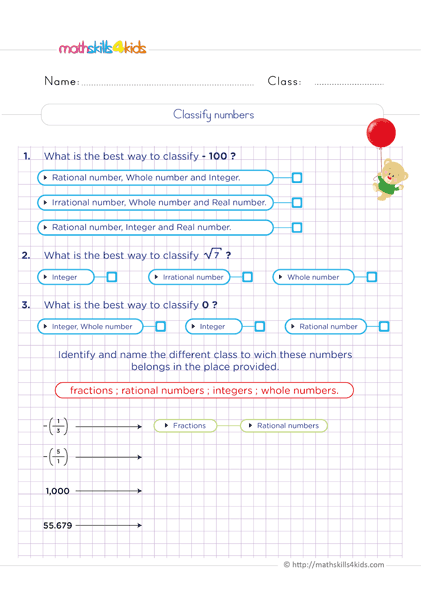
Printable PDF: 6th Grade number theory practice, 2 pages, answer key included.
See the activity: Difference between whole numbers, rational numbers and integersWhat are the prime and composite numbers from 1 to 100
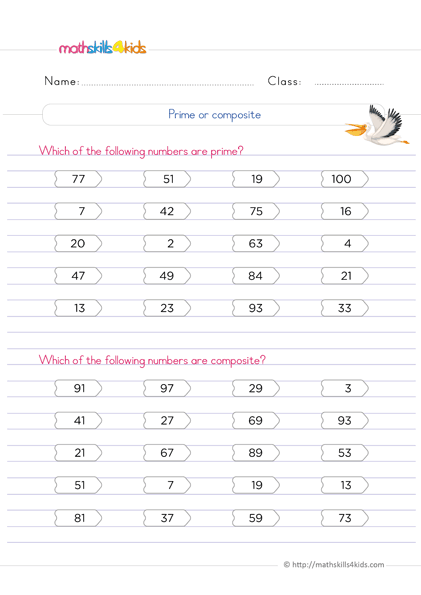
Printable PDF: 6th Grade number theory practice, 2 pages, answer key included.
See the activity: What are the prime and composite numbers from 1 to 100Understand how to write prime factorization with exponents
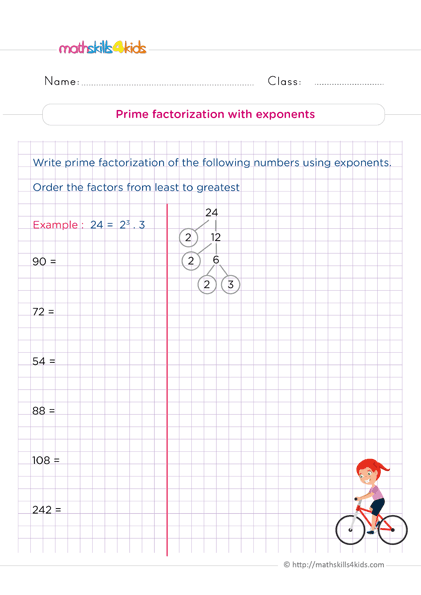
Printable PDF: 6th Grade number theory practice, 2 pages, answer key included.
See the activity: Understand how to write prime factorization with exponentsHow do you find the greatest common factor (GCF)
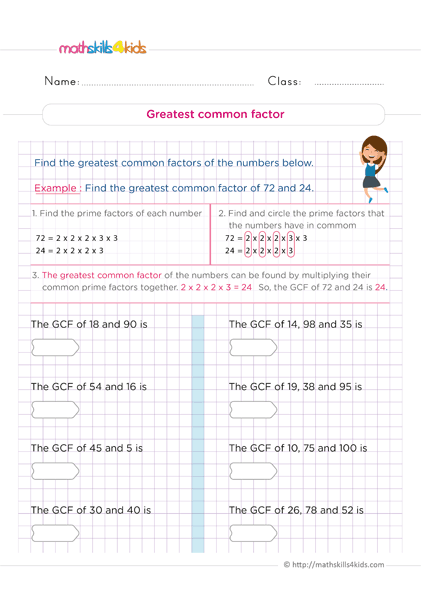
Printable PDF: 6th Grade number theory practice, 2 pages, answer key included.
See the activity: How do you find the greatest common factor (GCF)Least common multiple (LCM) - How to find it
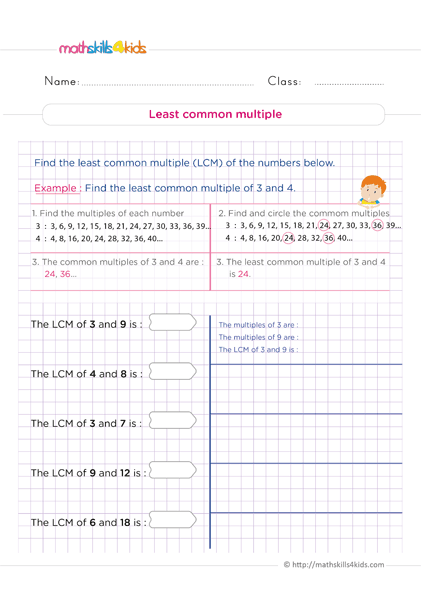
Printable PDF: 6th Grade number theory practice, 2 pages, answer key included.
See the activity: Least common multiple (LCM) - How to find itThe place value of digits in whole numbers
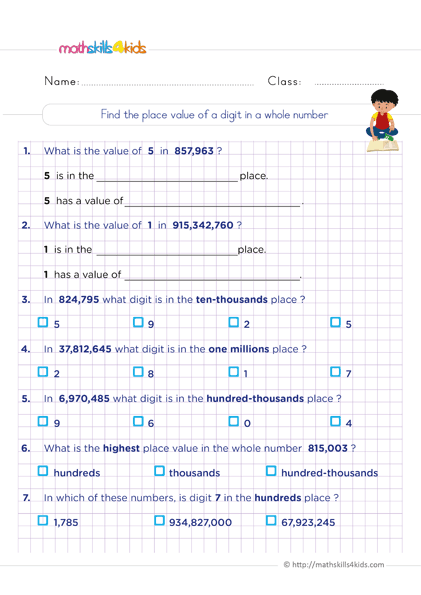
Printable PDF: 6th Grade whole numbers practice, 2 pages, answer key included.
See the activity: The place value of digits in whole numbers