Least common multiple (LCM) - How to find it
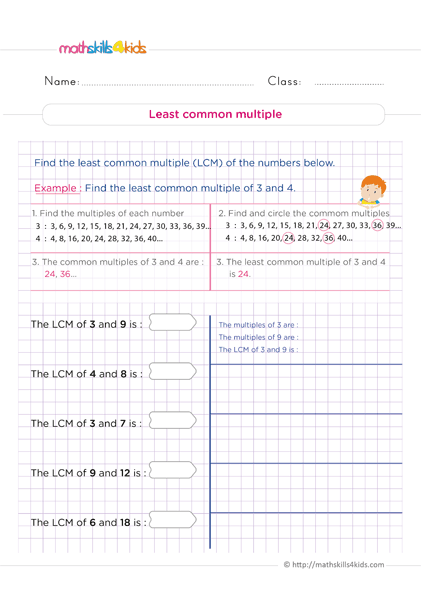
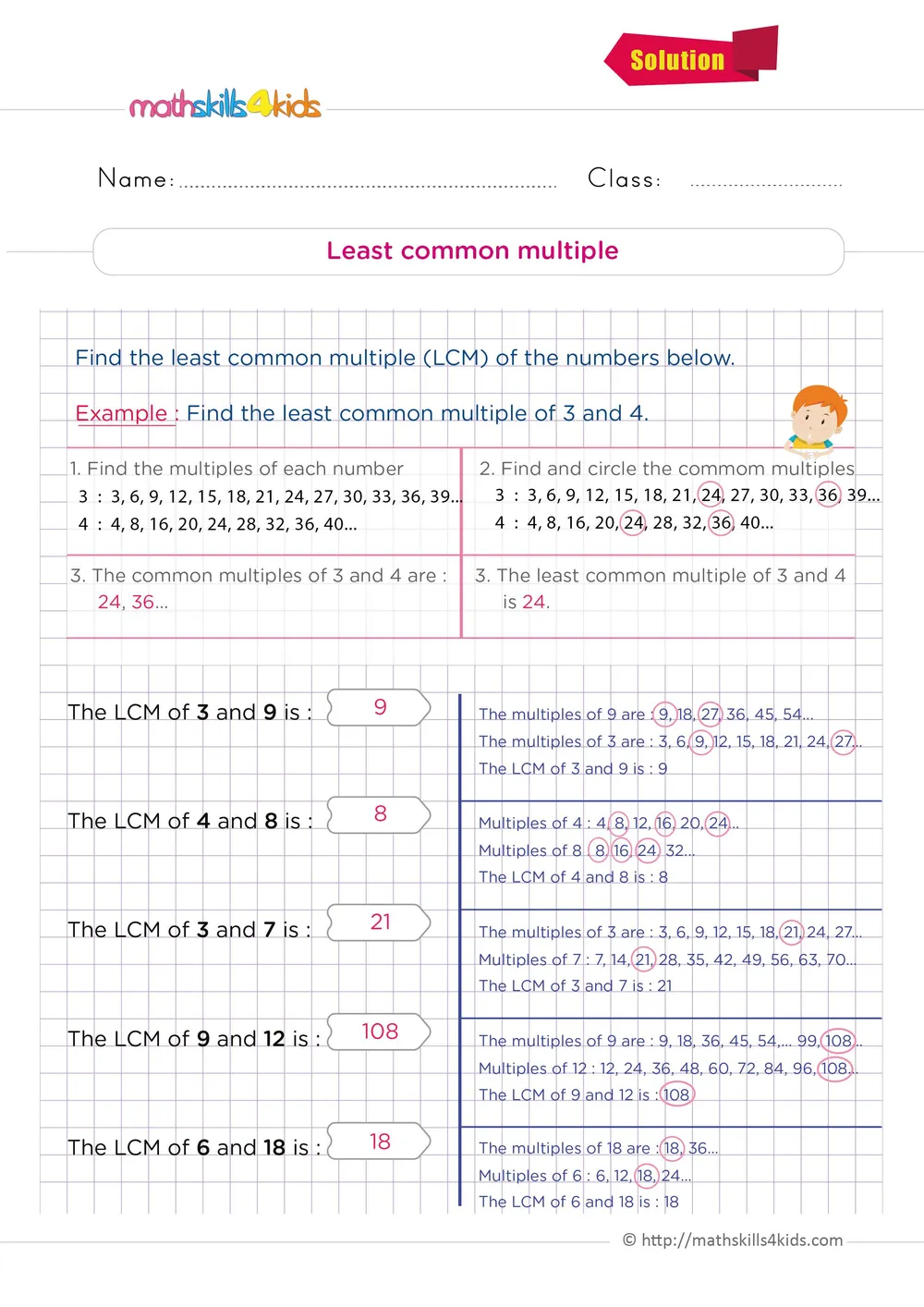
When will a 3-minute timer and a 4-minute timer beep at the same moment? Your child answers that kind of question by finding the least common multiple by listing multiples: write the multiples of each number, then circle the first one they share. Five pairs follow, from 3 and 9 to 6 and 18. The worked example and one answer on the solution page need a correction, explained below, which turns into a good detective job.
The smallest number on both lists
A common multiple is a number that sits in both times tables. The least common multiple is the first one. Listing is the most honest method at this age, because your child can watch the two lists meet.
The pairs are chosen with care. In 3 and 9, 4 and 8, and 6 and 18, the larger number is already a multiple of the smaller, so it is the answer. In 3 and 7, nothing is shared until their product, 21. And 9 and 12 share a factor of 3, so they meet early, at 36.
This is the LCM half of 6.NS.B.4, which asks for the least common multiple of two whole numbers up to 12. The pair 6 and 18 goes a little past that.
Spot the slip in the example
Start with the worked example at the top and treat it as a case to solve. Ask your child, "Is 12 a multiple of 4?" Then, "Is it on the list?" The list of multiples of 4 jumps from 8 to 16, and that missing 12 is why the example names 24. The true LCM of 3 and 4 is 12.
A note for you: the solution page also gives 108 for 9 and 12. The multiples of 9 run 9, 18, 27, 36, and 36 is also 12 x 3, so the LCM is 36.
Once the slips are found, the method holds up. Have your child say each multiple aloud and circle the first match.
Hot dogs, buns and blinking lights
The classic grocery store puzzle is pure LCM: hot dogs come in packs of 10, buns in packs of 8. Ask, "How many packs of each so nothing is left over?" The answer, 40 of each, means 4 packs of hot dogs and 5 packs of buns.
On a drive, watch two turn signals that blink at different speeds and count until they flash together.
Full House: An Invitation to Fractions by Dayle Ann Dodds, about an inn that fills up one guest at a time, is a gentle look at fractions of a whole, and fractions are where the LCM returns, once denominators differ.
Name the work: "You checked the list before you trusted the example." Next in this series, the word problems sheet hides the LCM inside a story.
About this 6th Grade number theory worksheet
Download the worksheet: Least common multiple (LCM) - How to find it
Download the PDF (opens in a new tab)Free · 2 pages · 840 KB · answer key included
🍪 Free worksheets are paid for by ads
To download for free, please accept cookies, or go Premium for an ad-free experience.
A few related activities
How do you find the GCF and LCM in word problems
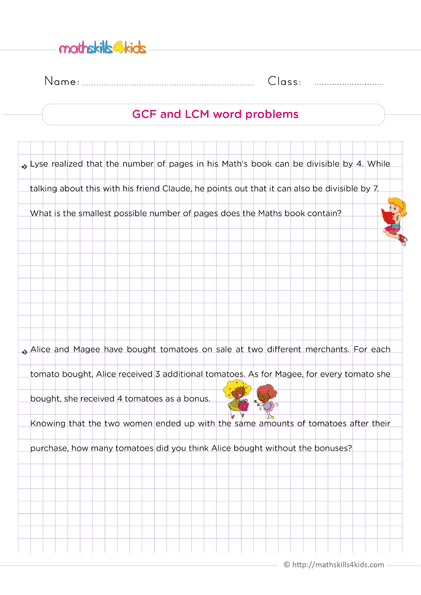
Printable PDF: 6th Grade number theory practice, 2 pages, answer key included.
See the activity: How do you find the GCF and LCM in word problemsDifference between whole numbers, rational numbers and integers
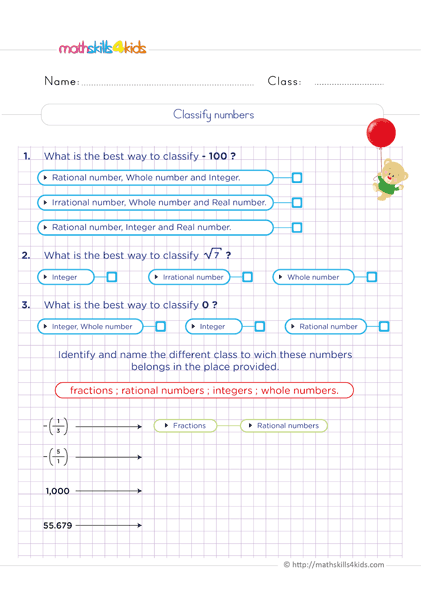
Printable PDF: 6th Grade number theory practice, 2 pages, answer key included.
See the activity: Difference between whole numbers, rational numbers and integersWhat are the prime and composite numbers from 1 to 100
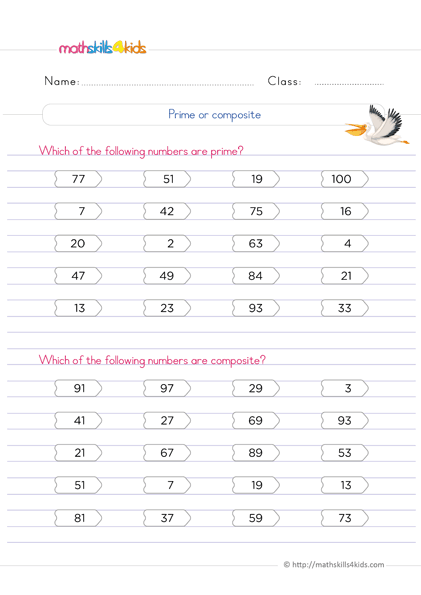
Printable PDF: 6th Grade number theory practice, 2 pages, answer key included.
See the activity: What are the prime and composite numbers from 1 to 100Understand how to write prime factorization with exponents
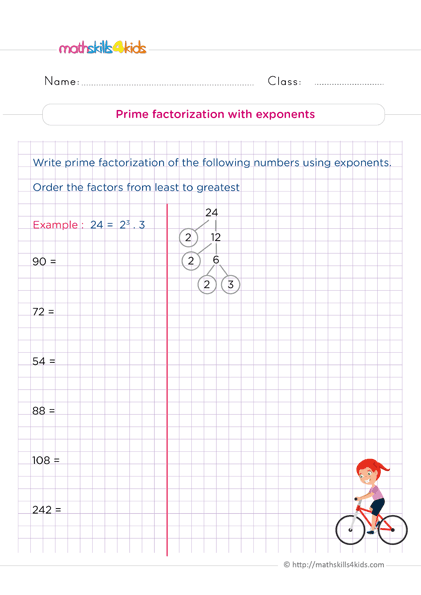
Printable PDF: 6th Grade number theory practice, 2 pages, answer key included.
See the activity: Understand how to write prime factorization with exponentsHow do you find the greatest common factor (GCF)
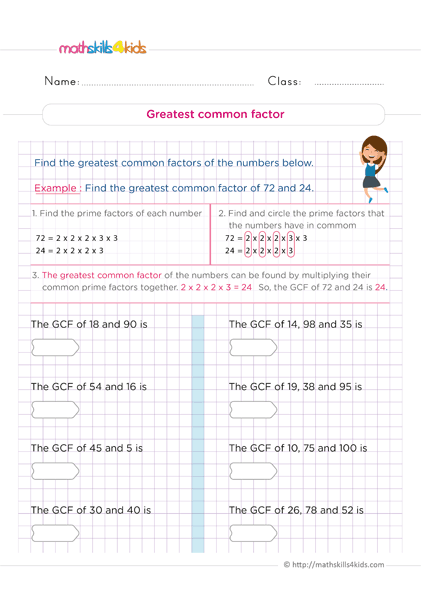
Printable PDF: 6th Grade number theory practice, 2 pages, answer key included.
See the activity: How do you find the greatest common factor (GCF)The place value of digits in whole numbers
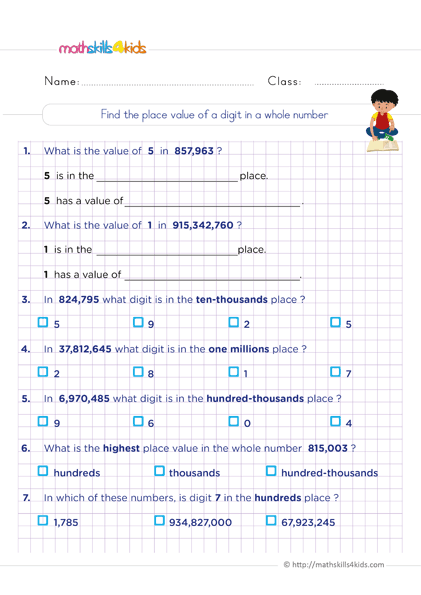
Printable PDF: 6th Grade whole numbers practice, 2 pages, answer key included.
See the activity: The place value of digits in whole numbers