What are the prime and composite numbers from 1 to 100
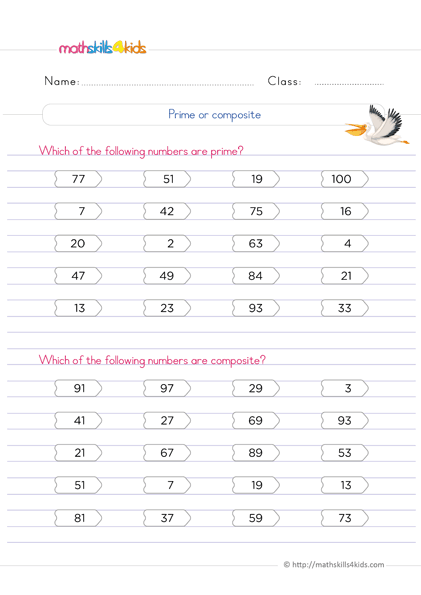
Ask a sixth grader whether 91 is prime and many will say yes on the spot. It looks lonely, it is odd, and it is not in the times tables they know by heart. Here your child slows that guess down by telling prime and composite numbers apart on 40 number tags, picking out the primes in one set and the composites in the next. The shaded solution page needs three fixes, noted below.
Why 91 fools almost everyone
A prime number has exactly two factors, 1 and itself. A composite number has more. The trouble is that most kids test only 2, 3 and 5, and an odd number that survives those three feels prime.
That is why the sheet mixes in odd composite numbers such as 49, 77 and 91. Each one hides a factor of 7: 49 is 7 x 7, 77 is 7 x 11, 91 is 7 x 13. The second set repeats several numbers from the first, such as 7, 13, 19, 21 and 51, so your child meets the same number with the opposite question.
This practice rests on 4.OA.B.4, the Grade 4 standard for factors, primes and composites up to 100. Sixth graders need it again before greatest common factor and least common multiple work.
Can 51 tiles make a rectangle?
Give your child one test to run on every tag: "Can it split into equal rows of 2 or more?" If it can, it is composite. Start with 51. It is odd and ends in 1, so it looks prime, but 5 + 1 = 6, and that means 3 divides it: 51 is 3 x 17.
When they reach 2, ask, "What are the factors of 2?" Some kids skip it because even numbers feel composite. Let them say why 2 belongs with the primes.
A note for you: the solution page misses three answers. 23 is prime in the first set, and 69 and 93 are composite in the second, since 69 is 3 x 23 and 93 is 3 x 31. Hunt for those three together.
Thirteen cookies on a baking tray
Primes turn up whenever you arrange things in neat rows. Next time you bake, hand your child 13 cookies and a tray: "Can you make a rectangle with more than one row?" They cannot, and that is what prime means. Try 12 and watch the options pile up.
At dinner, count the forks in the drawer and ask whether they could be set out in equal rows.
For reading together, Spaghetti and Meatballs for All! by Marilyn Burns follows a family reunion where 32 guests keep pushing square tables around. It is a story about area, and it also shows how many ways one number can be arranged.
Close by naming the work: "You tested every odd number instead of guessing." Next in this series, the prime factorization sheet breaks composites into their primes.
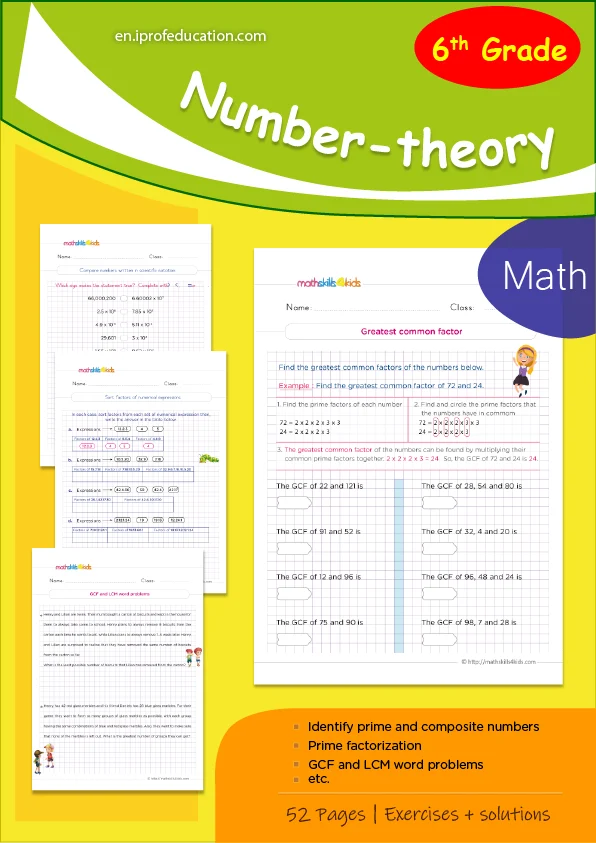
About this 6th Grade number theory worksheet
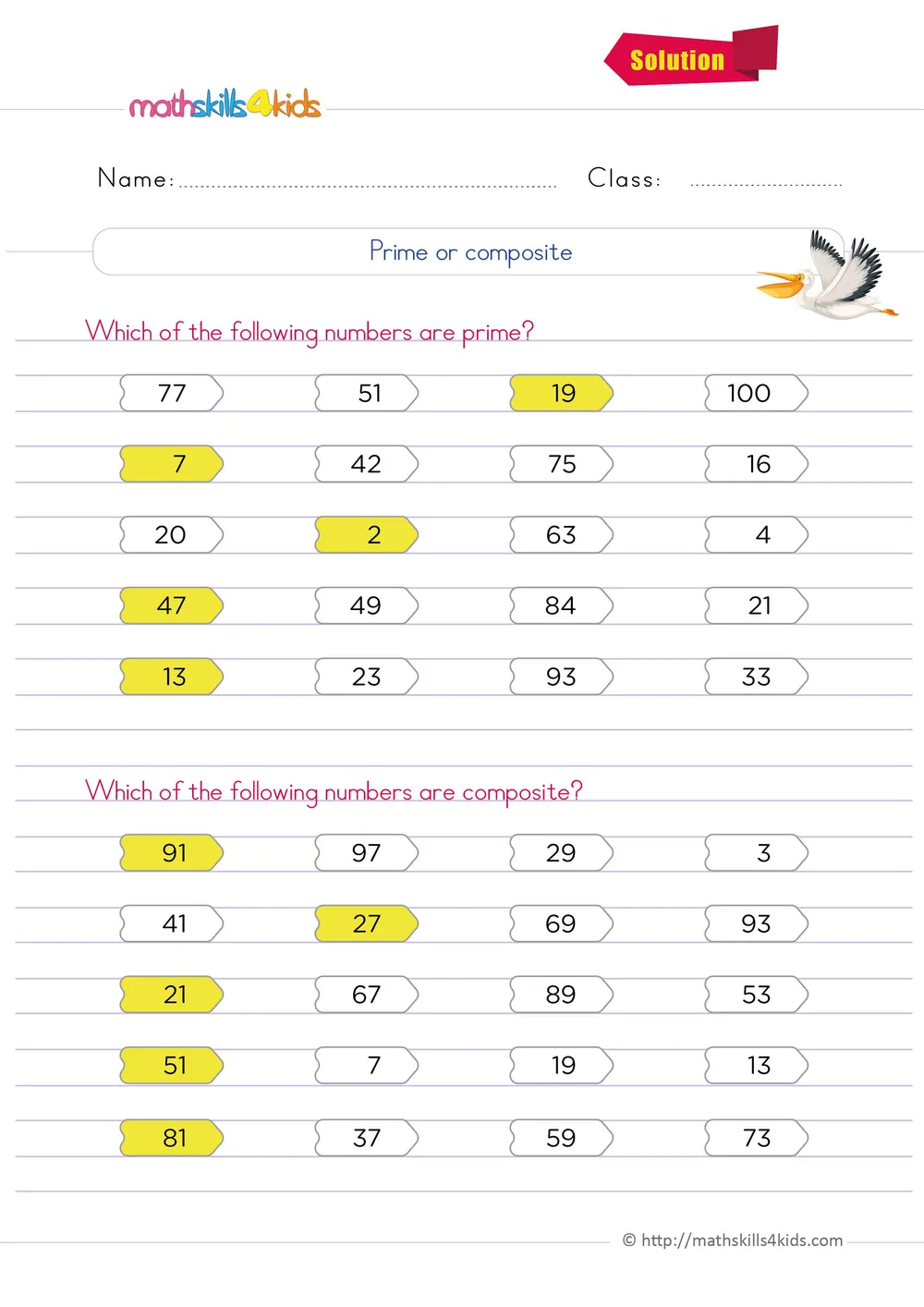
Download the worksheet: What are the prime and composite numbers from 1 to 100
Download the PDF (opens in a new tab)Free · 2 pages · 511 KB · answer key included
🍪 Free worksheets are paid for by ads
To download for free, please accept cookies, or go Premium for an ad-free experience.
A few related activities
Understand how to write prime factorization with exponents
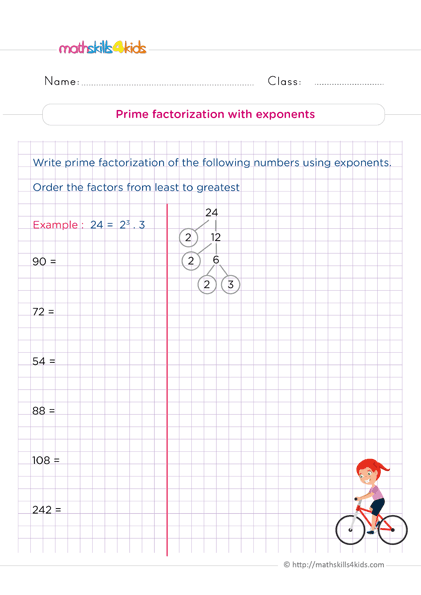
Printable PDF: 6th Grade number theory practice, 2 pages, answer key included.
See the activity: Understand how to write prime factorization with exponentsHow do you find the greatest common factor (GCF)
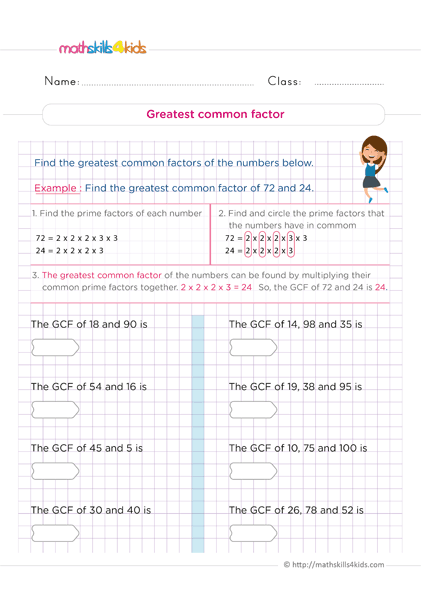
Printable PDF: 6th Grade number theory practice, 2 pages, answer key included.
See the activity: How do you find the greatest common factor (GCF)Least common multiple (LCM) - How to find it
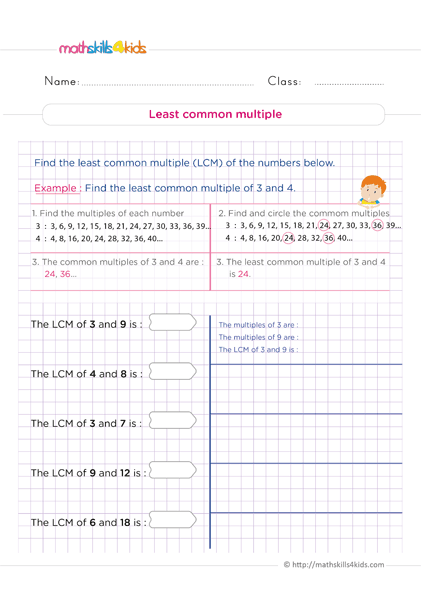
Printable PDF: 6th Grade number theory practice, 2 pages, answer key included.
See the activity: Least common multiple (LCM) - How to find itHow do you find the GCF and LCM in word problems
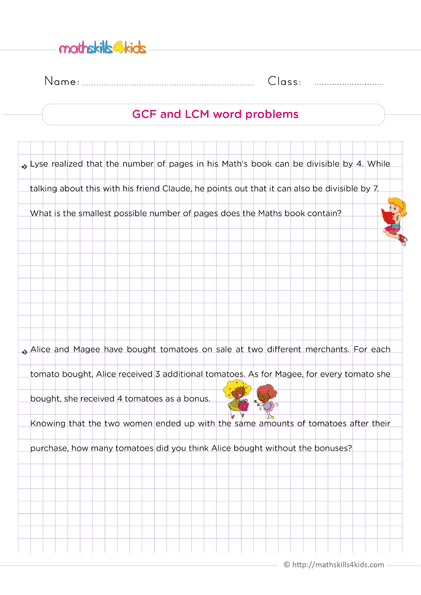
Printable PDF: 6th Grade number theory practice, 2 pages, answer key included.
See the activity: How do you find the GCF and LCM in word problemsDifference between whole numbers, rational numbers and integers
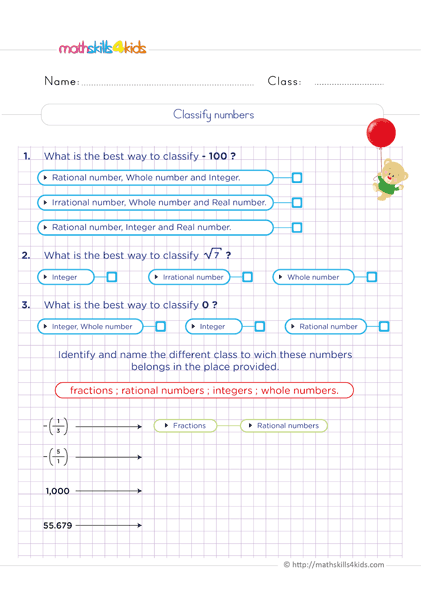
Printable PDF: 6th Grade number theory practice, 2 pages, answer key included.
See the activity: Difference between whole numbers, rational numbers and integersThe place value of digits in whole numbers
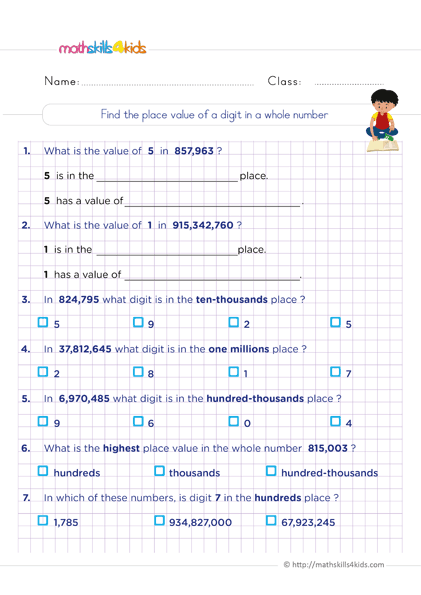
Printable PDF: 6th Grade whole numbers practice, 2 pages, answer key included.
See the activity: The place value of digits in whole numbers