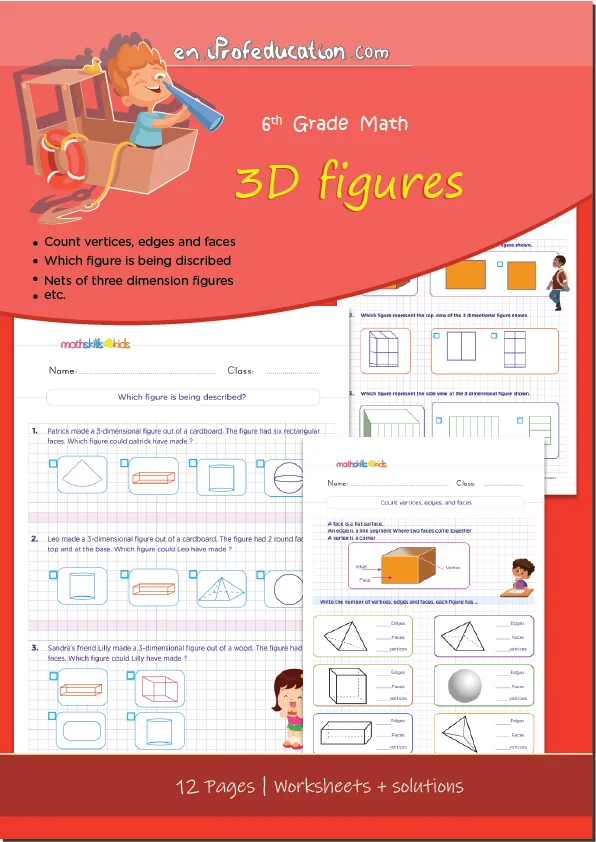
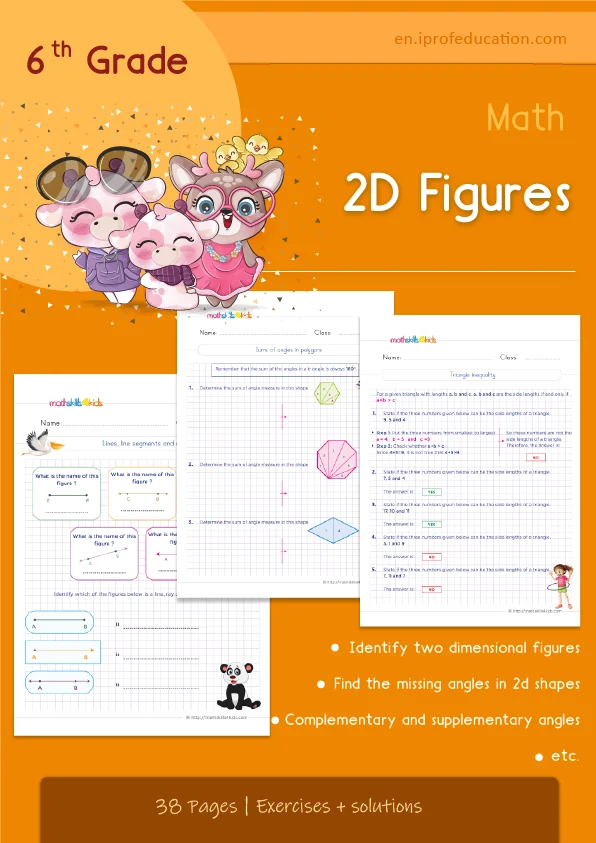
How to identify and classify polygons based on their sides and angles
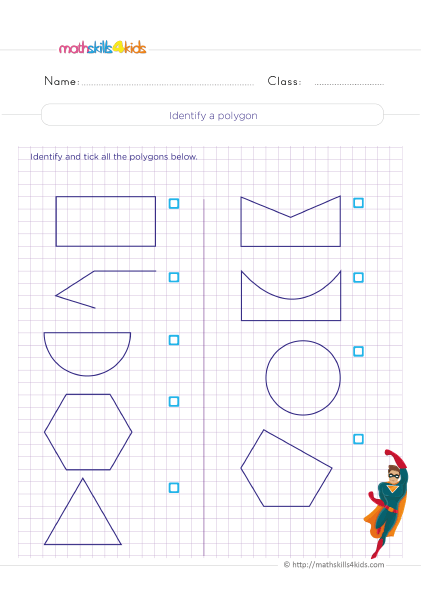
One of the vital skills that 5th graders need to master is identifying and classifying polygons based on their sides and angles. Polygons are closed shapes that are made of straight lines. The word polygon comes from the Greek words “poly,” meaning many, and “gon,” meaning angle. Therefore, a polygon is a shape with many angles.
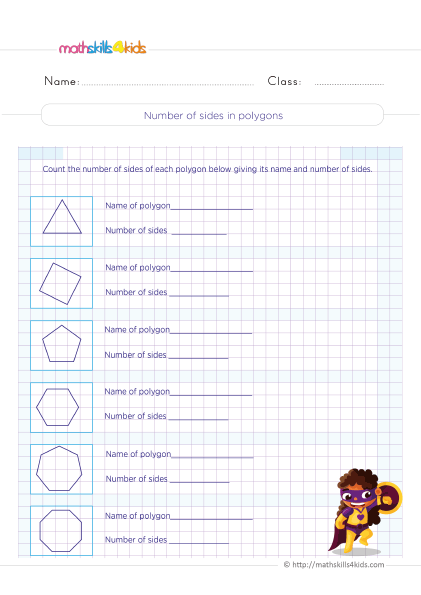
There are different types of polygons, such as triangles, quadrilaterals, pentagons, hexagons, heptagons, octagons, nonagons, decagons, etc. The name of each polygon tells us how many sides it has. For example, a triangle has three sides; a quadrilateral has four sides; a pentagon has five sides, etc.
To identify and classify polygons, we need to look at two main features: the number of sides and the measure of the angles. As we saw above, the number of sides determines the polygon's name. The measure of the angles determines whether the polygon is regular or irregular.
A regular polygon is a polygon that has all sides equal and all angles equal. For example, a regular triangle (also called an equilateral triangle) has three equal sides and three equal angles of 60 degrees each. A regular quadrilateral (also called a square) has four equal sides and four equal angles of 90 degrees each.
An irregular polygon is a polygon that does not have all sides equal or all angles equal. For example, an irregular triangle (also called a scalene triangle) has three unequal sides and three unequal angles. An irregular quadrilateral (a trapezoid) has two pairs of parallel sides, but not all sides are equal.
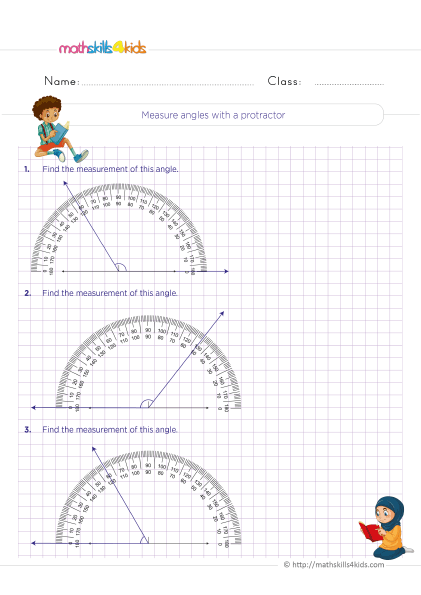
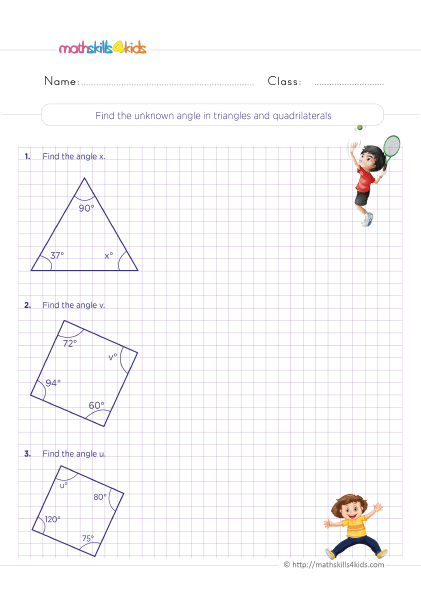
To classify polygons based on their angles, we need to know the sum of the interior angles of a polygon. The interior angles are the angles inside the polygon. The sum of the interior angles depends on the number of sides of the polygon.
There is a simple formula to find the sum of the interior angles of any polygon:
The sum of interior angles = (n - 2) x 180 degrees, where n is the number of sides.
For example, to find the sum of the interior angles of a pentagon, we plug in n = 5 into the formula:
Sum of interior angles = (5 - 2) x 180 degrees
3 x 180 degrees
540 degrees
Therefore, the sum of the interior angles of a pentagon is 540 degrees.
Using this formula, we can classify polygons based on their angles into acute, right, and obtuse.