
What are equivalent fractions, and why are they important?
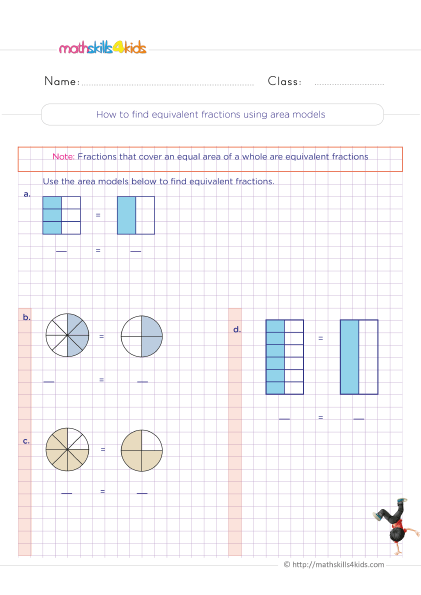
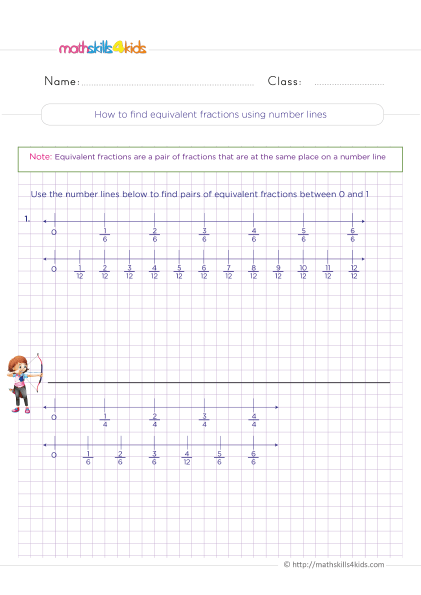
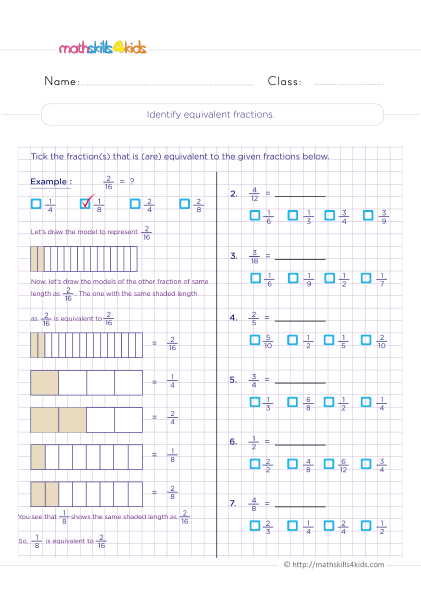
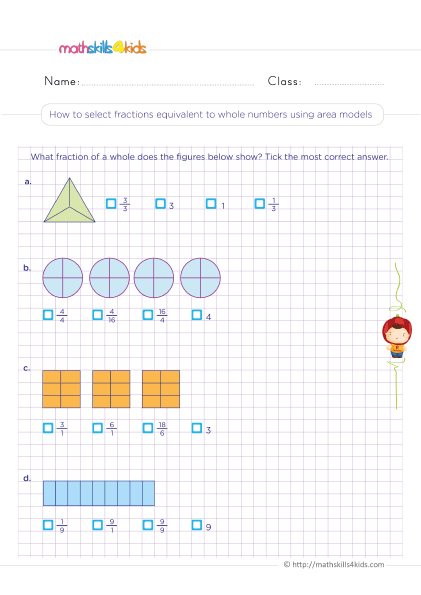
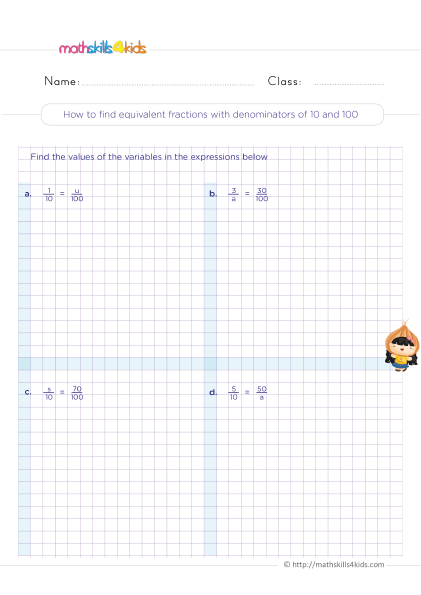
Equivalent fractions have the same value, even though they may look different. For example, 1/2 and 2/4 are equivalent fractions because they represent half of a whole. To find equivalent fractions, multiply or divide the numerator and the denominator by the same number (except zero). For example, to find an equivalent fraction for 3/5, multiply 3 and 5 by 2 to get 6/10.
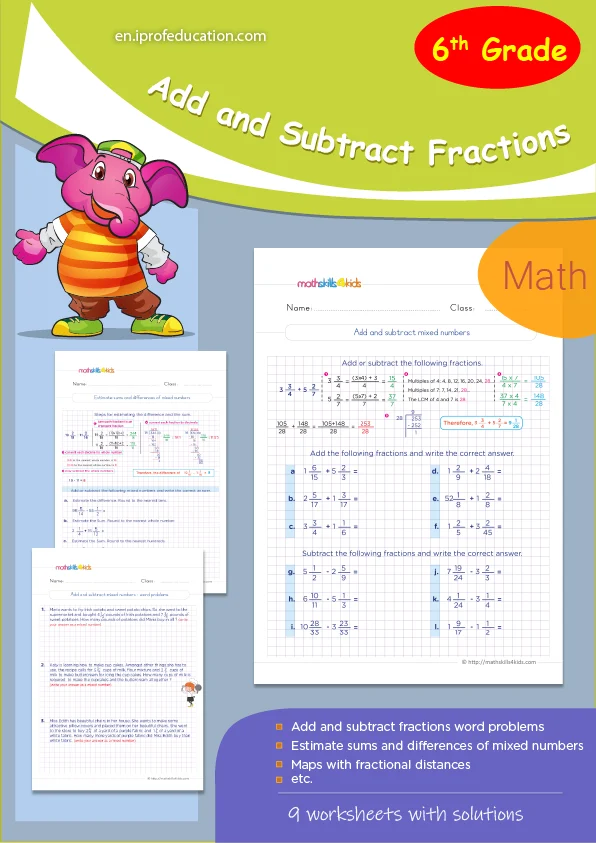
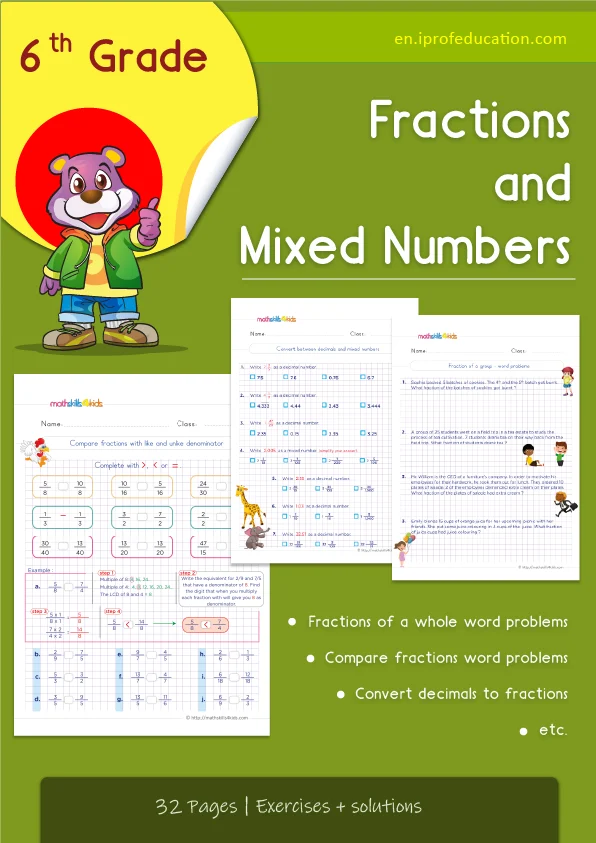
Equivalent fractions are important because they help us compare and simplify fractions. When we compare fractions, we need to find a common denominator (the bottom number) to see which fraction is larger or smaller. For example, to compare 2/3 and 3/4, we can find equivalent fractions with a common denominator of 12: 8/12 and 9/12. Then we can see that 3/4 is larger than 2/3 because 9/12 is larger than 8/12.
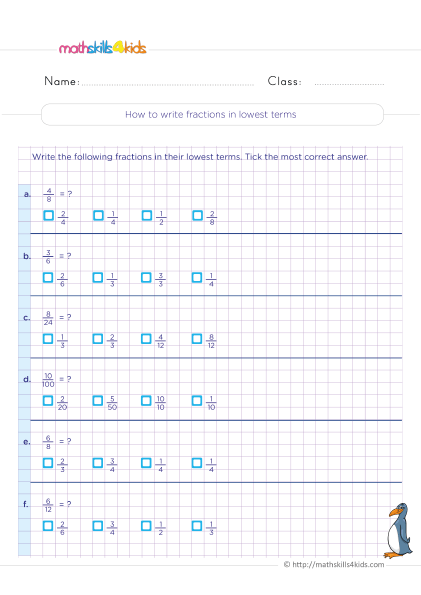
When simplifying fractions, we find an equivalent fraction with the smallest possible numerator and denominator. This is called the lowest term or simplest form of a fraction. For example, to simplify 6/9, we can divide 6 and 9 by 3 to get 2/3. This is the lowest term of 6/9 because no other number can divide 2 and 3 evenly.